











Modular and offsite construction is a major asset in tackling the housing crisis
Text and images Embuild Vlaanderen
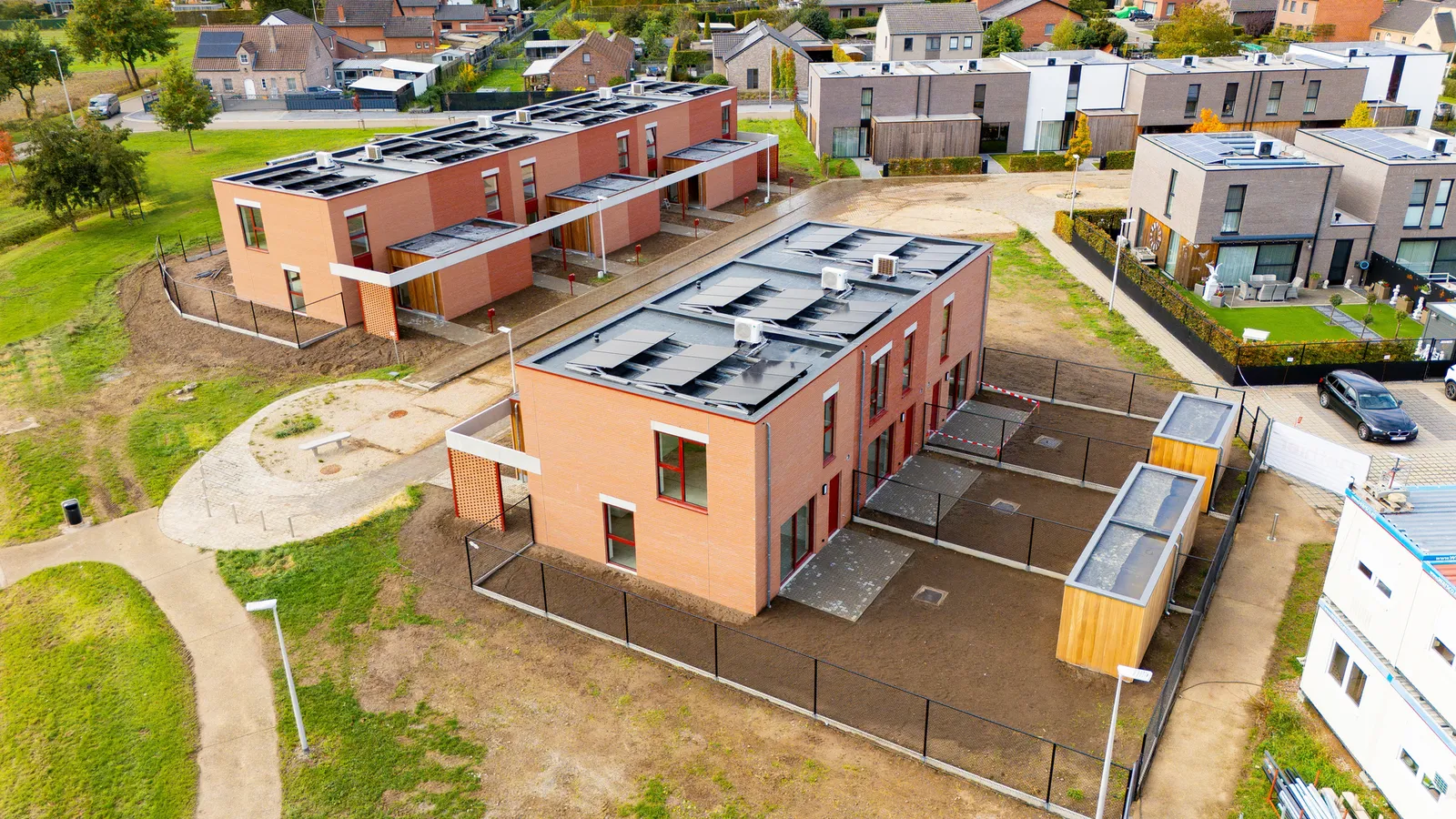
Modular offsite housebuilding has quickly grown to account for almost 8% of new homes and flats built each year in Flanders. According to an estimate by Embuild Vlaanderen, around 2,000 of the 26,500 new housing units completed in 2025 were built this way. By 2050, Flanders will need 600,000 additional homes. Industrialised, automated and modular construction methods can help the sector pick up the pace. And with households becoming smaller, building more homes on a smaller scale will also make housing more affordable.
“In industrial housebuilding, standard modules or components are prefabricated offsite in large workshops so they can be assembled very quickly on site. This approach brings a range of benefits, including shorter construction times, improved quality, the elimination of costs associated with defects, reduced use of building materials and lower energy costs. The greater the volume of housing modules, the lower the cost. This niche market is evolving rapidly. Modular housebuilders are expected to become increasingly important in the coming years,” says Caroline Deiteren of Embuild Vlaanderen.
“Contrary to what is often assumed, modular housebuilding does not mean one-size-fits-all. The starting point is a standardised way of working, but there is a wide range of options,” adds Caroline Deiteren.
Infill and upward extensions
Modular construction also offers a solution to the technical complexity of the densification needed in Flanders. Space is scarce in urbanised Flanders. In and around our city centres and village cores, infill development and upward extensions will be needed to provide quality homes for additional households. Compact modular units that can be added as an extra storey to existing buildings, or slotted and stacked between buildings, are extremely useful in this respect. They also reduce the construction phase to a minimum in busy areas.
Still too often unknown and unloved
The potential of modular housebuilders is clear from the framework agreement ‘Modular construction for social housing’, concluded with the Flemish Government. Using modular construction techniques, three modular construction companies are making capacity available to deliver no fewer than 1,750 modular social homes a year. So far, however, only 16 have been completed, with 317 in the pipeline. Housing companies remain highly cautious. Only 12 of the 42 housing companies are using the offer under the framework agreement.
“Industrial and modular solutions can also help clear the long waiting lists for social housing. But the sector still needs to do much more to convince clients of the benefits of this new, fast and smart way of working. We are still seeing reluctance on the ground,” says Caroline Deiteren.
Question about this story? Ask your question
Keep following this
Get an email when a new story is published. No account needed.
- SubjectGeneral







