











More than 33,000 construction workers completed compulsory basic safety training

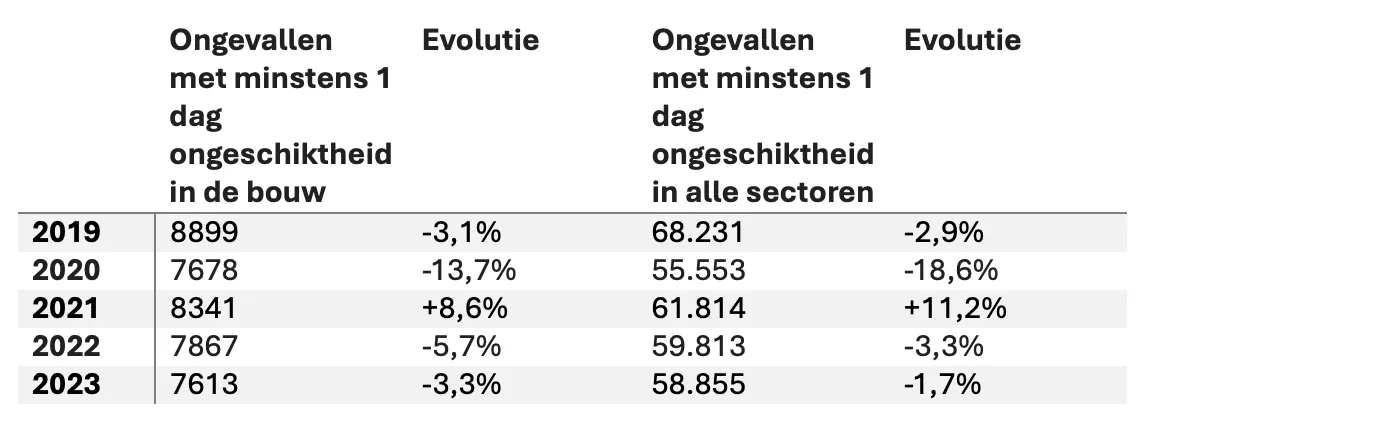
Last year, 10,720 new workers in the construction sector completed basic safety training. Since 15 April 2023, it has been compulsory for all new employees, self-employed workers and posted workers active on construction sites. “Embuild has always advocated this basic safety training, because everyone working on a construction site must know and apply the basic safety rules,” says Embuild CEO Niko Demeester. “The number of workplace accidents in the construction sector has already fallen by 14.5% over the past five years, but there is still room for improvement. This is why this compulsory training is so important.”
Basic safety training, which had already been compulsory since 1 April 2022 for all workers covered by joint committee 124 (by far the largest joint committee in construction, with around 137,000 workers), was extended on 15 April 2023 to employees covered by the sector’s other joint committees, as well as to self-employed workers and posted employees and self-employed workers.
In practical terms, every newcomer to the construction sector must complete this training. It takes 8 hours and must be completed within a month of starting work. A newcomer to the construction sector is anyone starting work in the sector who will be active on construction sites, unless they have worked in the sector for at least 5 years during the past 10 years. Employees who completed VCA basic safety training (or equivalent training) before it became compulsory are also exempt from this basic safety training.
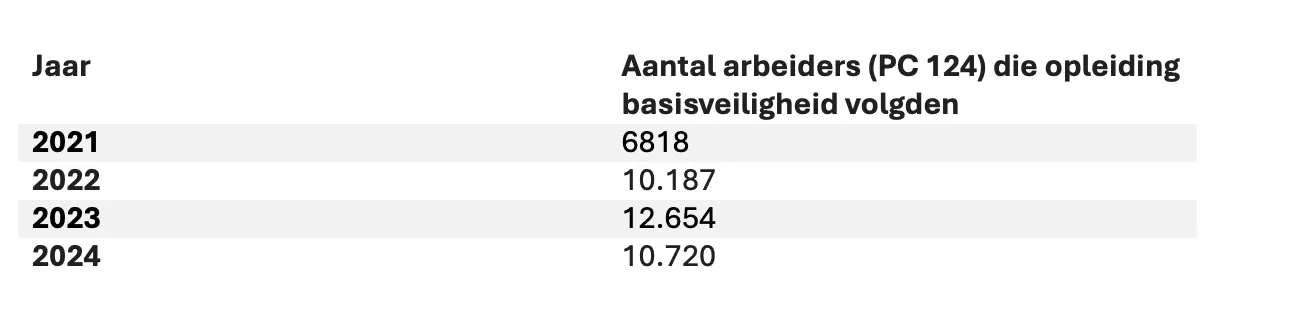
Niko Demeester, CEO of Embuild: “Since compulsory basic safety training was introduced, in 2022 for newcomers covered by joint committee 124 and in 2023 for every newcomer starting work on a construction site, we have seen a significant increase in the number of workers completing this training. We can only welcome that. The number of workplace accidents resulting in at least 1 day of incapacity for work may have fallen by 14.5% over the past 5 years, but every workplace accident is one too many.”
First and foremost, every self-employed worker is responsible for complying with the training requirement, both for themselves and for any staff they may employ. Failure to comply with the rules may result in an official report and a fine. But that is not all. In the event of subcontracting, the main contractor may also be held liable if breaches are found further down the chain.
Niko Demeester, CEO of Embuild: “The construction and installation sector rightly invests heavily in safety, and that investment is beginning to pay off, partly thanks to compulsory basic safety training. This training provides an important foundation for further improving safety in our sector. A safer construction and installation sector is also important for encouraging more people to consider a career in the sector, especially now that between 14,000 and 20,000 vacancies have remained open year after year.”
Question about this story? Ask your question
Keep following this
Get an email when a new story is published. No account needed.
- SubjectGeneral







