











New BENOR regulations better aligned with day-to-day concrete practice
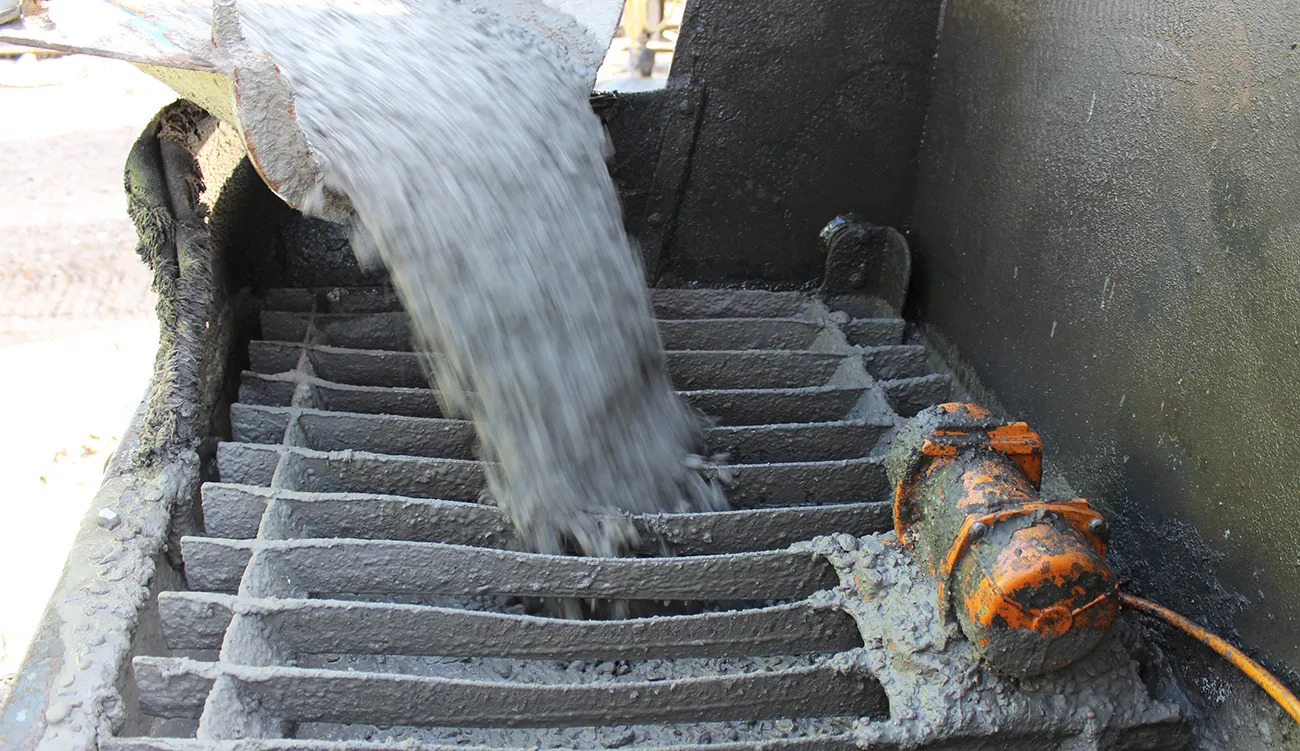
Following the introduction of the new concrete standard (NBN B 15-001: 2022) in July 2022, a new BENOR regulation has also been in force since 1 January this year: TRA 550 v.5.0. By 1 July at the latest, all certified concrete plants will have to comply with several new practical guidelines. Measures are being introduced to prevent additional water being added to the concrete mix on site. New flow classes have also been defined, linked to the final application, to help contractors determine the right concrete consistency. “We hope this will prevent misunderstandings in future and enable us to guarantee concrete quality even more effectively,” says Caroline Ladang, director at BE-CERT.
A new regulatory framework always comes with a series of changes. TRA 550 v.5.0 is no exception, with the aim of aligning the normative requirements even more closely with day-to-day site practice. One of the main changes compared with the previous BENOR regulation is that there may no longer be a direct connection between the water tank and the mixer drum of a concrete mixer truck. “By interrupting the water supply, we want to prevent water from being added too easily to the concrete mix to make it more fluid and easier to work with. This would reduce the compressive strength, as well as the quality and durability of the concrete. Instead, we want to encourage contractors to order the concrete at the right consistency from the outset,” explains Caroline Ladang.

Grey area
Consistency is a complex concept in the world of concrete. It determines how workable concrete is and describes not only its internal cohesion, but also important properties such as flow behaviour and its tendency to segregate. In short, the consistency of fresh concrete determines how easily it can be placed and compacted. Until recently, this was expressed through flow classes with S values, from S1 (low-flow concrete requiring intensive compaction) to S5 (high-flow concrete requiring less compaction), as well as self-compacting concrete, depending on the type of element to be concreted, the choice of compaction method and so on. The new BENOR regulation also addresses this issue, Caroline Ladang points out. “The S classes are based on an average value, including tolerance margins with a lower and an upper limit. These ranges do not align well with contractors’ expectations for certain applications, creating a kind of grey area in practice, with terms such as ‘a high S3’ and ‘a low S4’ that explicitly pushed the limits of compliance. As a result, many contractors lost sight of, and familiarity with, the properties of fresh concrete.”

New flow classes
Because the S classes often do not adequately reflect the flow of concrete that a contractor expects for a particular application, the new concrete standard NBN B 15-001 provides preferred target slump values to indicate flow, such as S20, S70, S120 … The new concrete standard specifies which preferred target value is suitable for each application, for example S120 for stairs and concrete placed on a slope, S150 for beams, and S210 for concrete for floors, topping layers, foundation trenches …. “Contractors will now know at a glance which S value they need and must order to ensure their work is carried out to the highest standard. The concrete will not need to be adjusted on site by adding water to achieve the required flow. This guarantees better-quality concrete that is also suited to the planned placing method on site,” concludes Caroline Ladang.
The right consistency … for as long as needed!
Contractors should bear in mind that the preferred target value for consistency (or flow class) they have ordered must be maintained on site for at least 30 minutes. This period is specified in the execution standard NBN B 15-400 and is also explicitly stated in TRA 550. 30 minutes is generally achievable with standard technology. However, correct placement of the concrete sometimes requires more time. “At contractors’ request, the new TRA allows a period longer than 30 minutes to be specified. The concrete plant will then make specific adjustments to the concrete technology to achieve this, which will be demonstrated through ITTs,” says Bert De Schrijver, technical adviser at FEDBETON. “The delivery note will indicate this as TCzz, where ‘zz’ is the total number of minutes for which the consistency is maintained.”
Een zakelijke vraag aan PROCERTUS? Get in touch
Companies in this story

Keep following this
Get an email when a new story is published. No account needed.
- SubjectGeneral
- CompanyPROCERTUS







