











New-build homes are increasingly fossil-free
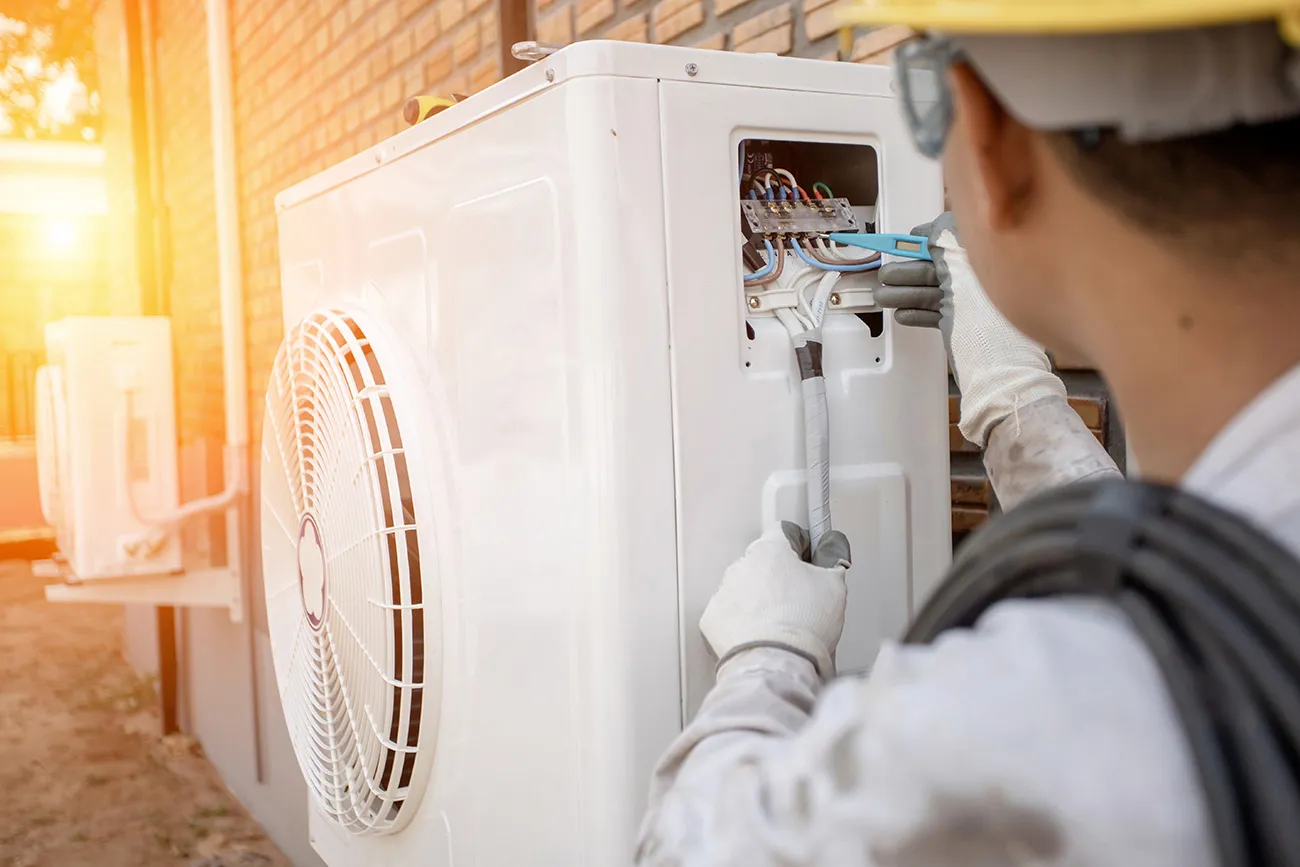
A recent survey of members of the Flemish Confederation of Construction and Techlink shows that construction professionals and installers are increasingly installing air-to-water heat pumps in new-build homes. The same is true of charging infrastructure for electric cars, albeit to a lesser extent because of a number of obstacles. These findings reflect the trend towards making new-build homes entirely fossil-free. Electrification through, among other things, PV panels, heat pumps and charging infrastructure is therefore essential to prepare our building stock
for the challenges of climate change, as fossil energy sources in buildings are still responsible for 40% of CO2 emissions in our country. A share of renewable energy in new-build homes has been mandatory for some time, but from 2026, building without fossil fuels will become the standard in Flanders. Many construction professionals and installers are already leading the way in this transition.
“New-build homes are already energy-efficient, with renewable energy and high levels of insulation. Heat pumps are also often the preferred choice over fossil energy sources. New-build homes are therefore leading the way, and that is necessary if we are to make all our homes fossil-free by 2050, in other words, within a single generation. Alongside the importance of electrification for heating and cooling, combined with renewable energy, our buildings will also play a major role in providing enough charging facilities for electric transport. This means not only charging points at employers or service providers, but also making use of homes to ensure that enough charging points are installed more quickly. Within ten years, only fully electric cars will be rolling off the production line,” says Marc Dillen, director general of the VCB.
Growing use of air-to-water and geothermal heat pumps
A survey of VCB members shows that the air-to-water heat pump is the most popular type for houses. 60% of construction professionals say they use this solution often or almost always. Air-to-air heat pumps are currently less commonly installed in houses. Geothermal heat pumps, which offer the highest efficiency, are also being used increasingly often. The Flemish government’s recent spatial report shows that more than 5,500 geothermal heat pumps were installed in Flanders between 2017 and 2021. Of these, 1,545 were used to heat homes and apartments.*
The survey also shows that heat pumps are considerably less popular in apartments. Only 25% say they use an air-to-water heat pump often or almost always. However, geothermal heat pumps are increasingly being chosen for apartments with a communal system. In such cases, 29.4% of contractors say they use them often or almost always.
Practical obstacles to the large-scale rollout of charging infrastructure
82% of our contractors say they rarely or never install charging points in new apartment buildings. For new houses, 84% say they rarely or never do so. Possible explanations include persistent uncertainty about fire safety legislation and the fact that installing a charging point usually requires an increase in the capacity of the grid connection. Charging points also add to the construction budget. However, ducts or cable trays are already being installed. Around half of contractors say they install the necessary ducts for at least some of the residential units. “These provisions for charging points at home will boost the necessary electrification of transport, but the availability of enough installers will be a challenge,” says Kris Van Dingenen, managing director of Techlink.
Question about this story? Ask your question
Keep following this
Get an email when a new story is published. No account needed.
- SubjectGeneral







