











New innovative method for testing paint
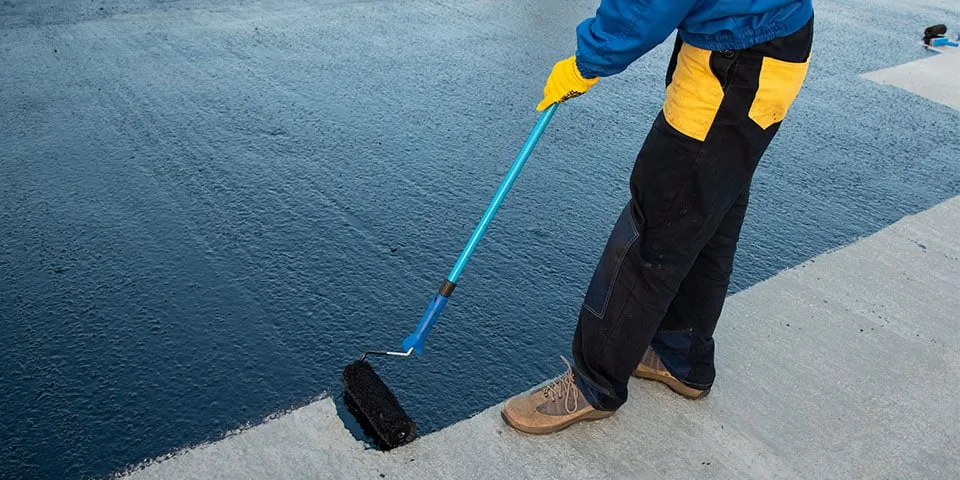
As part of his doctoral research into how paint coatings behave on metal, Dr Sven Pletincx, supervised by Prof Tom Hauffman and Prof Herman Terryn of VUB’s Electrochemical and Surface Engineering (SURF) research group, has succeeded in investigating for the first time under real-world conditions the effects of salts or water on the contact layer between paint and metal. “The new method will make it possible to investigate all types of coatings in the future, and even to fine-tune the bond strength of paint coatings in advance. The research has implications for a wide range of fields, from the coatings industry itself to applications in the construction and transport sectors,” says Dr Pletincx.
Paint coatings peel over time, causing them to lose their primary function: protecting the material beneath. On metal, a paint coating provides protection against corrosion. The stronger the bond between the paint and the metal, the better the metal is protected. The bonds that form between a paint coating and a metal surface have been studied for some time, but two major problems remained. First, a cross-section has to be made to examine the contact layer, or interface, which can then start reacting with the air. Second, most conventional analysis techniques are carried out under vacuum, at very low pressure.
“Current research methods do not simulate the actual conditions to which paint coatings are exposed. Research in the paint industry is currently even carried out empirically, through trial and error. New coatings are made, and their adhesion and the strength of the bonds at the interface are tested. If the results are satisfactory, a new type of paint has been developed. This naturally takes years and costs a great deal of money,” explains Dr Pletincx.
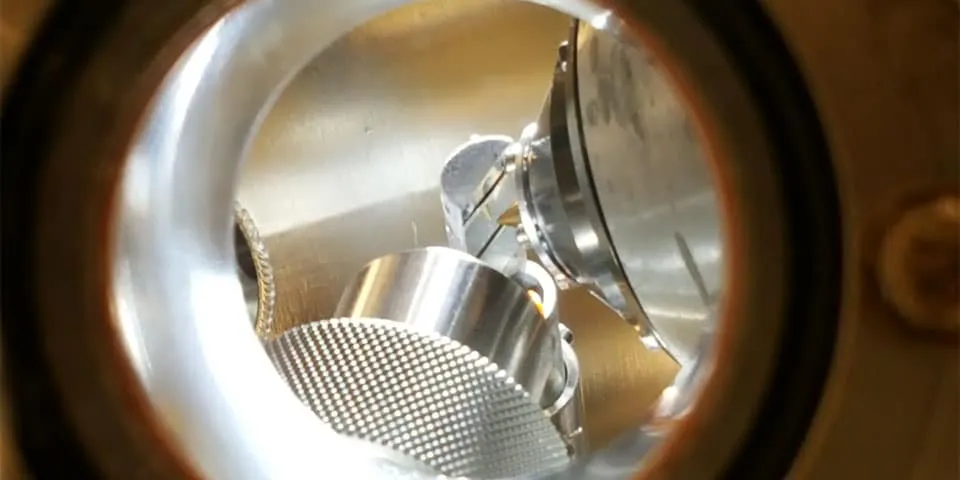
In his PhD, Pletincx developed a method that makes it possible to examine the actual paint coating under real-world conditions. The method is based on making the paint or metal layer extremely thin. Infrared and X-ray radiation are then used to examine the interface through the layers. At the same time, an electroanalytical technique developed at VUB is used to provide additional information about adhesion and the resistive and capacitive behaviour of the paint coating. Pletincx used the innovative method to study the effects of water and salts on the interface between paint coatings and the metal surface. The findings were immediately quite surprising. It is generally assumed that water has a damaging effect on bonds. However, the research revealed that, for a particular type of acrylic coating, water initially forms the bonds at the interface. As more water reaches the interface, the bonds break down, as expected. The amount of water at the interface therefore plays an important role.
Tailoring paint to the surface
The new method makes it possible to examine the chemical characteristics of almost all coatings as a function of time, temperature, water content and so on. What is more, it will be possible to engineer the interfaces of coatings on metal surfaces and adjust the bond strength of paint coatings to suit the surface in question. The paint industry is seeking a flawless coating. The methodology developed for this PhD could be a step in the right direction.
Question about this story? Ask your question
Keep following this
Get an email when a new story is published. No account needed.
- SubjectGeneral







