











“Our collaboration model benefits everyone”
Text Tim JanssensImage Studibo
Ellen Adriaenssens, Jonathan Chiau, Lorin Peeters and Jelle Lapierre (Studibo)
In 2023, four specialised Flemish engineering and consultancy firms joined forces operationally under the Studibo banner, with the ambition of eventually offering every relevant consultancy and engineering service in the sector. The plan is working brilliantly: the group now has no fewer than seventeen brands in Flanders alone, has extended its reach to Brussels, Wallonia, the Netherlands and Luxembourg, and is setting its sights firmly on France and Germany. What lies behind this rapid growth? What tangible benefits do consultancy firms gain by joining? And how does Studibo’s distinctive philosophy work in practice? We put these questions to Jonathan Chiau and Lorin Peeters (Stabico-Stir), Ellen Adriaenssens (Concreet) and Jelle Lapierre (Groep Dirk De Groof).
Employees have their say
Ellen Adriaenssens, structural engineer at Concreet by Studibo
Jonathan Chiau, Teamleader EPB at Stabico-Stir by Studibo
Lorin Peeters, structural engineer at Stabico-Stir by Studibo
Jelle Lapierre, Teamleader EPB at Groep Dirk De Groof by Studibo




Calling Studibo a success story is now an understatement. Since 2023, the group has grown into one of the leading players in Belgium’s engineering and consultancy sector. Whereas the sector was once highly fragmented, Studibo now brings together specialist firms, each excelling in its own field, from structural engineering and building services to acoustics, environmental consultancy and certification. This collaboration makes all the difference: clients, architects and developers have direct access to the right expertise within Studibo, without the complexity of dealing with countless intermediaries. The result? More efficient projects, better coordination and an integrated approach that raises the bar for quality and sustainability. Ellen Adriaenssens, Jonathan Chiau, Lorin Peeters and Jelle Lapierre can each speak to this from their own experience.
Ellen Adriaenssens: “At Concreet, we specialise in structural engineering. I’m one of the engineers who carries out the necessary calculations, after which our draughtspeople turn them into clear, practical drawings. Collaboration and sharing knowledge have always been essential parts of our day-to-day work, but since we became part of Studibo, as one of the four firms involved from its launch in 2023, that aspect of the job has taken on a new dimension. We now have even more knowledge and experience at our disposal, which is a huge help when tackling specific and challenging problems.”
Jonathan Chiau: “Stabico was also involved in the Studibo story from the outset. As Teamleader EPB, I’m responsible for everything related to EPB, EPC, airtightness, ventilation and the like. Our services also include structural engineering and health and safety coordination, and since the merger with Stir we can also offer building services engineering (MEP) studies. This expansion allows us to bring different areas of expertise together in one team and respond more effectively to our clients’ needs. The huge pool of knowledge and expertise within Studibo is extremely valuable in this respect.”
Lorin Peeters: “As a structural engineer at Stabico-Stir, I can only agree. Some time ago, I visited Ellen and her colleagues at Concreet to find out more about their firm and how they approach structural engineering. It was very informative, and I see that as one of Studibo’s major benefits.”
Jelle Lapierre: “For me, these faces are a little newer, as we’ve only been part of Studibo for a few months. The names of the firms are familiar, though, because we used to come across one another regularly on projects before the Studibo era. I’ve been with Groep Dirk De Groof for eight years now, seven of them as Teamleader EPB. Like Jonathan, I’m responsible for the energy audits we carry out, EPB reporting, EPCs … We also provide health and safety coordination, utility services coordination, airtightness and ventilation testing, drainage inspections and more.”
Sharing knowledge and experience is one of Studibo’s core purposes. How does this work in practice?
Jonathan Chiau: “It happens both spontaneously, through informal visits and discussions, for example, and through centrally organised, structured initiatives. Several working groups have been set up, for instance, where specialists and team leaders from the
different brands look in greater depth at specific issues, such as legislation, share best practices and consider how they might work even better and more efficiently. The same applies to my particular field, and I find it very informative.
Everyone is open to suggestions, and nobody claims to have all the answers, because ‘the best way of working’ differs from one firm to another. You pick up ideas and take on board what you think will work for you, without Studibo imposing particular working methods or requirements.”
Jelle Lapierre: “It really is a collaboration between like-minded people, with all the benefits that brings. If there are services we don’t offer ourselves, we can always turn to other brands in the group, enabling us to manage projects from start to finish in-house. That helps us strengthen our position in the market, while Studibo as an umbrella brand also benefits.”
Lorin Peeters: “Absolutely! Being able to draw on the staff and expertise of other brands within Studibo when needed means we can respond more quickly and work more flexibly. If unforeseen circumstances put us under pressure to meet a tight deadline, for example, we can confidently outsource certain structural engineering studies to Concreet.”
Ellen Adriaenssens: “Exactly. That mutual support can also be location-specific. If reinforcement inspections need to be carried out in the Brussels region, for instance, travelling from Kapellen would be quite a trek for us, so we can always ask Stabico-Stir to take them on. That’s very convenient, including for our clients. As a Studibo brand, we can offer them an even broader, higher-quality and more reliable service. In short, our collaboration model benefits everyone.”
Jonathan Chiau: “Here’s a good example: recently, an architect asked me a complex question that I couldn’t immediately answer from the EPB regulations. Rather than contact the Flemish Energy and Climate Agency and wait several days for a reply, I put the question to a few expert colleagues at other Studibo brands. Within an hour, someone who had encountered a similar situation got back to me, and I was able to respond to the architect, who was very pleasantly surprised by how quickly we had got back to them.”
As a Studibo brand, you also have access to central support services, including administration, marketing and HR. Are you already seeing the benefits?
Jonathan Chiau: “Definitely, particularly when it comes to recruiting new staff. Specialist engineers have plenty of choice in the job market, so it’s no easy task for a small independent consultancy to stand out in today’s war for talent, especially when the roles require specific skills that are in short supply. Studibo really helps us with that. It finds the right people for our vacancies, and as a group it also has the profile to make us more attractive to potential applicants. This means that we, like the other Studibo brands, can cast our net wider. The group’s geographical spread is useful here too. For example, someone who works at our office is employed by us but comes from the Antwerp region. That’s obviously much more convenient than having to commute to Lennik every day and spend two hours in the car.”
Lorin Peeters: “We also have a colleague from West Flanders working at Kubiek in Bruges. The upshot is that we can attract more people simply because we have offices across Flanders. The fact that you don’t necessarily have to be tied to one specific location opens up possibilities, both for us and for potential new colleagues.”
At Studibo, that collective strength goes hand in hand with a small-scale local presence, with your firms continuing to operate as separate entities. Is that the best of both worlds?
Jonathan Chiau: “Yes, I think so. Personally, I’m pleased that our local operations within our familiar team structure have remained intact. Our clients appreciate that too, while also being able to benefit from being part of a larger group. At the same time, there’s a strong sense of belonging across Studibo. Fun joint initiatives such as Studibo Day, attended by all the brands and their employees, help foster that. They give you the chance to meet other people in your field in an informal setting, perhaps laying the groundwork, without even realising it, for successful future collaborations or knowledge sharing.”
Lorin Peeters: “After the welcome and a few speeches, there are team-building activities, with employees from the different brands placed in mixed groups to encourage closer ties. Good food and drink help too, of course (winks).”
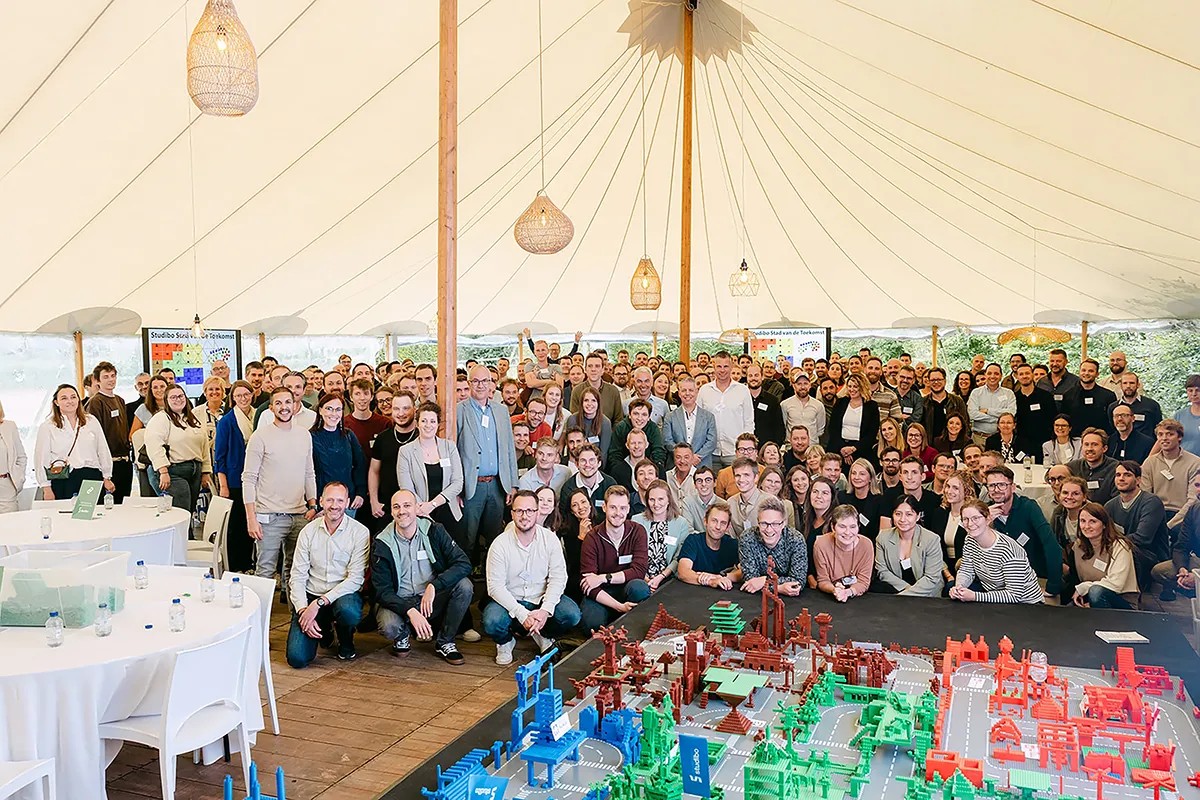
Jelle Lapierre: “We’ve already had one of those Studibo Days, with more than three hundred people there. Quite impressive. I completely agree with Jonathan, too. It might sound a little strange at first, but the fact that as little as possible would change in our day-to-day work was an important deciding factor in joining the group (laughs). It feels nothing like a takeover or merger, because we still have the same name, the same way of working, the same managers … but with that extra strength behind us. I’m also thinking, for example, of implementing new tools or technologies, which is less straightforward in terms of budget and organisation when you’re a small independent firm. The plan is for us all to use the same ERP package in time, which will help us take another step forward in terms of efficiency.”
Lorin Peeters: “From the outset, it was made very clear that the aim was not to turn Studibo into one large, cumbersome organisation, but to allow the individual practices to retain their own identity and internal operations. The past two years have shown that this is indeed the case, and that Studibo enables us to respond more quickly and flexibly to our clients’ needs. In short, as far as we’re concerned, the balance is very positive.”
Ellen Adriaenssens: “I can confirm that, because we’ve experienced exactly the same thing. Our confidence in the Studibo project and the value it brings us has only grown.”
Finally, how do you see the future, both for yourselves personally and for your labels and Studibo as a whole?
Ellen Adriaenssens: “The aim, I think, is to keep growing. Personally, I hope to gain more knowledge, continue learning and, in doing so, contribute to even bigger and more challenging projects. I’m convinced that Concreet by Studibo is the right place for me to do that.”
Jelle Lapierre: “I expect the Studibo labels to work together more and more, especially by submitting joint tenders for certain projects. One logical result should be an increase in the number and scale of our commissions. It’s a challenge we’re happy to take on. I’m also looking forward to learning more from one another, so that we can keep evolving together and maintain our upward trajectory.”
Jonathan Chiau: “I’m also very optimistic about the future, particularly because I can see that Studibo takes a very sustainable approach to its people. Thanks to this constructive collaboration with the other labels, we can now think bigger, so our work certainly won’t become monotonous or less interesting in the near future.”
Lorin Peeters: “Exactly. Now that we can offer additional services through Stabico-Stir and make use of Studibo’s knowledge network, we’ll probably be able to take on larger projects. In other words, there’s no shortage of exciting and challenging prospects …”
Een zakelijke vraag aan Studibo? Get in touch
Companies in this story


Keep following this
Get an email when a new story is published. No account needed.
- SubjectGeneral
- CompanyStudibo
- CompanyTeamleader







