











Planning for greater density and climate risks: how can we create resilient communities?
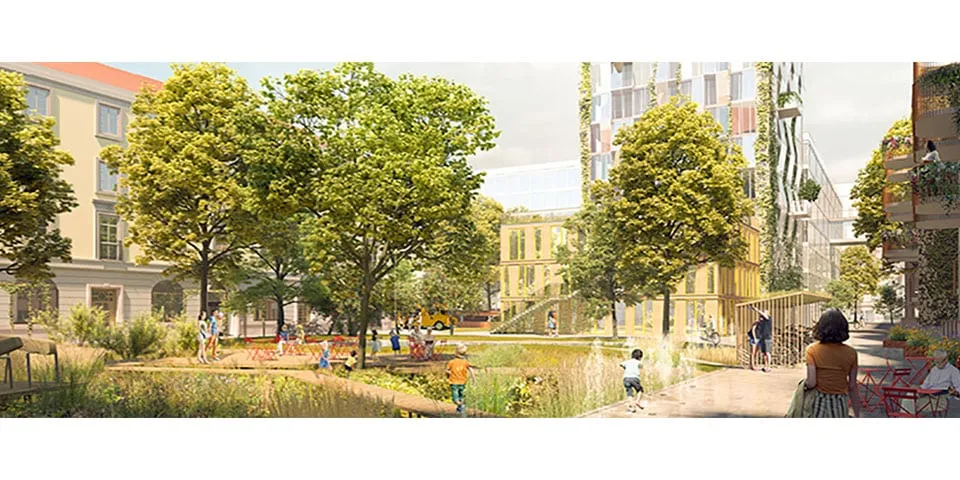
A new report by Sweco shows how cities can increase the population of a settlement by 100%, the number of jobs by 100% and green space by 100%, while also improving liveability and climate resilience.
At a time when social distancing is the norm, discussing densification is a real challenge. Although the link between urban density and the spread of Covid-19 has yet to be established, cities and towns must address the current and future threats of pandemics just as urgently as the threats posed by extreme weather events such as heatwaves, drought and heavy rainfall.
Half the world’s population lives in cities today. The UN predicts that by 2050, as many as two-thirds of the world’s population will live in a city. This rapid urbanisation presents us with new challenges, but also offers opportunities.
A new study by Sweco, combining leading research and experience from around the world, shows that sustainable, smart development supported by targeted climate measures can solve an apparently impossible equation: a 100% increase in population, a 100% increase in jobs and a 100% increase in green space, all in a climate-resilient and liveable environment.
“If approached in the right way, densification can improve climate resilience and liveability while supporting a range of enriching human experiences,” says Sara Tärk, landscape architect at Sweco. Tärk is particularly focused on ensuring the quality and quantity of green infrastructure in urban areas.
According to the study, the need for private space per resident and the total space per employee can be reduced by 20% through better access to shared spaces, more flexible layouts, improved technology, teleworking and shared mobility. Public spaces such as city parks are more in demand than ever during Covid-19. These surroundings can be expanded by redesigning them to minimise the space taken up by cars and parking.
Well-designed use of space would improve overall liveability, as measured by the effective accessible space per resident. Cities with flexible design and strong communities recover much better from extreme events than cities with a more traditionally structured social environment.
Neighbourhoods of Tomorrow: Designing for climate resilience in dense urban areas is the second in a series of Urban Insight reports by Sweco on the theme of “Climate action”. In the report, our experts highlight the specific data, facts and scientific evidence needed to plan and design safe, resilient urban environments for the future.
Een zakelijke vraag aan Sweco Belgium? Get in touch
Companies in this story

Keep following this
Get an email when a new story is published. No account needed.
- SubjectGeneral
- CompanySweco Belgium







