











Plywood is five layers thick
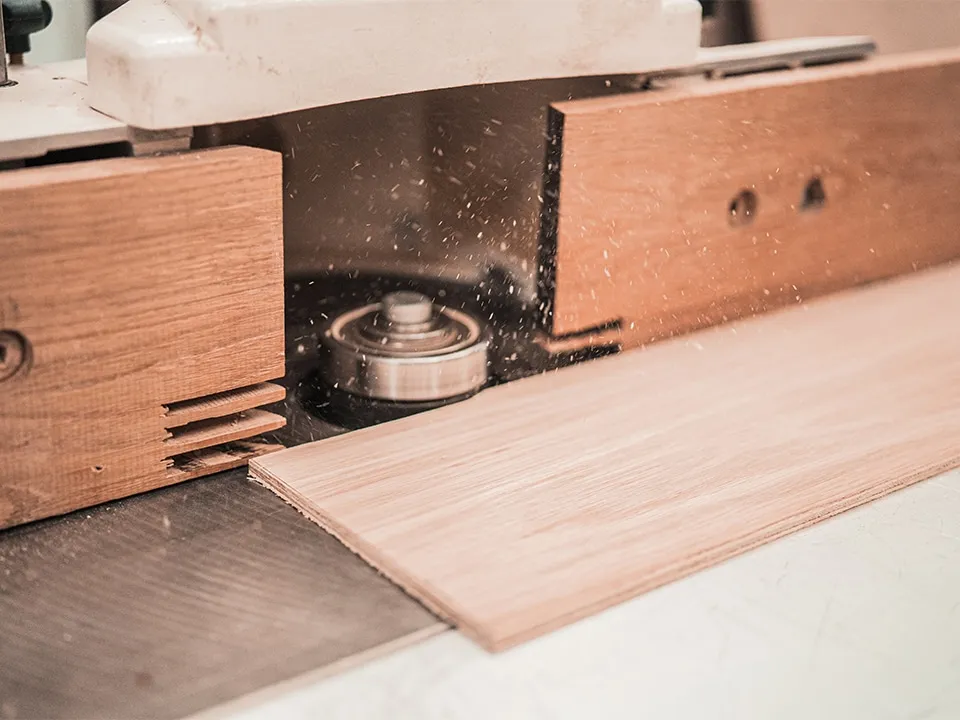
Plywood is a panel material made up of at least five bonded layers of wood. These multiple layers make it not only strong, but also attractive in appearance. It is therefore no surprise that plywood is widely used to make furniture.
Wood types
Because plywood has the appearance of wood, many bookcases, cupboards and other pieces of furniture are made from it. Commonly used wood species include birch, poplar and okoumé. There is also the more expensive hardwood plywood. Each wood species has its own appearance and properties. Hardwood is also suitable for damp rooms, for example for making bathroom furniture.
Water- and moisture-resistant
Even so, it is advisable to make plywood water-repellent when using it in damp rooms. WBP plywood is available, meaning that the adhesive used will not come unstuck in damp conditions. However, the wood itself still needs protecting. A transparent wood preservative is best. Unlike paint or stain, it does not form a coating, but soaks into the wood to make it water-repellent.
An alternative: three-ply
For indoor use, there are other wood-based panels comparable to plywood. Three-ply looks very similar to plywood, but is thinner because it consists of just three layers of wood. It is therefore not as strong or stiff as plywood, but is ideal for furniture and wall finishes. As with plywood, the layers are always odd in number to prevent warping.
Quality indicated by grading
There are different quality grades, based on the outer veneer layers. If these are flawless, the panel is given an A grade, the highest classification. Grade B means good quality, but with knots, while BB indicates a reasonable grade. The top and bottom veneer layers may differ in quality. This is indicated, for example, by A/BB: the visible face is flawless and the reverse is of reasonable quality.
Question about this story? Ask your question
Keep following this
Get an email when a new story is published. No account needed.
- SubjectGeneral







