











Precision dewatering for prestigious residential development
Tekst Tim JanssensBeeld G. Smeyers
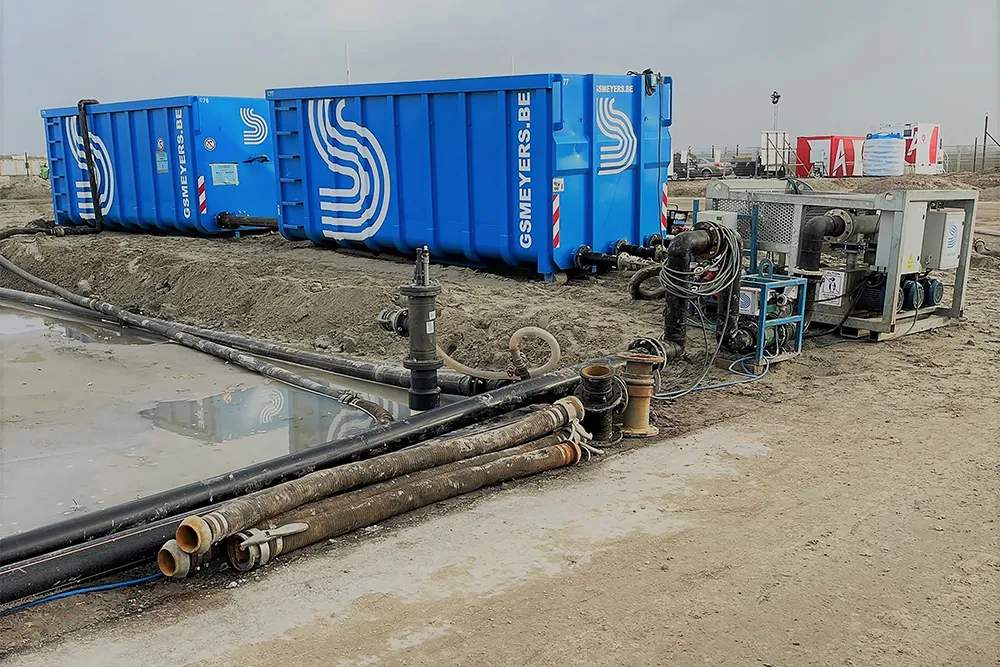
Work has recently begun on De Zoute Schorre in Knokke-Heist, a new residential development comprising fourteen homes, underground car parks and a low-traffic public realm. One of the first steps in the construction process was groundwater dewatering, which proved complex and challenging from the outset due to the specific nature of the soil. It was a task tailor-made for specialist G. Smeyers, which used a combination of techniques to keep the sizeable excavation dry and will continue to monitor the situation closely for some time to prevent disruption during the works.
Living in the historic heart of Knokke, in a green setting and just a stone’s throw from the centre and the sea: it sounds like a dream. For fourteen families, this will soon become a reality, as De Haan Construct is developing De Zoute Schorre, a high-quality residential project with homes averaging 320 m² and each with three underground parking spaces. The design is by Piet Bailyu, a true Knokke local who knows the ‘library of architectural styles’ that characterises the local architecture. The design philosophy behind De Zoute Schorre is to give authentic elements a modern touch, allowing the residential development to blend seamlessly into its distinctive surroundings while still standing out in a subtle way. The homes therefore bring to mind traditional coastal village villas, but with more glass and natural light. It is no surprise that no detail has been left to chance, from the high-end materials and sophisticated building services to the low-traffic landscaping, complete with plenty of greenery, winding paths and an intriguing range of views.
Vertical wellpoints and deep wells
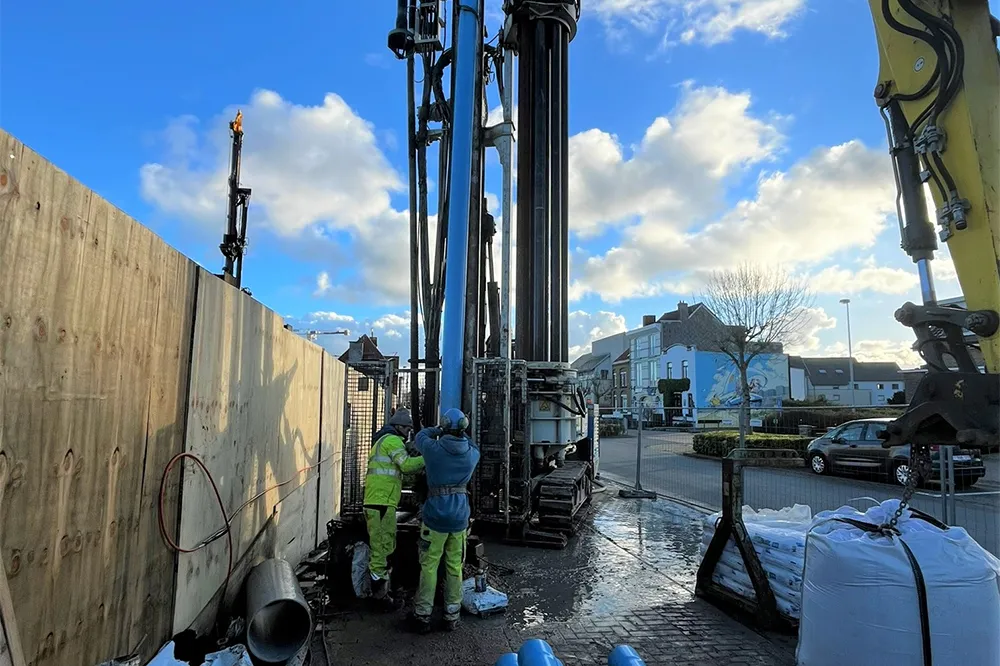
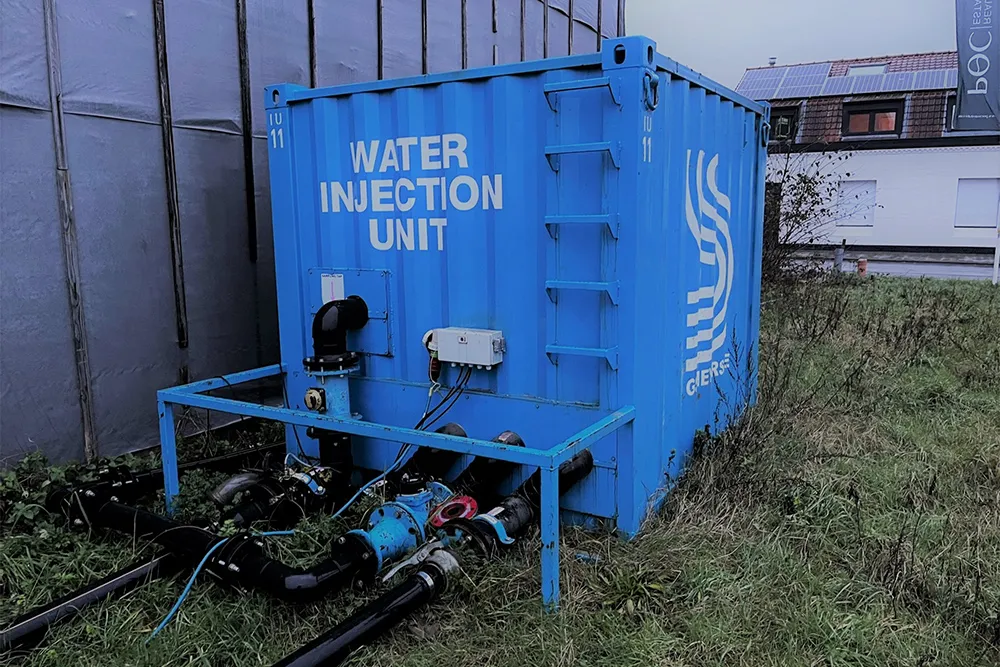
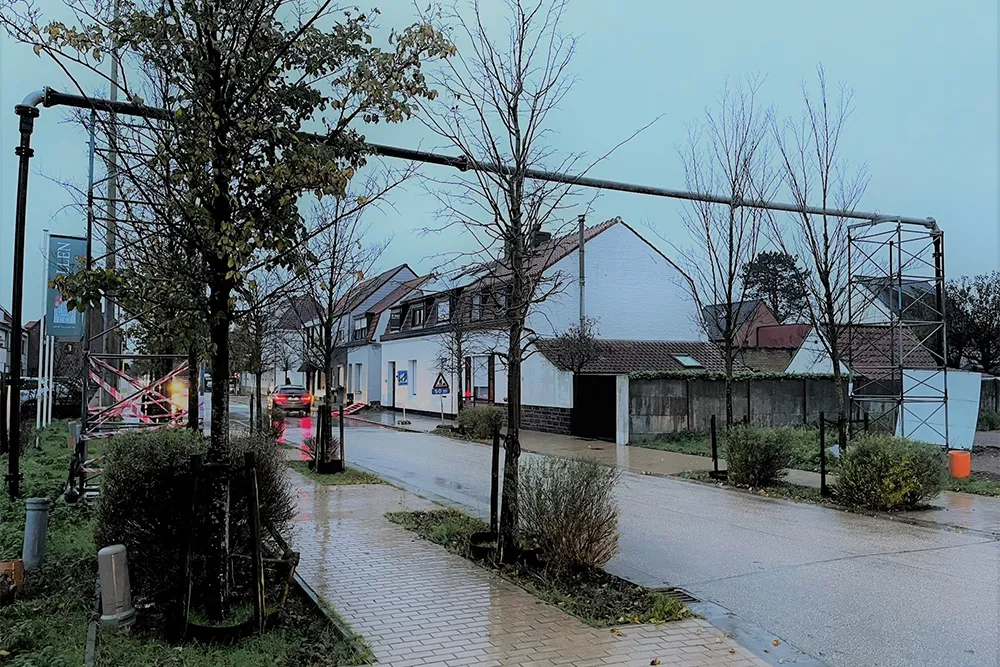
Getting the works under way proved to be a challenge, both literally and figuratively. Given the heterogeneous composition of the subsoil, G. Smeyers used two types of dewatering on behalf of main contractor DSV Crop. “As the clay layer is quite high in some places, we divided the excavation into two zones. In one zone, the clay layer is 7 metres below ground level, so we were able to use vertical wellpoints. In the other zone, the clay layer is much shallower, so we also had to use pressure relief dewatering with deep wells,” explains site manager Xandres Maes. “We inject the salt water pumped up through the deep wells further along into the same soil layer (recharge dewatering). The water from the wellpoint dewatering is discharged into two swales some distance from the site, using an additional pumping station. To avoid obstructing traffic on the two roads in between, we erected a structure specifically for this purpose, enabling us to run the discharge pipes overhead.”
Complex, challenging and fascinating
For G. Smeyers, De Zoute Schorre is what is known as a ‘critical site’. In other words, if the dewatering does not work as it should, things can quickly go wrong. “So we need to monitor everything very closely. The monitoring wells that measure water pressure are complemented by a vacuum sensor on each wellpoint line, allowing us to respond quickly if any problems arise,” says Xandres Maes. “Everything is going well so far and we have not received any alarms, but we will continue to monitor the situation closely. The sewer pipes are currently being laid underground and the ground slab will be poured shortly, so we will remain involved in the works for some time yet. Projects such as De Zoute Schorre involve a great many different processes, which makes them not only complex and challenging, but certainly fascinating too. That’s just how we like it!”
Een zakelijke vraag aan G. Smeyers N.V? Neem contact op
Bedrijven in dit verhaal

Blijf dit volgen
Bij een nieuw verhaal krijg je een e-mail. Geen account nodig.
- OnderwerpGeneral
- BedrijfG. Smeyers N.V







