











Renovation target for 2050: €162 billion needed
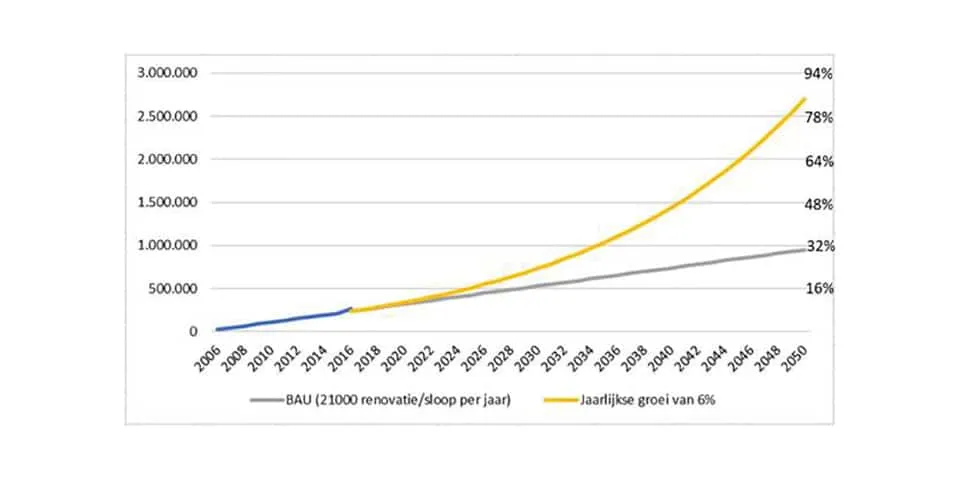
To meet the climate targets by 2050, around 2.7 million homes in Flanders will need major renovation, including 500,000 occupied by vulnerable groups, according to a SERV study. Turning these homes into genuinely energy-efficient properties requires much more than simply installing roof insulation or filling the cavity walls. In many cases, the entire building will need work: the façade, roof, floor, windows and heating systems.
Older flats, an almost impossible task
Current renovation rate: only a third of the target achieved
If the current renovation rate of around 16,000 approved renovations a year continues, only a third of the housing stock will be energy-efficient by 2050. At present, there is not enough success in mobilising households to invest in their homes. This problem is even more pronounced in apartment buildings. Flat owners can be held responsible for renovating individual units, but major problems arise when it comes to renovating the communal areas. Appropriate legislation and financing are needed to speed up the renovation of buildings under collective ownership.
Partnerships are needed
The cost of meeting the renovation target runs to many billions and cannot be borne by the government alone. According to SERV, the average renovation cost could reach €60,000 per home, or €162 billion to renovate all homes. By comparison, the Flemish government currently spends €47.5 billion a year across all policy areas. The government, households, banks and the construction sector must work together to accelerate the pace of renovation.
After a major renovation, a home will use less energy and its sale value will rise. A study by Wienerberger, for example, estimates that a façade renovation increases a home's value by 20% on top of the investment cost. The government must place greater emphasis on these benefits of renovation: providing buyers with sufficient information about the costs and benefits, encouraging renovation loans and making use of green housing taxation. A lending policy that takes sufficient account of a home's energy efficiency and ability to retain its value will also help create a healthier credit system.
Natural opportunities to renovate
The transfer or construction of a home is an ideal opportunity to encourage additional renovation. In 2017, around 80,000 homes were sold in Flanders. Those about to buy or build a home still have the opportunity to increase their budget for energy efficiency. Households can be brought on board before purchase to help meet the renovation targets. After purchase, budgets are fixed and making an additional investment in energy efficiency becomes much more difficult financially. The Flemish Climate Plan proposes making renovation compulsory after purchase, which will certainly be a powerful tool. To make this tool even more effective, legislation, financing and taxation must also be adjusted accordingly, so that the step taken when buying or building is as substantial as possible. Those who choose to build a new home already meet the climate targets. In fact, new-build standards are already stricter than the standards set for existing homes in 2050.
Current renovation rate (grey) and target renovation rate (yellow)
Number of homes in Flanders on the left, proportion of homes on the right, total number of homes in Flanders: 3.2 million
Question about this story? Ask your question
Companies in this story
Keep following this
Get an email when a new story is published. No account needed.
- SubjectGeneral
- CompanyWienerberger nv







