











Repurposing projects across Flanders, often saved from demolition, open their doors to the general public
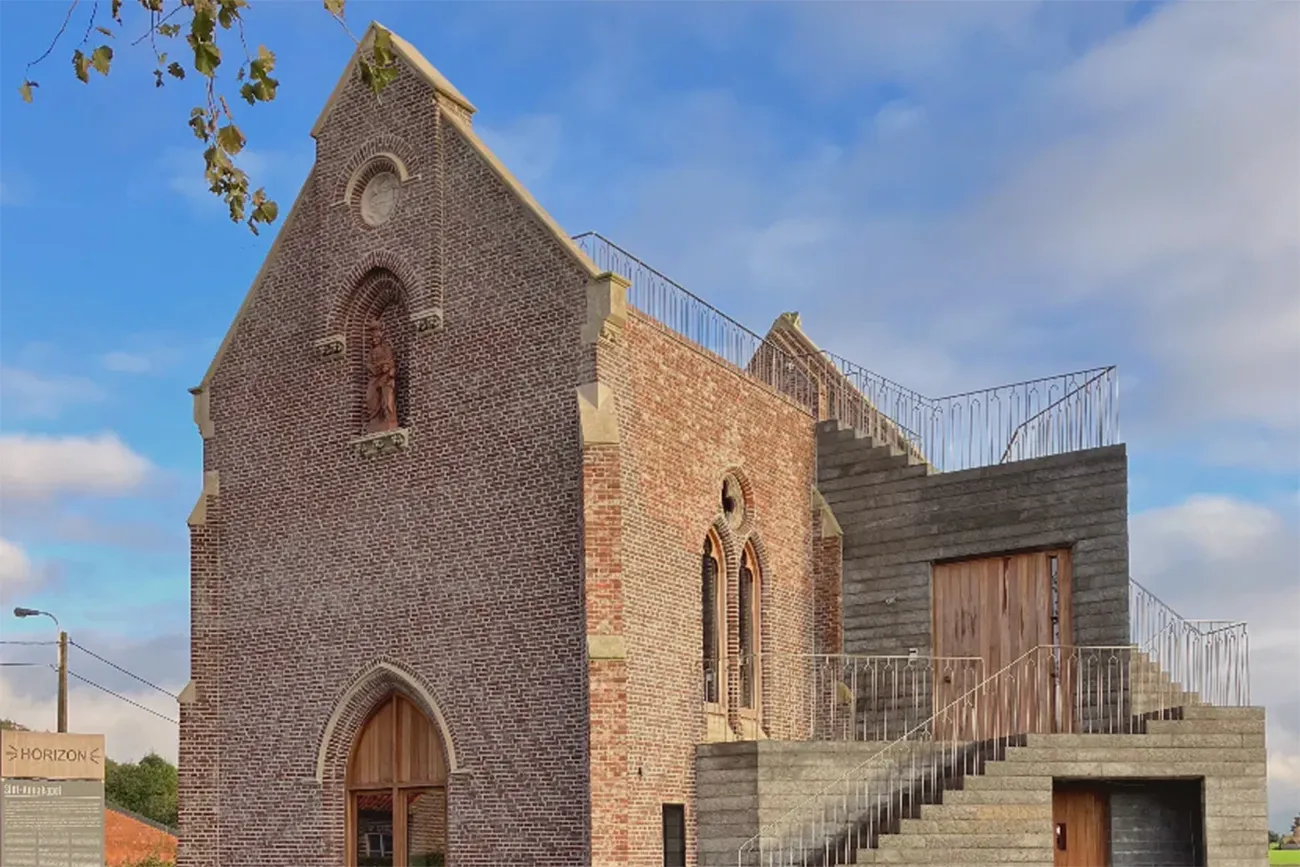
A church that was not demolished, but transformed into a fairytale event venue. A courthouse that was not razed to the ground, but given a new lease of life as a health centre. Or a monastery, railway station or military barracks saved from demolition and still awaiting smart ideas for a new purpose. On Sunday 12 May, dozens of repurposed buildings across Flanders will open their doors to the general public. “Repurposing Day” is set to become the proverbial counterpart to New-build Sunday, and already looks set to be a success. “Thousands of buildings across Flanders can and must still be repurposed. People simply need to get to know these often-hidden gems better, and then they will see for themselves just how much added value they offer,” say the organisers.
When it comes to churches alone, around 350 buildings in Flanders are currently being assessed for repurposing. We are seeing a similar trend with the many vacant office buildings: two-thirds of these commercial properties in Brussels have recently been, or will soon be, converted into homes. In other words, repurposing is gradually becoming a hot topic.
Yet it is still far from well known enough. And that is precisely what Repurposing Day aims to address. “It is also urgently needed,” say Pieter Verfaillie and Ruben Willaert, the two organisers launching the first edition. Both are respected specialists in repurposing, with backgrounds in architecture and heritage expertise. Over the past two years, they sounded out the wider sector to find out whether repurposing projects deserved more attention. The decision was reportedly made very quickly, not least because of the tremendous enthusiasm from the sector.
The first edition of Repurposing Day takes place on Sunday 12 May and already features more than 25 projects across Flanders.
“There is an urgent need to bring society, the economy and the environment back into balance. We will not achieve that by continuing to repeat what we have done over the past decades. A shift in the way we think and act is under way, and ‘repurposing’ seems to be the common thread that can bring everything together on the path to a more sustainable future,” says Pieter Verfaillie. “People need to know that our region is already home to thousands of projects that may no longer serve a useful purpose today, but still evoke a certain emotion or have heritage value, and therefore should not be razed to the ground at any cost. What is more, experts are keen to hear local residents’ views on what they would like to see from projects being repurposed.”
Don’t demolish in order to do better
Repurposing Day can certainly be seen as the counterpart to New-build Sunday, the organisers say. This year, the focus is mainly on property projects. Next year, it will also extend to other sectors, such as the textile and IT industries, where repurposing and circularity are also attracting growing interest.
“When it comes to property, we still tend to demolish entire buildings generation after generation because we think we can do better today. Buildings increasingly have to meet a whole raft of regulations, and bringing existing buildings up to standard all too often seems like an impossible task. But of course, that is not always the case,” says Ruben Willaert. “Repurposing often comes with plenty of obstacles, such as regulatory restrictions, lengthy procedures or budgetary uncertainty. But we must not lose sight of the fact that the days of constantly encroaching on new open space are over.”
From nuns to the iconic National Bank
Repurposing Day aims above all to inspire people and foster engagement. According to the organisers, many ideas for new uses often come from local residents. It is no coincidence, then, that the new initiative has attracted widespread support, from investment companies, architects and public authorities to church councils, monastic orders and co-housing groups, all of whom are throwing open their doors.
“In every neighbourhood, you will find repurposing projects that are already under way or waiting to get started. People just don’t always notice them. We want to change that by identifying them and drawing attention to them all in one place. Again and again, year after year. We are starting here in Flanders and dream of expanding into other countries, because it is needed.”
One of the main attractions on 12 May will be the Mariadal monastery site in Hoegaarden, Flemish Brabant. This walled site has a rich history dating back to 1450, and a repurposing process is being developed in collaboration with the last remaining nuns. On Repurposing Day, the doors of this impressive project will open for the first time.
Another remarkable building is an iconic structure dating from 1981 on Goossensvest in Tienen, with its striking serrated roofline. It served for many years as a justice of the peace court, but is now being given a new purpose as a neighbourhood health centre, providing primary care under the motto “Right to Care”.
And then, the pièce de résistance: the National Bank in Antwerp, one of the most monumental buildings in Flanders, is throwing open its doors. The site, which is rarely open to the public, is being repurposed as a stunning office space. Another highlight of Repurposing Day is De Waterhond, a 16th century chapel in Sint-Truiden that has also been converted into an unconventional office space.
Below are some prominent projects in the various Flemish provinces. You can also find more information about the different regional projects opening their doors at www.herbestemmingsdag.be.
Question about this story? Ask your question
Keep following this
Get an email when a new story is published. No account needed.
- SubjectGeneral







