











Scores of craftsmen restore Hoogstraten’s ‘Lange Katrien’ to its former glory
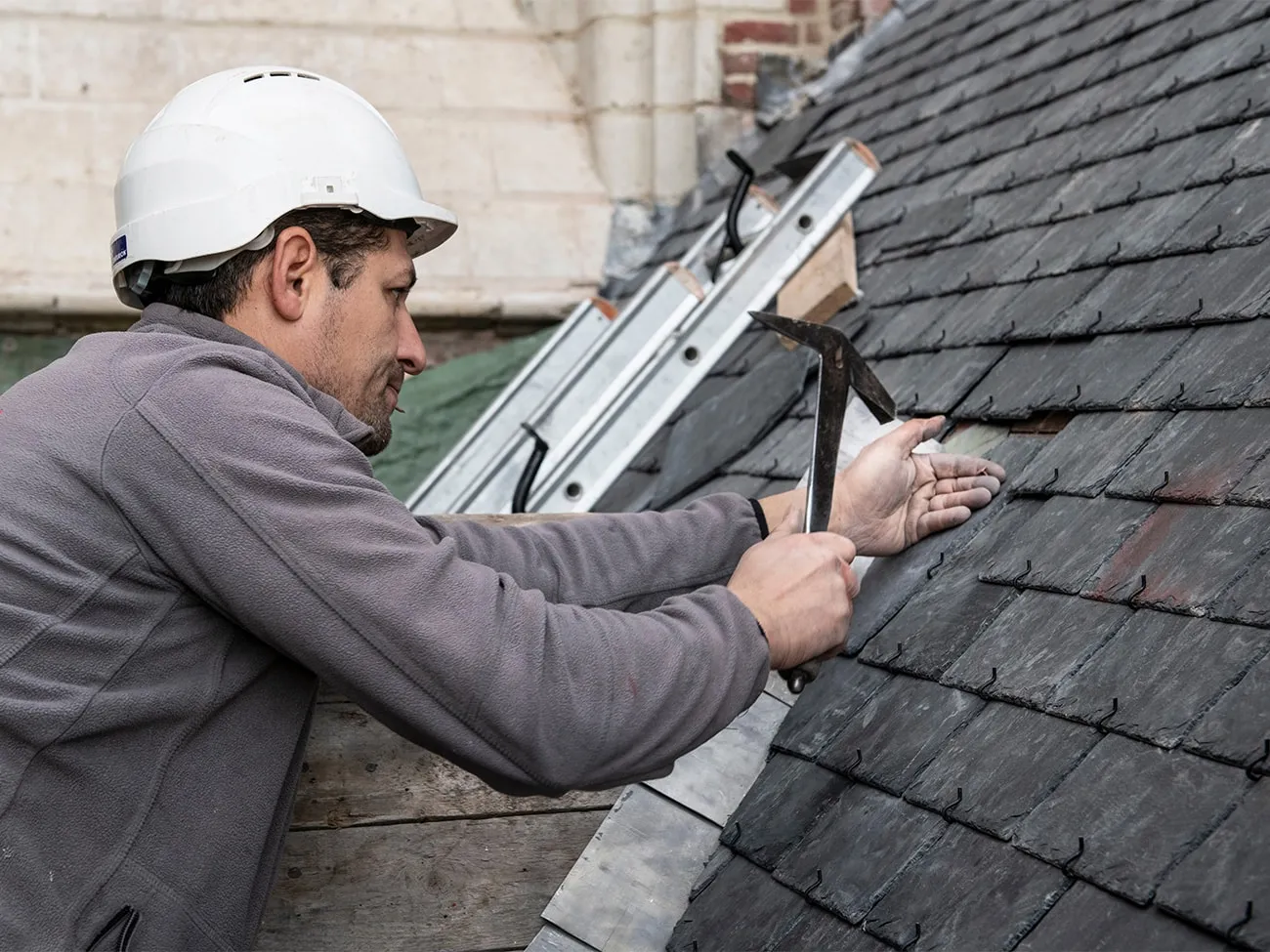
Renotec’s craftsmen are once again working on an architectural gem. They are renovating the entire exterior of St Catherine’s Church in Hoogstraten, popularly known as ‘Lange Katrien’. Junior project manager Margot Santy: “We clean, inspect and repair the façades, roofs, attics and stained-glass windows. It’s a typical Renotec project: unique heritage, complex restoration work and lots of different teams working together. That’s what we love doing.”
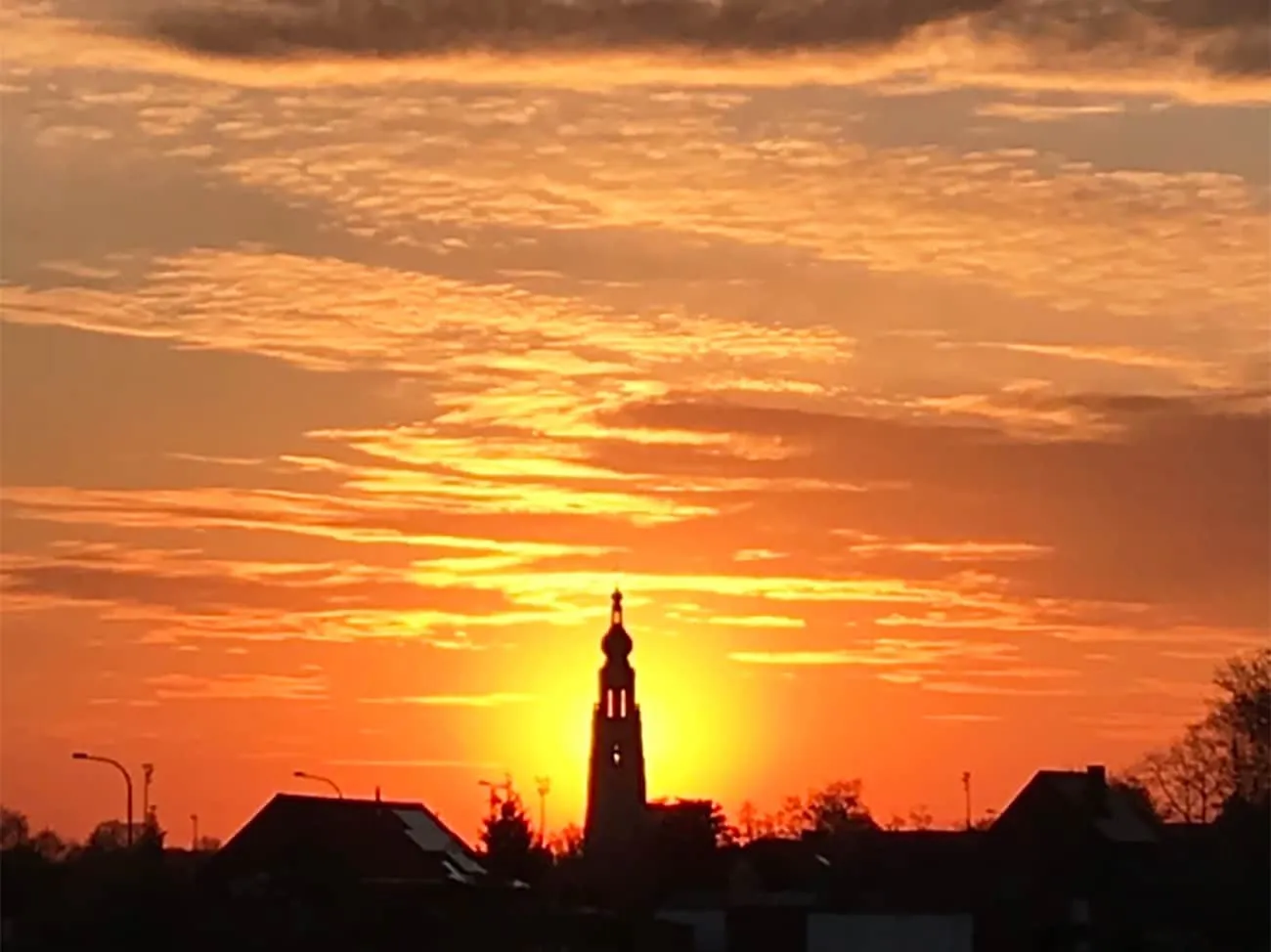
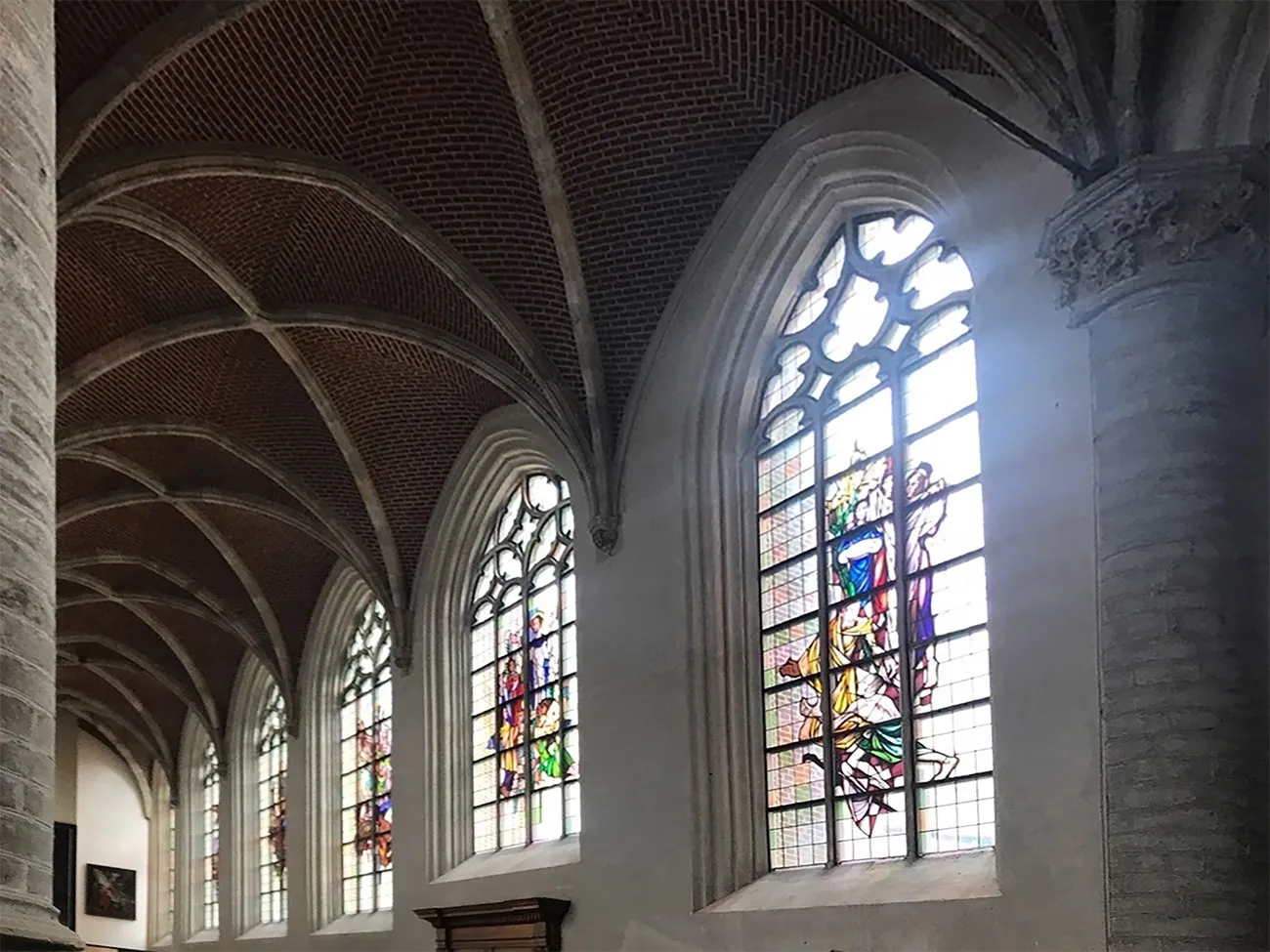
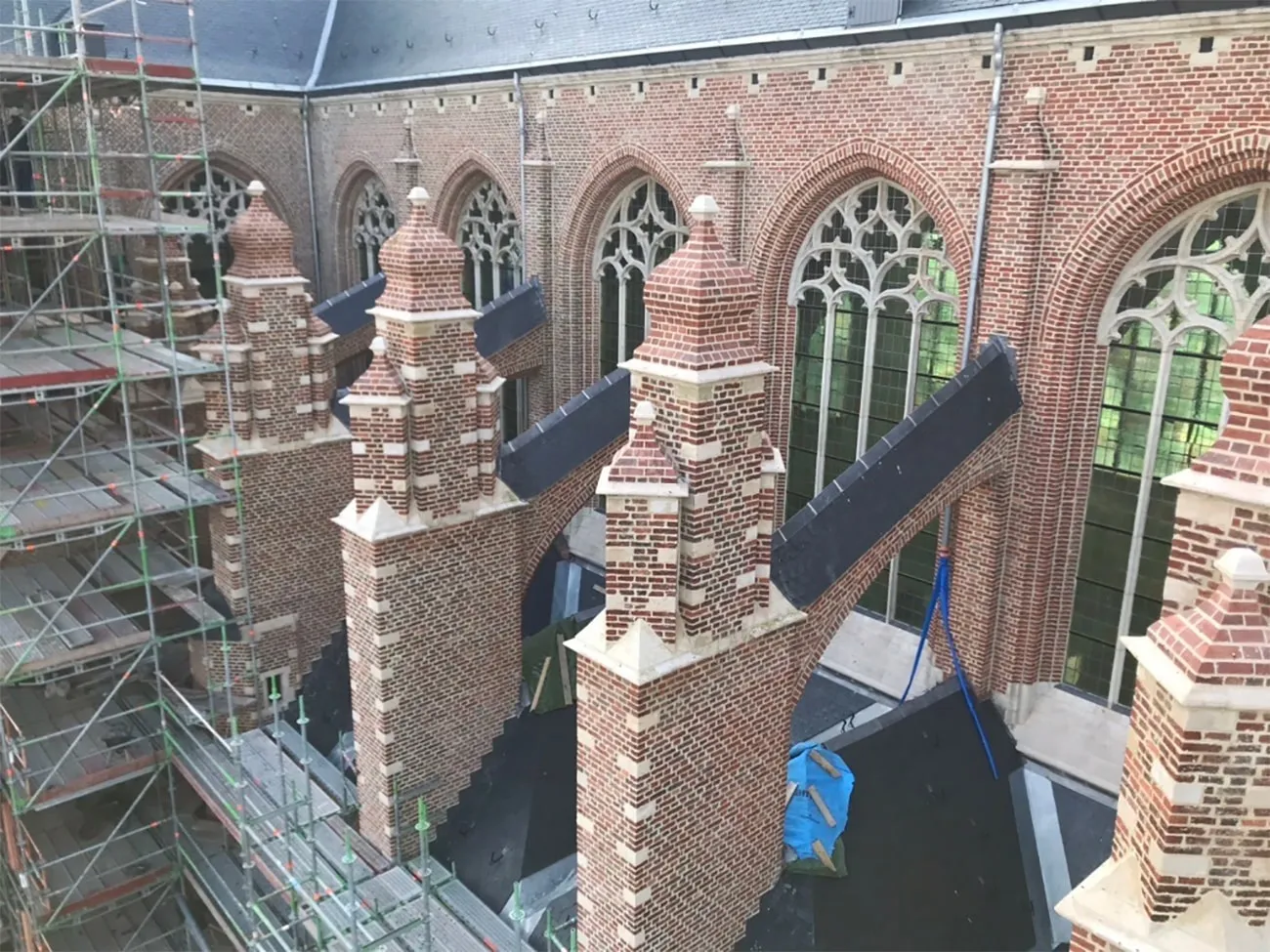
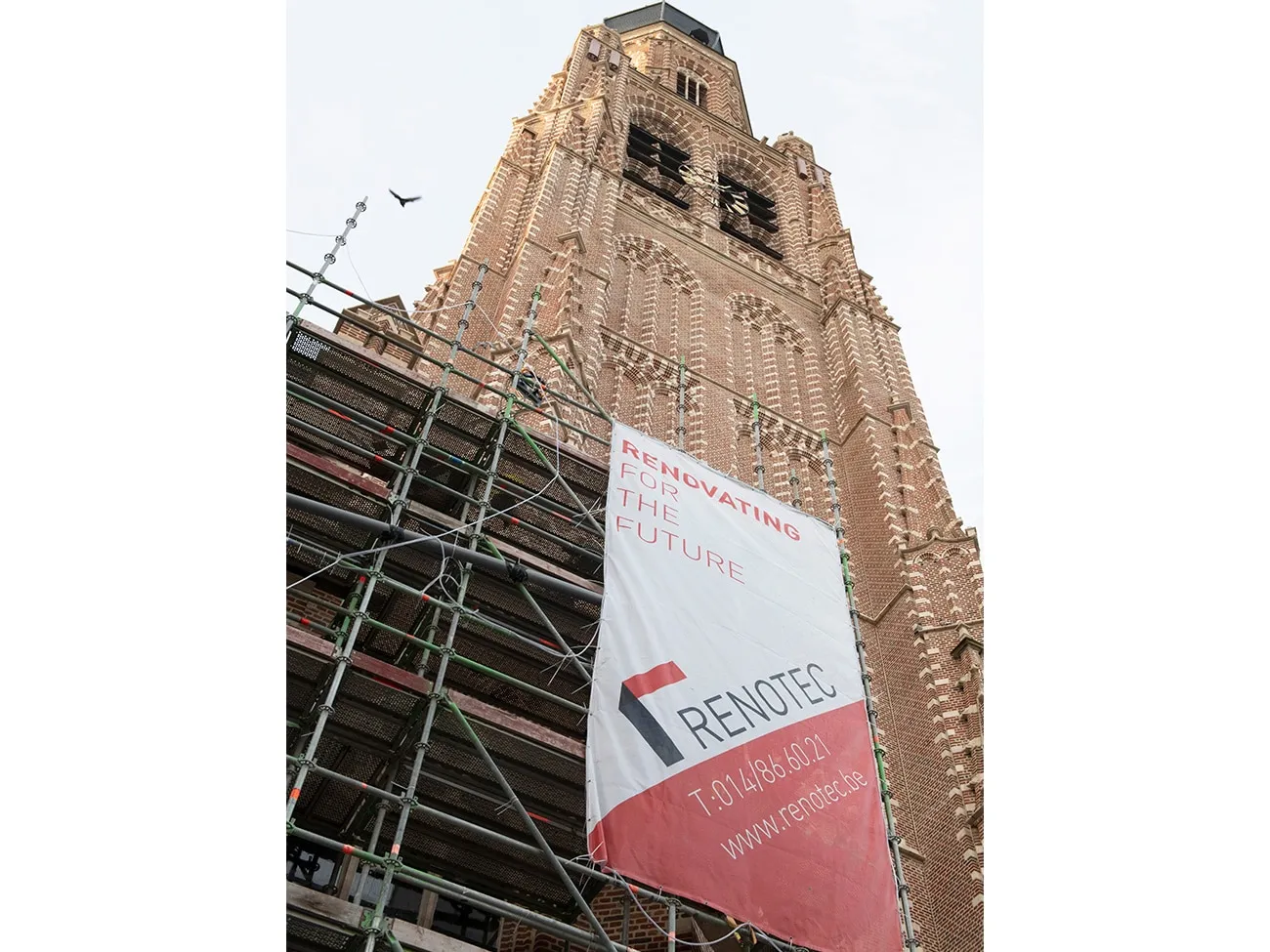
At 104.7 metres tall, the late Gothic St Catherine’s Church in Hoogstraten is the third-tallest church building in Belgium and one of the tallest brick buildings in the world. The church was built in the sixteenth century. Rombout Keldermans, one of the architects of Antwerp Cathedral, drew up the plans. What are the exterior’s eye-catching features? The local Campine brickwork, interspersed with sandstone bands, fifteen sixteenth-century stained-glass windows and the Gothic turrets. Brick by brick and pane by pane, Renotec is giving Lange Katrien a new look while preserving its authenticity.
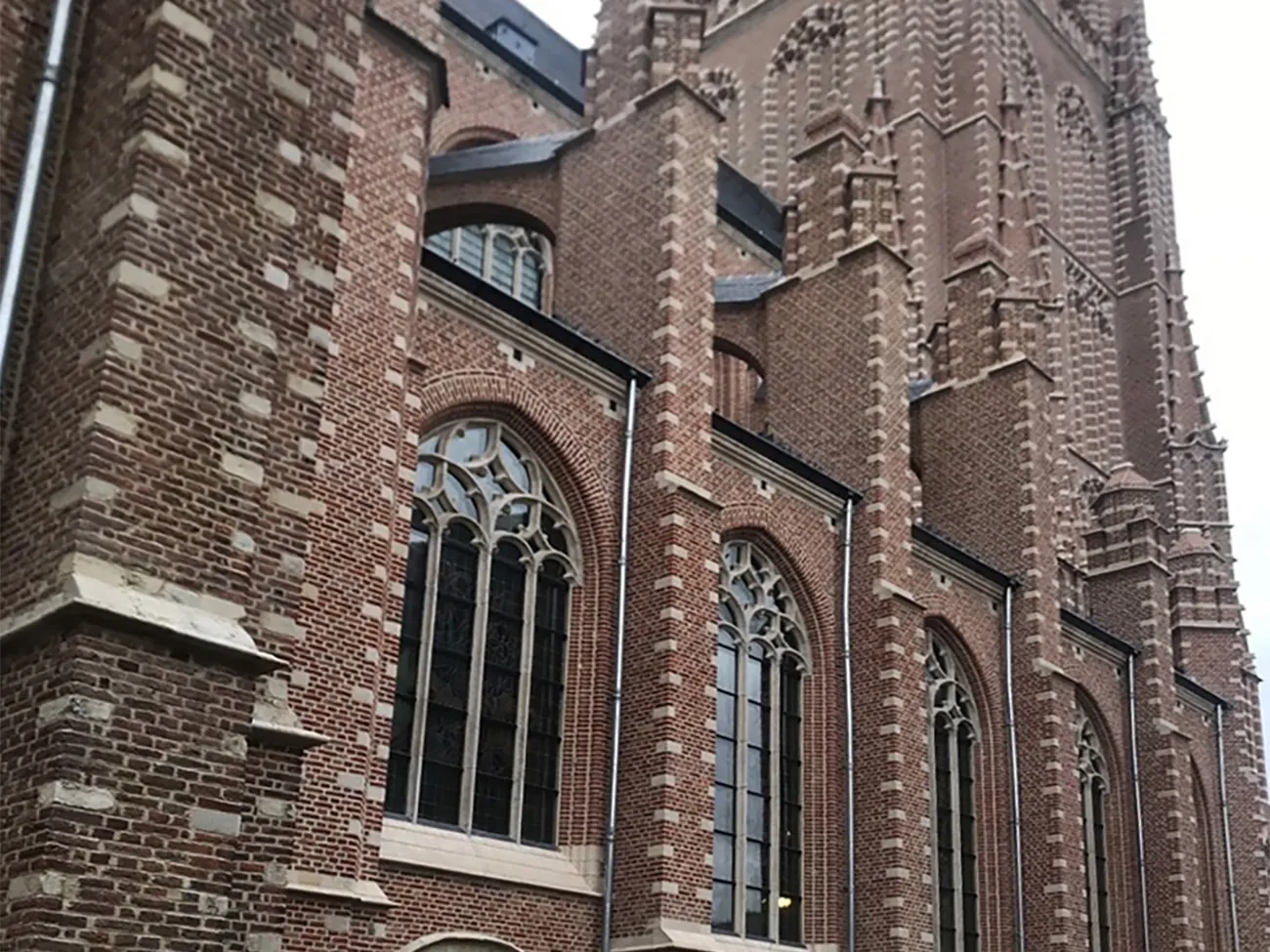
Restoration of roofs, walls and windows
Margot Santy: “From March 2020 until the summer of 2021, we renovated the entire north side of the exterior. Now it’s the turn of the south side. We’re replacing all the slates and inspecting and repairing the roof boarding. Where necessary, we’re also repairing the concrete roof structure and replacing all the lead and zinc work. The façade is being given a thorough clean, and all the masonry is being repaired and strengthened. To check the condition of the natural stone, we used ultrasonic testing, among other methods. We took drone images to map the data for each individual block.”
Pointing with an original ruled line
A specialist team is working on the pointing. Much of it is no longer original. German troops dynamited the church tower in 1944, when the Allies crossed the Dessel-Turnhout-Schoten Canal and drove the Germans into retreat. When it fell, the tower destroyed a large part of the church nave. All the pointing is now being replaced. The surviving sections of the church’s original construction are being pointed with a ruled line, a horizontal mark. This was an aesthetic masonry technique used until the seventeenth century. The sections rebuilt later do not have this line. The 1944 explosion also destroyed part of the original timber roof structure. These sections were replaced with concrete roof trusses, which are also being restored.
Small works of façade art
Margot Santy: “The stained-glass windows are one of the most demanding, but incredibly fascinating, parts of the work. We bring all the windows to our workshop in Geel, where they are studied and restored in detail. Protective secondary glazing is being fitted to protect them. My personal favourites are the pinnacles: the cone-shaped decorative turrets at the ends of the buttresses. Each one is a small work of art. The turrets are dismantled and rebuilt using specially made bricks.”
The eyes and ears on site
Margot Santy: “As junior project manager, I’m responsible for coordinating the site. Lots of teams are involved in the renovation of St Catherine’s Church: our roofers, bricklayers, structural repair specialists, glazing specialists, brickmakers, pointing specialists, concrete restorers and so on. I make sure the right person is in the right place at the right time and that all the work is carried out safely.”
Margot Santy graduated with a master’s degree in interior architecture in 2018. She joined Renotec as an assistant project manager straight after her studies and has since progressed to junior project manager. Her career shows how Renotec is committed to bringing young people into the construction industry. From day one, young project managers follow an intensive in-house training programme. They also start work on site straight away to gain practical experience, with support from a project manager and foremen who have many more miles on the clock. Margot Santy: “It’s a pleasure to be on site every day. It’s a wonderful, varied project, and everyone works well together. That really makes things spark.”
TECHNICAL DETAILS
Client
Church fabric of St Catherine (Hoogstraten)
Architect
CONIX RDBM Architects (Antwerp, Brussels)
Main contractor(s)
Renotec (Geel)
Question about this story? Ask your question
Who worked on it
Sint-Katharinakerk in Hoogstraten
- clientKerkfabriek van Sint-Katharina (Hoogstraten)
- architectCONIX RDBM Architects (Antwerpen, Brussel)
- main contractorRenotec (Geel)
Keep following this
Get an email when a new story is published. No account needed.
- ProjectSint-Katharinakerk
- SubjectGeneral
- CompanyKerkfabriek van Sint-Katharina (Hoogstraten)
- CompanyCONIX RDBM Architects (Antwerpen, Brussel)
- CompanyRenotec (Geel)







