











Smarter management of public buildings starts with asking which buildings we really need
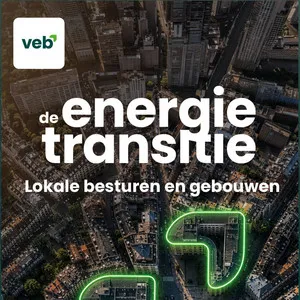
Local authorities face a major challenge in making their building stock carbon-neutral. But is it feasible to renovate every building individually? In a podcast by the Flemish Energy Company (veb), representatives from the City of Mechelen and the Municipality of Pelt explain why taking a strategic view of the entire building stock delivers more than a collection of renovation projects.
Cities and municipalities often manage dozens or even hundreds of buildings. Renovating all of them to improve their energy performance requires huge investment, while budgets remain limited. According to veb, the solution starts with asking a different question: which buildings will an organisation actually need in the future?
Presenter Bavo Boutsen discusses the challenge with Annelies Van De Vijver, Head of Property Management at the City of Mechelen, Julie Mutsaers, Buildings Specialist at the Municipality of Pelt, and Steven Van Esser, transition adviser at veb.
Less space, more possibilities
A key concept is sufficiency: not only making buildings more energy-efficient, but also assessing how much space is really needed. By combining functions and sharing spaces, local authorities can make much more efficient use of their building stock.
Veb distinguishes between so-called DNA buildings, which are a perfect match for an organisation’s identity and operations, and buildings that play a less central role. For the latter, repurposing, changing the use or selling them may be more attractive options than a conventional renovation.


Examples from Pelt and Mechelen
The merger of Neerpelt and Overpelt opened up opportunities to use existing buildings differently. The former Neerpelt town hall now serves several public functions, including as a library and Huis van het Kind. The community school in Herent also shows how schools, childcare and youth organisations can share spaces.
Mechelen, with a building stock of around 120 properties, combines energy audits and data from the Terra platform
(the Flemish government’s building stock and energy database) with budgets and policy objectives to prioritise investment. The city is also focusing on flexible property. For example, the car park at Keerdok was designed so that it could later be used as office space.
Building support makes the difference
A property strategy is more than a technical exercise. Buildings also have social and emotional significance. That is why policymakers, technical departments and users need to be involved in decision-making.
The key lesson? Accelerating the energy transition does not necessarily start with more renovation projects, but with better decisions about which buildings have a future and how they can be used to their full potential.
Listen to the podcast
Find out how local authorities are sustainably renovating their buildings for 2050. In the first episode of veb’s podcast series De Energietransitie, the guests discuss how local authorities can future-proof their building stock.
🎧 Listen to episode 1 on Spotify : Local authorities and buildings
Een zakelijke vraag aan Vlaams Energiebedrijf? Get in touch
Companies in this story
Keep following this
Get an email when a new story is published. No account needed.
- SubjectGeneral
- CompanyVlaams Energiebedrijf







