











Soil remediation as a catalyst for economic development
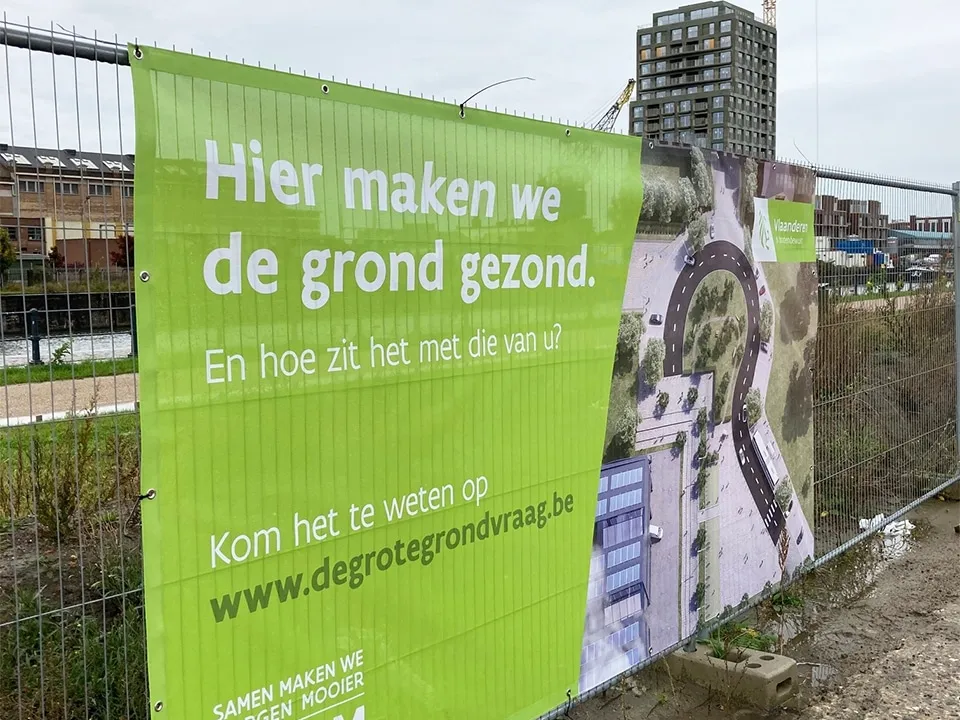
Flanders aims to have its soil in top condition by 2036. To achieve this, all risk sites, meaning potentially contaminated land, large and small, must be mapped by 2028.
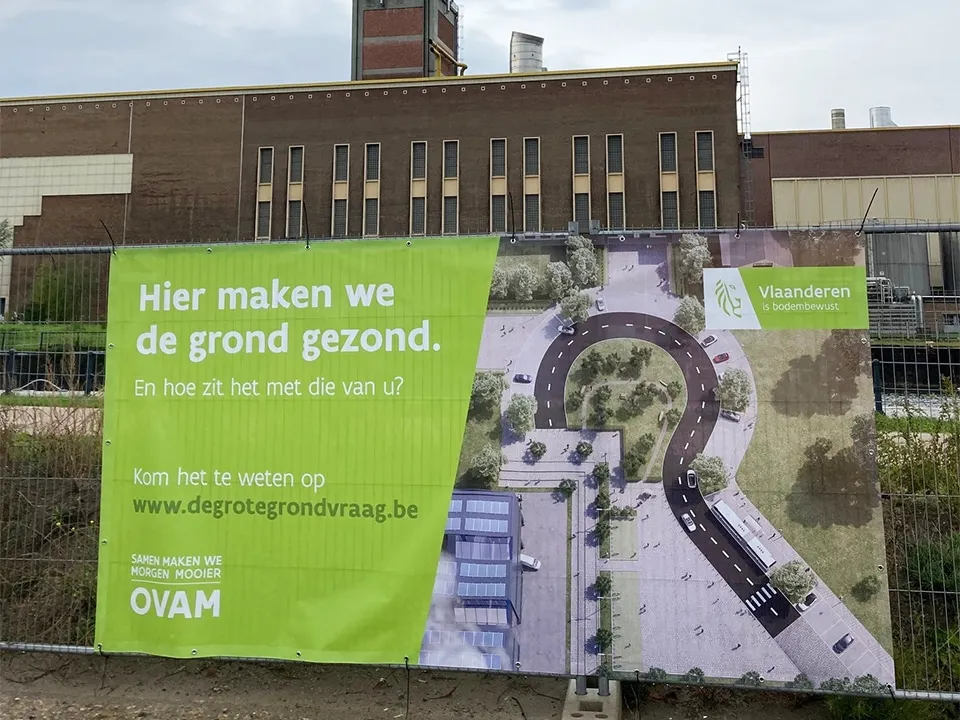
Last year, OVAM launched De Grote Grondvraag, an initiative to raise awareness of this issue among all landowners in Flanders and help them check their land and remediate it where necessary. But the organisation is also taking action itself. Over the past year, it carried out dozens of ex officio remediation projects at contaminated sites, with a total budget of 32.4 million euros. One notable example is the CAT-site, the former Renault Vilvoorde premises.
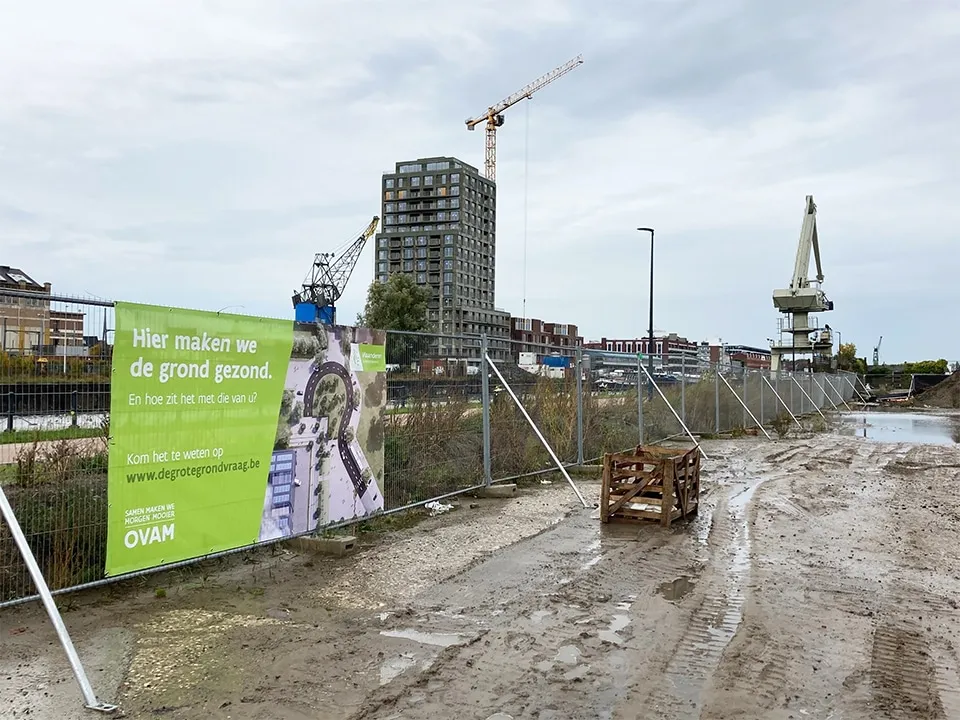
The large-scale ‘De Grote Grondvraag’ campaign hit its target last year. A total of 138,000 users have already registered to find out how healthy their soil is. So far, 177,000 plots have been checked through De Grote Grondvraag. This year, efforts are being stepped up further, as Flanders has particularly ambitious aims. OVAM spokesperson Jan Verheyen says: “By 2036, we want to make Flanders completely free of soil contamination. That is why, from 2021, we will begin carrying out exploratory soil investigations in phases. Once a city or municipality has joined, private individuals will be able to check their land. To date, 214 of Flanders’ 300 cities and municipalities are taking part. By the end of the year, we hope to have added most of the remainder and to encourage even more citizens and businesses to get involved.”
Benefits all round
Registration brings nothing but benefits for private individuals and schools. “If the contamination is historical and they had no part in it, they are exempt from the costs of the soil investigation and any remediation,” Jan Verheyen stresses. “If they ever want to sell their land, they will need a soil certificate in any case.
By joining De Grote Grondvraag, they will be fully informed about soil quality and will not face any surprises later on. 55% of all risk sites (85,000) have already been investigated. The soil investigations will show whether remediation is actually required. That is not a welcome message, but a strong Flanders is a healthy Flanders, and soil quality certainly contributes to that. That is why we do not want landowners to bear the costs either.”
Tackling larger-scale contamination
Financial support is also available for larger-scale contamination. Dry-cleaning facilities and car repair and bodywork businesses are typical examples of sites that may be affected by soil contamination. They can apply for support from dedicated sector funds. OVAM also carries out remediation projects ex officio. Jan Verheyen says: “There are still quite a number of blackfields and brownfields in Flanders with very serious soil contamination. Over the past year, Flanders invested 32.4 million euros in remediating contaminated soil and giving the sites a new purpose. It is a substantial sum, but an investment that pays for itself, because soil remediation often acts as a catalyst and driver for economic activity and renewal. It also helps ensure economic continuity during the coronavirus crisis.”
Renault Vilvoorde site
One of the best examples of the potential of such redevelopment projects is the CAT-site in Vilvoorde. Renault Vilvoorde’s industrial past has resulted in serious soil contamination, which has been undergoing remediation since 20 August, commissioned by OVAM and in collaboration with MG Real Estate. “There are two major source zones: one linked to a historical domestic waste landfill, and another of unknown origin with high benzene concentrations. By applying the latest techniques, an estimated 80% of the soil can be remediated on site and reused. Two other locations in the area will also need to be remediated in the near future. This will finally allow a centrally located area of 60 ha to shed its historical legacy and be made available once more for housing, work, recreation and green space. That is a welcome prospect when you consider how scarce space is in Flanders,” says Verheyen.
Een zakelijke vraag aan OVAM? Get in touch
Companies in this story
Keep following this
Get an email when a new story is published. No account needed.
- SubjectGeneral
- CompanyOVAM







