











Soudal tackles PU foam waste on site with CircuPUR
Text Marlies DecavelImage Soudal
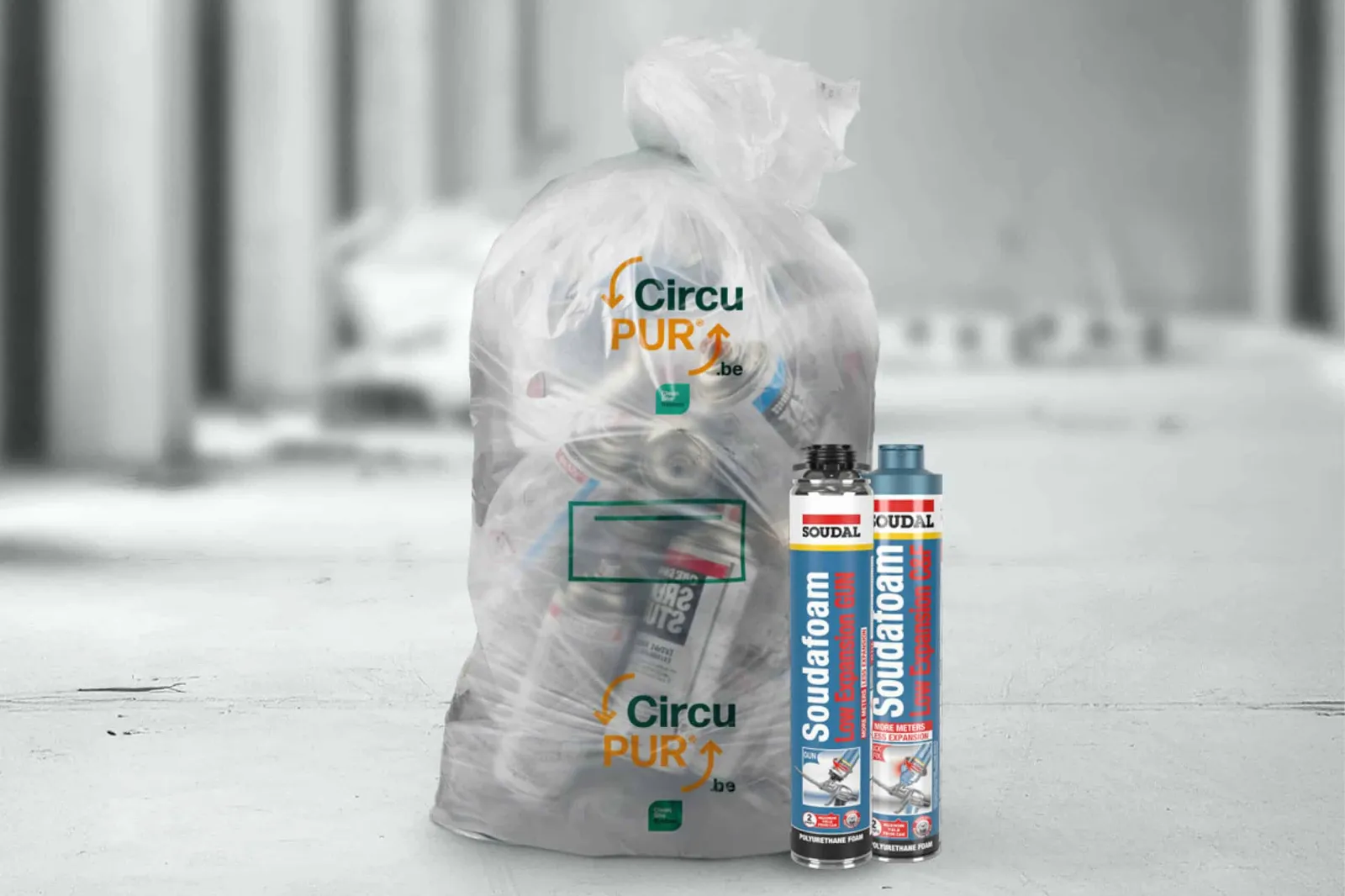
PU foam is used on almost every site every day for sealing, insulation and fixing. After use, the packaging is left behind, usually with some chemical residue still inside. What do you do with it? From 4 May, CircuPUR offers a simple, comprehensive answer. Collect it, hand it in and you’re done. It really can be that easy. A sector initiative that makes a difference on site and addresses what lies ahead.
Filling gaps around windows and doors, sealing joints against air leakage and fixing elements quickly: PU foam comes in handy several times a day on site. “PU foams are an essential part of the construction industry,” says Luc Thys, Group Marketing & R&D Director at Soudal. “After use, the cans are left on site, often with chemical residue still inside the packaging.”
This waste often ends up mixed in with ordinary construction waste, as a simple, practical alternative was lacking for a long time. This approach carries risks. Because of the residue, a can may be classed as chemical waste, potentially resulting in extra costs and uncertainty when it is collected.
The sector therefore set out to find a solution that reflects the realities of site work, without extra paperwork or wasted time. That solution is now taking shape in CircuPUR, which Soudal and Wienerberger tested for a year and is rolling out widely from May with ten manufacturers.
Simple on site
The system is designed around the needs of trade professionals. On site, you collect empty PU foam cans in dedicated bags. You hand them in at your usual trade supplier when you pick up new materials. With around a hundred collection points in Flanders already, and more to come, there will always be one nearby.
The processing cost will be included in the product price. In return, users receive a complete service: a network of drop-off points and compliant processing of the collection bags handed in. Thys says: “We are working with Valipac to process this chemical waste. This ensures everything is handled in accordance with the rules.”
For tradespeople, it remains simple. “We’ve been sorting our waste at home in Belgium for years. Why should it be any different on site?” The result: less risk of extra costs due to incorrect sorting and greater control on site.
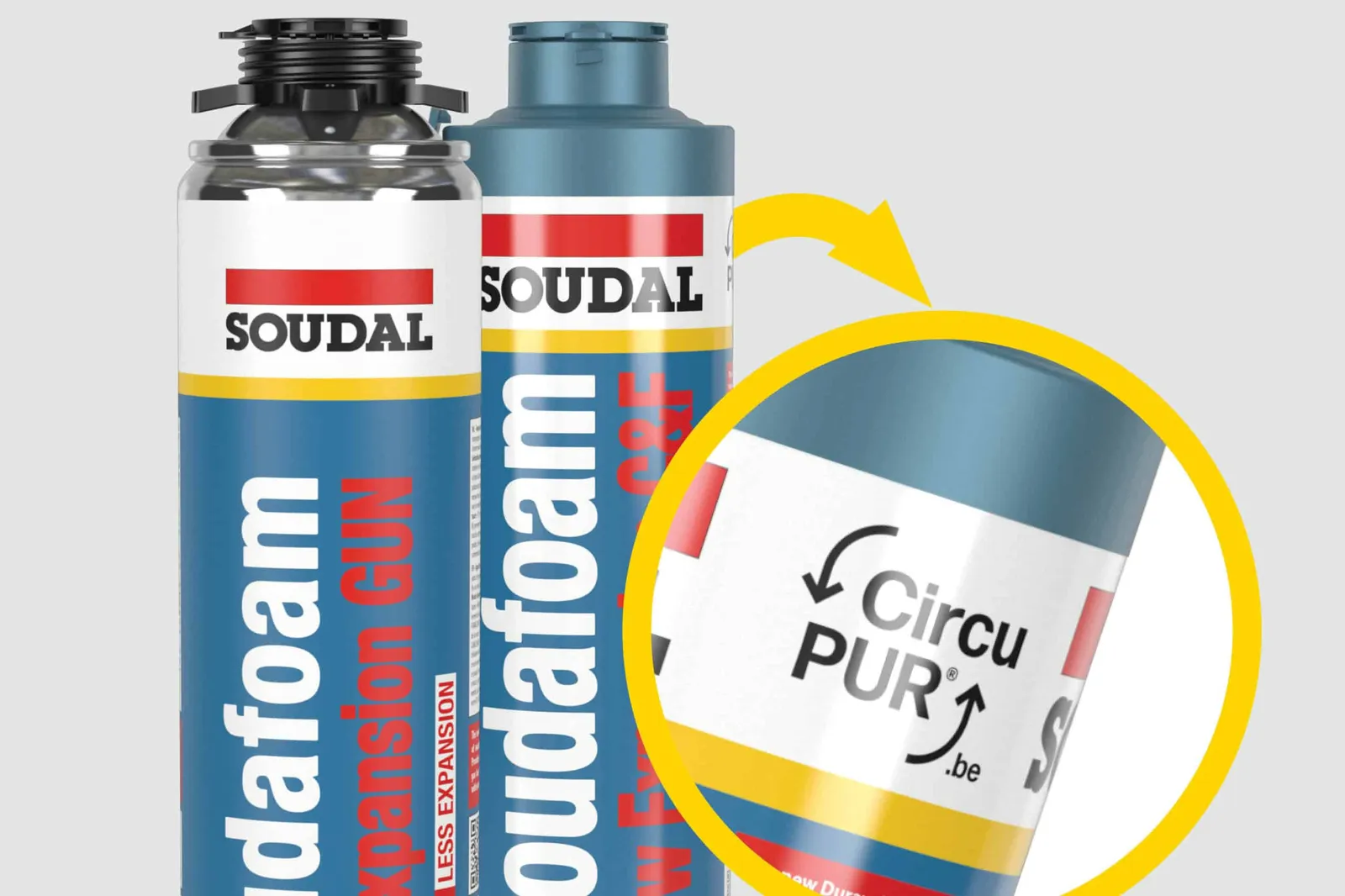
Proven approach, ready for new regulations
The concept draws on experience from abroad. A similar system has been in place in Germany for years, where Soudal also helped get it off the ground, while more targeted initiatives are under way in the Netherlands. “These examples show that it works,” says Thys, who has also been appointed chair of CircuPUR. “We are adapting that knowledge to a Belgian model that reflects the realities of site work: simple, clear and scalable.”
CircuPUR also enables the sector to anticipate stricter European regulations on packaging and waste (PPWR), which will take further shape from this summer. Thys says: “Recyclability is gradually becoming the norm, including for product residues. This initiative fits that direction perfectly: we prevent waste and give residual streams value again. It is the only logical path that we as a sector can and must take.”
Setting the standard together
Ten manufacturers are joining the system from the outset, including Soudal, Wienerberger, Rectavit, DL Chemicals, Tremco and Ploegsteert. The ambition goes further: to make CircuPUR the standard in Belgium. Scale is crucial. Behind the scenes, the process is technically complex and relies on a carefully designed logistics chain. The more players join, the more efficient and robust the system becomes.
Luc Thys ends with a clear call to action: “This requires a joint effort from manufacturers and tradespeople. It is something new, so it will take a little getting used to. At the same time, it makes sense and is easy to use. That will make the transition quick. With CircuPUR, the correct processing of PU waste will become an obvious part of the construction process.”
Een zakelijke vraag aan Soudal? Get in touch
Companies in this story

Keep following this
Get an email when a new story is published. No account needed.
- SubjectGeneral
- CompanySoudal
- CompanyWienerberger nv
- CompanyRectavit NV







