











Students create concrete furniture for young people with autism spectrum disorder
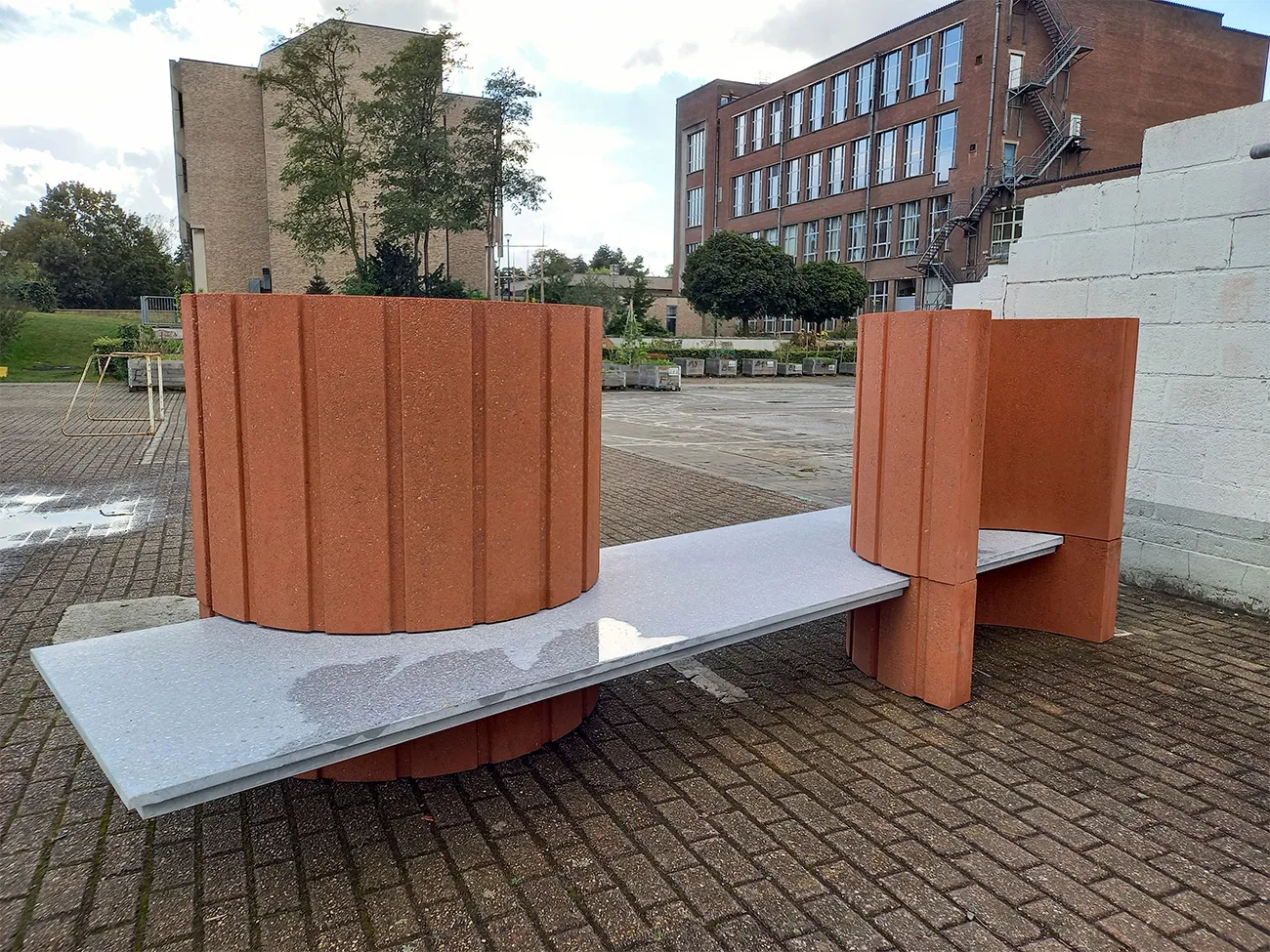
Pupils with autism spectrum disorder (ASD) need breathing space, both literally and figuratively. An adapted outdoor space must avoid both overstimulation and understimulation (known as hyposensitivity). But how do you design a furnished space that offers calm while also providing stimulation? Civil engineering and architecture students at UGent explored this paradox in close collaboration with autism specialists, Stad Gent and Het Kwadrant, a school in Ghent for pupils with ASD. FEBE member Decomo, working with FEBE, also made it possible for pupils at Het Kwadrant to start testing two designs at their school.
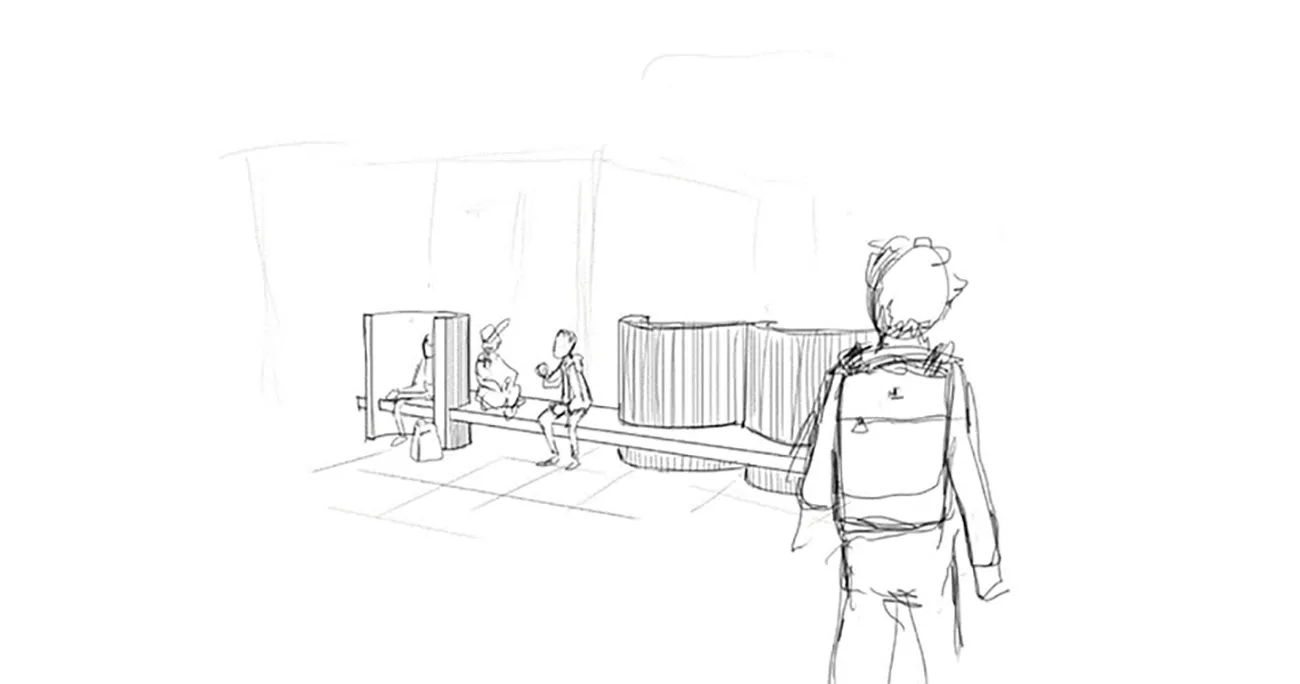
Het Kwadrant, a city school on Martelaarslaan in Ghent, provides adapted education for 72 pupils aged between twelve and seventeen with autism spectrum disorder. The needs of these young people vary considerably, including when they take a break at school. While one pupil likes to have a clear view of the entire playground, another prefers to be apart from others in a more enclosed space. Teachers also need to be able to keep an eye on things, and all the outdoor furniture must be robust enough to withstand rough use. The pupils’ outdoor space must accommodate different types of use and interaction. Designers also need to keep the impact of stimuli such as noise and visual input firmly in mind at all times.
Understanding became a key concept
When designing furniture for pupils with ASD, it is essential to understand how they interact with one another and their surroundings. There is a great deal of research on this subject, but it needs to be approached critically. Most of the literature, moreover, focuses solely on children aged between three and twelve, whereas Het Kwadrant caters for young people up to the age of seventeen.
Collaboration from every angle
The project’s multidisciplinary approach makes it unique. In addition to the usual guidance from architectural engineers, seven student teams led by Professor Nathan Van Den Bossche received input from psychologist and professor Herbert Roeyers, who researches autism, special needs education specialists from UGent and HGent, an Egyptian interior designer, a consultancy from Paris and the care coordinators at Het Kwadrant. FEBE provided technical support for the architectural concrete.
Surprising and versatile results
The project exercise produced a wide range of results. Some groups designed an original piece of seating, while others developed a complete design for the outdoor space. Both Het Kwadrant and Stad Gent were so impressed by the results that they presented them to the project team studying the renovation of the entire campus. The designs are relevant not only to Het Kwadrant, but potentially to all the schools on the campus.
Two designs became reality
Decomo and the concrete federation FEBE were keen to put two prototypes to the unvarnished test of the pupils at Het Kwadrant. They gave the student designers of the selected outdoor furniture all the know-how and technical assistance they needed to bring their designs to life. The future civil engineers were able to draw on the necessary expertise from industry specialists for everything from the concrete mix and formwork to surface treatment and handling. The pupils at Het Kwadrant are now making full use of the furniture, and hopefully other designs will soon be incorporated into the renovation of the entire campus. The students involved, the concrete industry, the ASD specialists and the school staff all found this project a fascinating, stimulating experiment, with a heart-warming result for young people with autism spectrum disorder.
Een zakelijke vraag aan DECOMO? Get in touch
Companies in this story

Keep following this
Get an email when a new story is published. No account needed.
- SubjectGeneral
- CompanyDECOMO







