











The energy crisis in the construction sector: how the brick industry is helping to find solutions
We had barely begun to recover from rising building material prices when energy prices started spiralling out of control, with gas prices increasing more than tenfold. The energy crisis is affecting every sector, including construction. More than half of Belgians even think this is not a good time to build or renovate. And that is despite the fact that the vast majority see making their homes energy-efficient as an absolute top priority. Everyone knows that bricks are fired in a kiln and that this obviously takes a lot of energy. A brick is made from natural, often recyclable raw materials, and production generates almost no waste, but it does emit CO2. We are doing everything we can to optimise energy consumption, for example by using residual heat from firing to dry bricks. But that does not mean we should play down the issue. We want to do our bit for a sustainable present and future.
Putting bricks on a diet
Will the brick soon go into hibernation because of the energy crisis? Let us be clear: we are not (yet) leaving the age of brick behind, but we are putting bricks on a diet. We have been working on slimmer bricks for years. Today, façades are often still clad with a 10 cm layer of facing brick. That will soon be a thing of the past. We are ‘dematerialising’ the brick. We are moving towards a 7 cm brick with exactly the same excellent properties. What is more, it requires 20 to 25 per cent fewer raw materials and therefore less energy. Better still, the brick is around 10 per cent cheaper. We are already producing the slimline brick and will soon expand production to all our factories.
The slimming does not stop there
A few years ago, we started making brick slips measuring 1.8 cm. These can be made by sawing solid bricks into slips, but in 2017 Vandersanden became the first brick manufacturer to switch to producing ECO brick slips, moulded directly to a thickness of 1.8 cm. This uses 70 per cent fewer raw materials and 50 per cent less energy than traditional facing bricks.
Using narrower bricks and/or brick slips leaves more room for insulation in your walls. We are driving dematerialisation across our business and putting paving bricks on a diet too. Across the entire range produced at our Kessel site, 6 cm will become the new standard, replacing 6.7 cm. That is a reduction in thickness of more than 10 per cent. We are also constantly looking for ways to dematerialise further, for example by using perforated paving bricks. These can reduce volume by as much as 40 per cent. They are particularly suitable for car parks, gardens and driveways, offer high water permeability and are lighter to handle during installation.
Dematerialisation means using less material. This saves energy and raw materials, while the lower weight also makes transport more sustainable.
Together to zero
It is clear that the brick industry, and the construction sector more broadly, will undergo far-reaching change. Slimmer bricks are just one of the many developments in the sector.
At Vandersanden, we think in generations, not years, and are in the driver’s seat when it comes to making the brick industry more sustainable, with one clear goal: carbon neutrality by 2050. We do not even call this an ambition, but a promise. Together to Zero: we will make it happen.
However, we cannot make the brick industry this much more sustainable on our own. Nor do we want to. We recently launched our Together to Zero sustainability programme, reaching out to our stakeholders to take on the challenge together and operate and produce entirely CO2-free in the future. Guided by our philosophy, ‘The most beautiful things are made together’, we want to give everyone in our industry the opportunity to join this movement.
We have defined eight areas to guide us towards carbon neutrality by 2050: dematerialisation, water management, low energy consumption at production sites, smart automation, fossil-free mobility, circular materials & applications, renewable energy, and low-carbon and carbon-negative products. We have already made considerable progress in all eight areas. For example, we use energy-efficient brick kilns and reuse the residual heat from firing to dry the bricks. We have more than 35,000 solar panels and recently even installed our own wind turbine. And that is not all: our vehicle fleet, including forklifts, is being fully electrified; we are introducing a return service for wooden pallets; and we now use only packaging that contains at least 30 per cent recycled material. We have not done all this alone: we work with local authorities to implement climate-adaptive solutions, and we are joining forces with competitors and industry federations to dematerialise bricks.
And it does not stop there. Together to Zero is a movement we want to champion, and a promise we intend to keep. We are already well on our way, rather than waiting until tomorrow, and we are calling on others to jump aboard the fast train too. Let us join forces as an industry, as businesses and as a society.
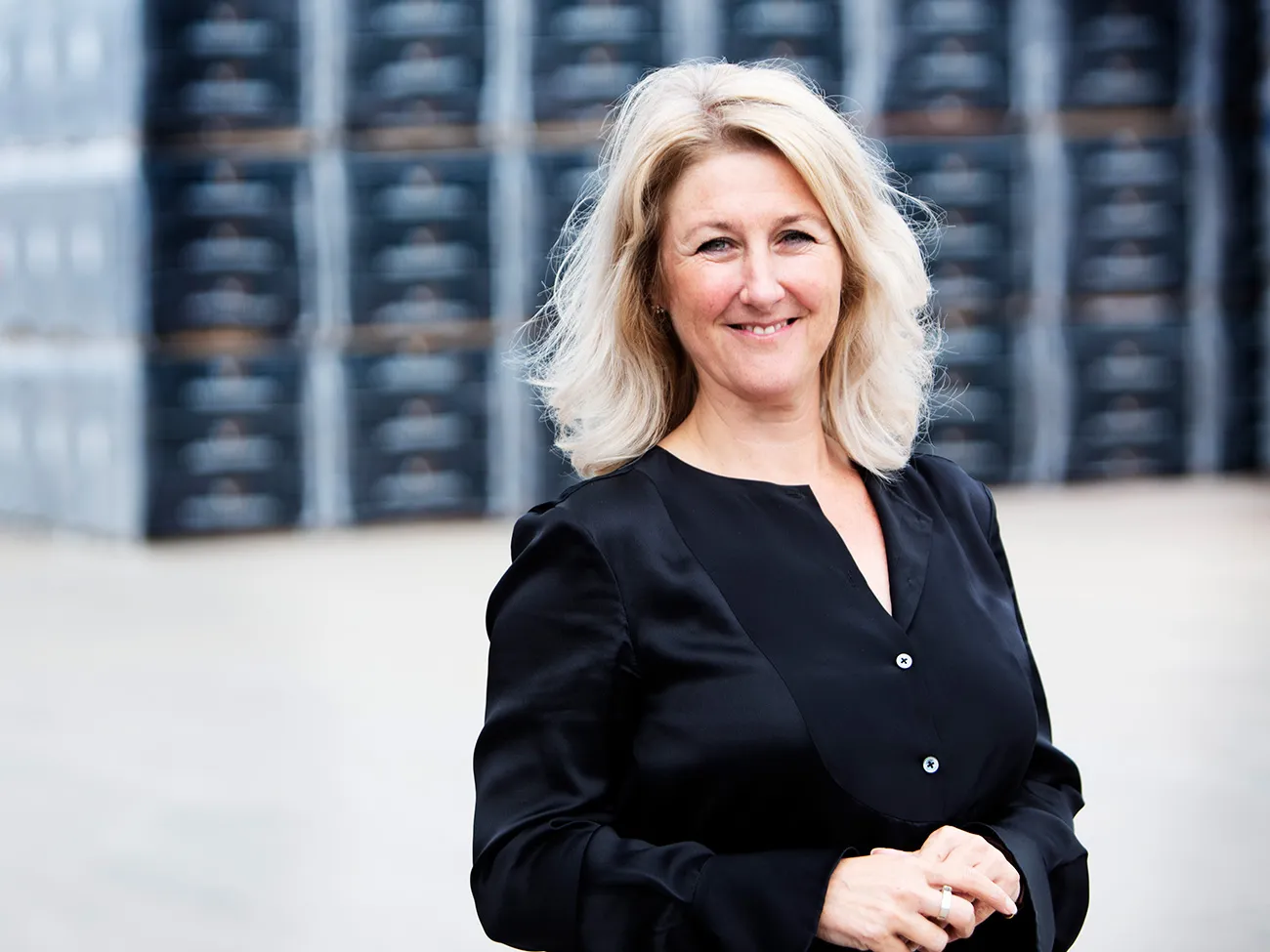
Nathali Donatz, Group Marketing Director Vandersanden
Een zakelijke vraag aan Vandersanden? Get in touch
Companies in this story
Keep following this
Get an email when a new story is published. No account needed.
- SubjectGeneral
- CompanyVandersanden







