











The natural evolution of led light: enhancing human wellbeing
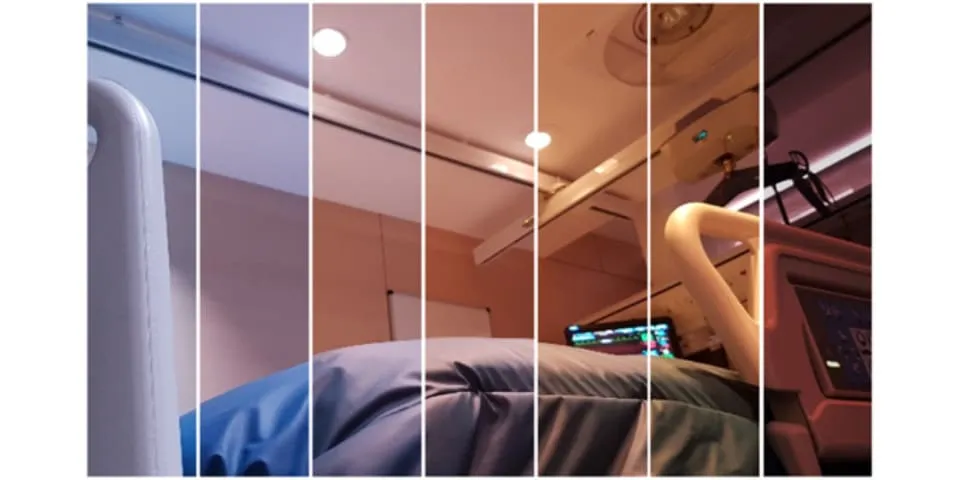
According to the World Health Organization, most people spend 90% of their time indoors. Exposure to natural light, however, has many benefits: it improves sleep and school performance, and can significantly reduce the risk of mental illness at certain ages (1). It is therefore crucial to minimise disruption to the circadian rhythm, the biological clock that regulates how many hours you sleep and stay awake. Experts in this field are adamant that a lack of a particular type of light stimulates the body to produce melatonin. This hormone resets the biological clock every 24 hours and protects the body against inflammatory diseases and ageing.
- LEDMOTIVE aims to take its spectral control technology global. The technology can reproduce any spectrum and any type of light.
- The multispectral lighting system brings the vitality of natural light into healthcare and work environments, lifting people’s mood and improving their wellbeing and quality of life. It creates a suitable atmosphere tailored to the human circadian rhythm.
- At the end of 2018, the company completed a funding round to support its international expansion. Some of the funding came from the European Commission’s “Horizon 2020” project.
LEDMOTIVE: light, a factor in quality of life
Clearly, artificial lighting in indoor spaces affects melatonin production, and ultimately the sleep patterns of anyone who spends a lot of time in enclosed spaces will be disrupted.
LEDMOTIVE: lighting technology for human wellbeing
In 2012, Josep Carreras, founder and CTO of LEDMOTIVE and a PhD in physics, recognised that LED technology was the future of lighting, but that much remained to be done to develop lighting systems that could significantly improve wellbeing. He therefore developed a technology that could adapt perfectly to people’s circadian rhythms. This led to LEDMOTIVE’s spectral control technology, patented in 21 countries, which makes it possible to reproduce natural light, including the changes in light throughout the day. All this is achieved with the highest visual quality, without high light levels.
The system combines light from 7 distinct colour channels to produce any visible light spectrum. This makes it possible to eliminate or adjust light with the greatest harmful effects, such as violet light. Conversely, light with the greatest benefits can be enhanced, depending on the time of day and the application. The daily pattern of sunlight is not simply a change in the light’s hue, or correlated colour temperature (CCT), but a complete and continuous evolution of the spectrum.
LEDMOTIVE’s technology makes it possible to programme a lighting sequence for circadian cycles, oscillating between the light spectrum of sunrise and that of sunset to produce a different variation of sunlight every hour. This allows the biological clock to be synchronised with artificial light when exposure to natural light is not possible.
LEDMOTIVE: our technology is ready to conquer Europe
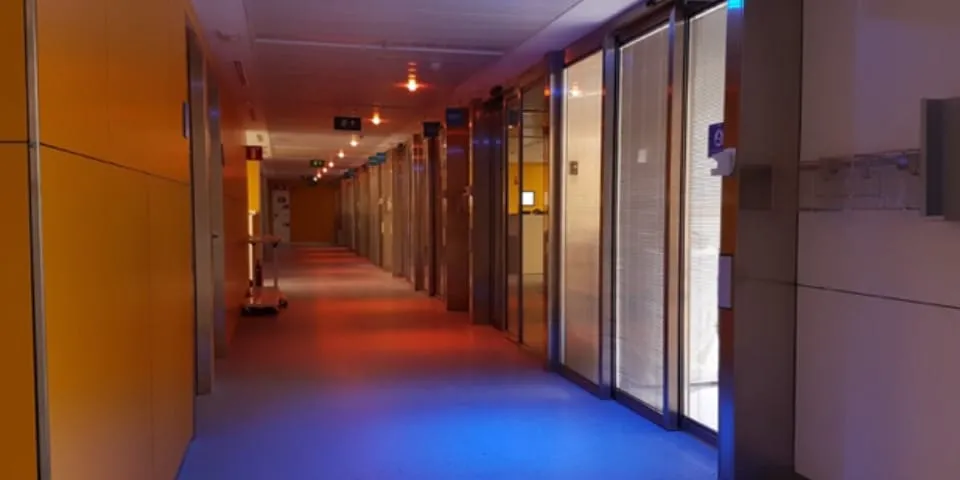
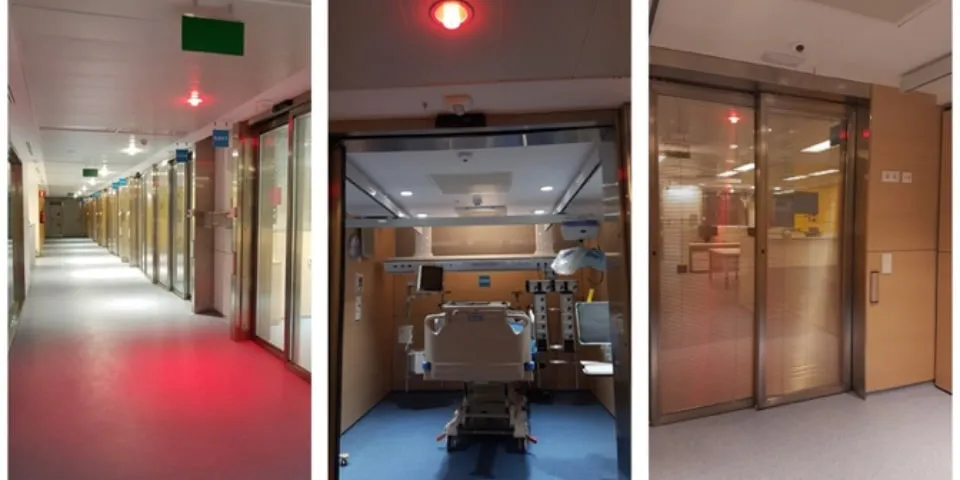
At the end of 2018, the board of the Barcelona-based company completed a funding round that had begun around 12 months earlier. This enabled the company, the number one lighting company in spectral control using LED technology, to raise a total of €1,850,000, of which €850,000 came from the European research and innovation programme “SME Instrument, Horizon 2020”. According to the company’s CEO, Meritxell Carreras, “LEDMOTIVE wants to expand and reach new international markets such as England, France, Belgium, Germany and Sweden.” Meritxell Carreras points out that, given the technology’s high level of acceptance in Spain, particularly in the hospital sector, it is not unlikely that the company will also gain a significant market share in these countries. LEDMOTIVE has installed its technology in the new smart intensive care unit at Vall d’Hebron Hospital in Barcelona, one of the largest hospitals in Europe and the largest in Spain, to help patients orient themselves and recover more quickly. The lighting there is modelled on 21 March, so thanks to LEDMOTIVE technology, it is always spring in the intensive care unit.
The potential applications for this lighting system are endless. In schools, for example, it can help improve students’ performance. It can also be useful in offices to enhance employees’ general wellbeing and productivity. And in Scandinavian countries, it could even help combat seasonal depression caused by a lack of sunlight.
Question about this story? Ask your question
Keep following this
Get an email when a new story is published. No account needed.
- SubjectGeneral







