











The Pen | Tom Deloose, CEO at Avapartners Architects & Planners
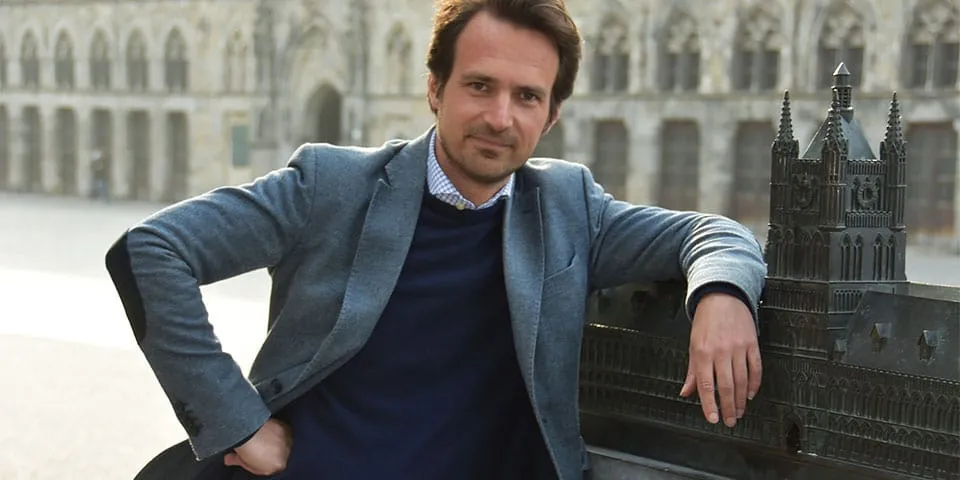
As a newcomer to the world of construction, following in the footsteps of a succession of distinguished predecessors in this series, I take up the pen with due modesty, but not without pleasure. And modesty is precisely the subject I want to write about over the next 350 words: modest housing, affordable housing.
A case for affordable urban living
If we want Flanders to relinquish its crown as king of rural plot development and ribbon development, and see our home region crowned for its well-considered urban planning, more people urgently need to live in cities. Cities offer countless advantages and endless solutions to many of the macroeconomic, social and environmental problems we face today. Admittedly, I am not entirely impartial: I am a fervent city dweller myself. But only a few years ago, I was living in a tiny village in the Westhoek. And however charmingly nostalgic you may find the Flemish countryside (as I do!), with its local bards and beers, animals and devotions, it is sadly not very efficient. A city, by contrast, generates fascinating and innovative patterns and movements in transport, culture, education, sport, play, architecture, history and the economy, while also offering peaceful tranquillity and the joy of green spaces. Our future, dear reader, lies in the city.
However, the ever-rising prices of urban homes concern me. How can we organise ourselves as a community in cities if the average teacher, bank clerk, architect, civil servant and self-employed person can no longer afford a simple city home? Property prices are out of proportion. We urgently need to take action and, as an industry, devise and implement models and concepts that are cost-efficient, forward-looking and future-proof. Architects can work with the parameters of materials, layouts and new manufacturing possibilities in their designs. They can devise solutions, not in isolation but together with other construction partners, in the tension between serial construction and individual ownership, standardisation and flexibility, compactness and spatial experience, logical structures and
intelligent detailing, cutting unnecessary costs and making essential investments. They can also organise and manage the construction process itself more efficiently (again, together with other construction partners): well-managed collaboration and bold entrepreneurship can certainly help bring about a more rational pricing policy.
In conclusion: let’s get started straight away! Or no, let’s wait until tomorrow. With a view of the city, I put on some Bill Evans and sip a modest glass of cognac.
The pen is passed to Jan De Moor, managing director at Artes Woudenberg.
Question about this story? Ask your question
Keep following this
Get an email when a new story is published. No account needed.
- SubjectGeneral







