











The perfect marriage of concrete core activation and geothermal energy
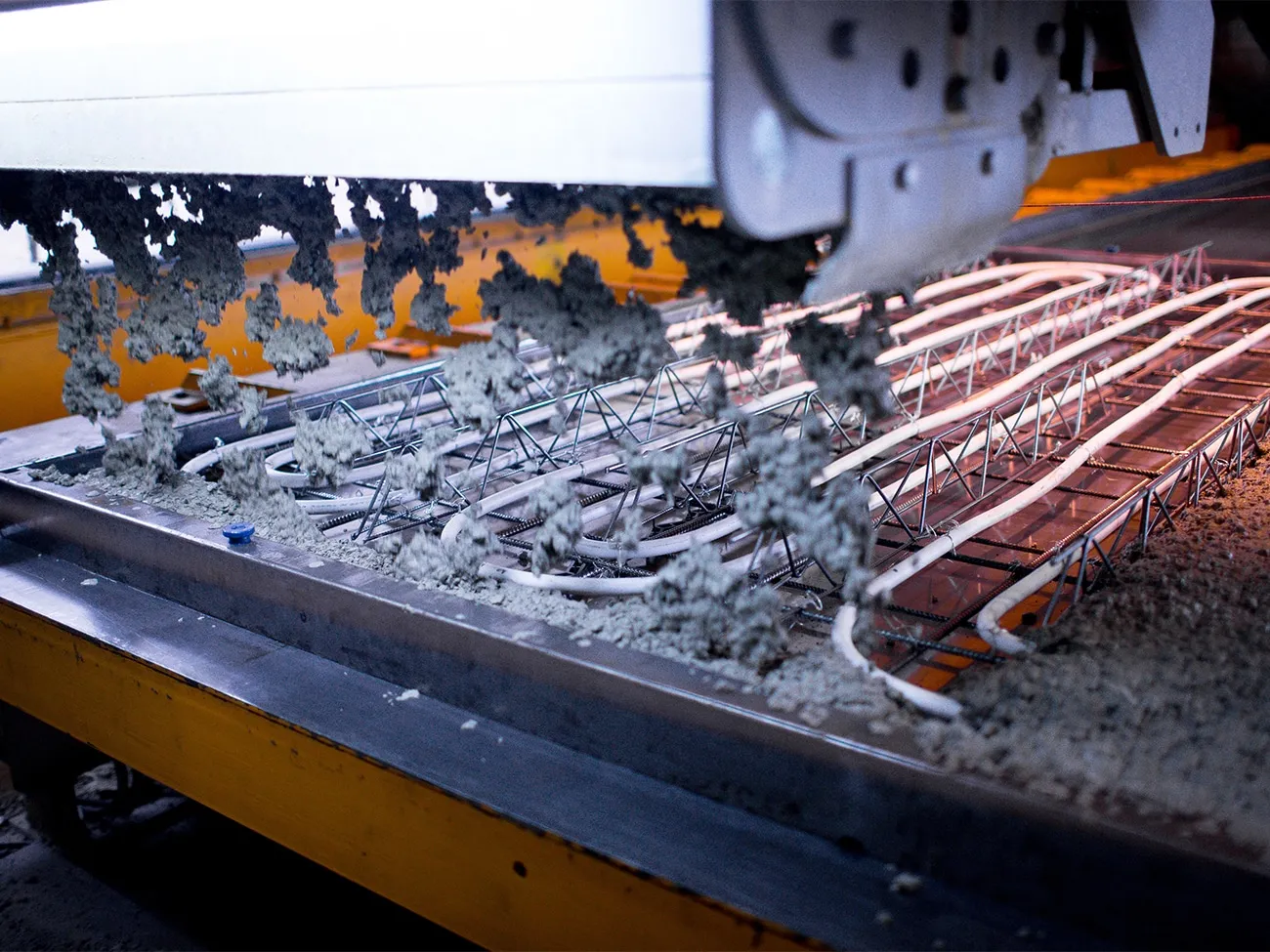
The SmartGeotherm research group investigated methods for capturing thermal energy (heat or cold), storing it temporarily and releasing it when cooling or heating is required.
The results clearly show that combining geothermal energy with concrete core activation can be an efficient and forward-looking technology.
Concrete has a considerable capacity to store heat temporarily. Using thermal inertia can therefore reduce heating demand and eliminate the need for additional cooling. However, if a building does not have sufficient thermal capacity or cannot release enough of its stored energy at night, the building’s mass can be thermally activated. By integrating water pipes into the core of a concrete floor or wall, stored thermal energy can be removed more quickly, increasing the cooling capacity of the mass. This is known as concrete core activation (CCA).
Concrete core activation is self-regulating. As the difference between the room temperature and the temperature of the concrete surface increases, so does its capacity to absorb or release heat. During the cooling season, when supply temperatures are high, concrete core activation can offer significant benefits, especially when ‘free geocooling’ can be used. If cooling the building requires only the circulation pump to run, and water from the geothermal heat exchanger can be used without passing through a chiller, a very high energy efficiency ratio (EER) can be achieved. For every unit of electricity used, 10 to 20 units of heat can be removed, depending on the specific situation.
Case study
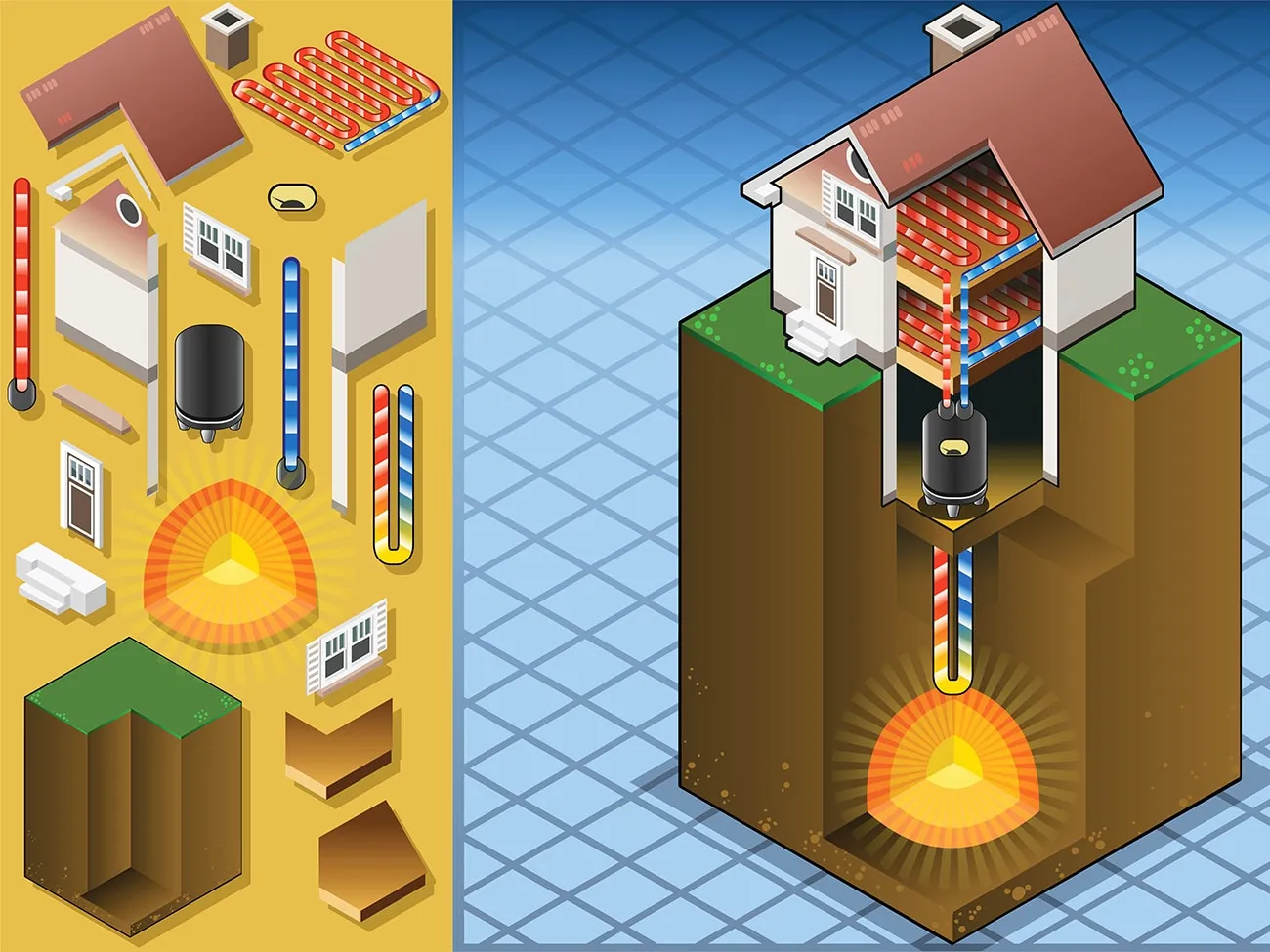
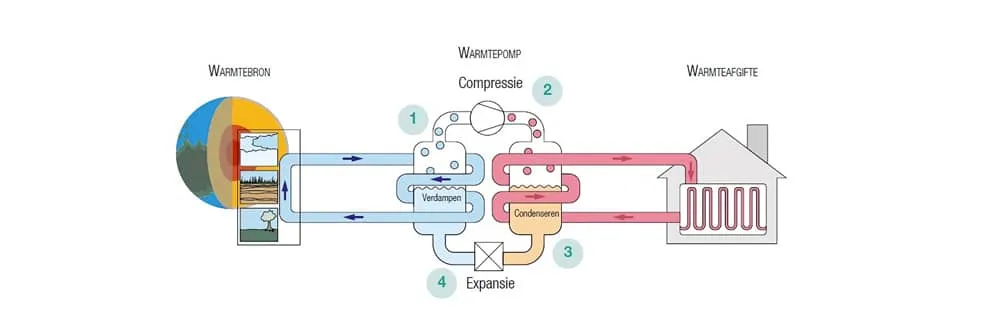
The critical importance of the heat pump’s COP when extracting geothermal energy, combined with concrete’s thermal storage capacity, suggests that geothermal concrete core activation could provide a sustainable, forward-looking HVAC system. Because its heat-transfer surface is much larger than that of radiators, only a small temperature difference is needed between the heat emitter (the CCA system) and the room. This is beneficial for heat pump efficiency.
The SmartGeotherm researchers carried out a limited study of thermal storage under different conditions. They used a simplified model focusing on the influence of thermal resistances (R) and thermal capacities (C) in the climate zone, air, wall and emission system. They applied this limited parameter study to an open-plan office with one intermediate floor in an office tower, comparing different parameters: concrete core activation versus radiators, lightweight versus concrete structure, and with or without night cooling.
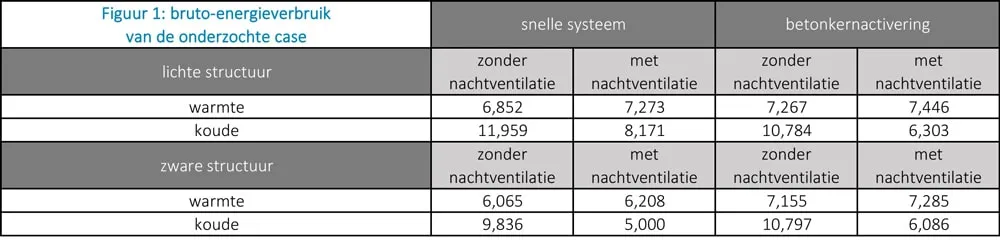
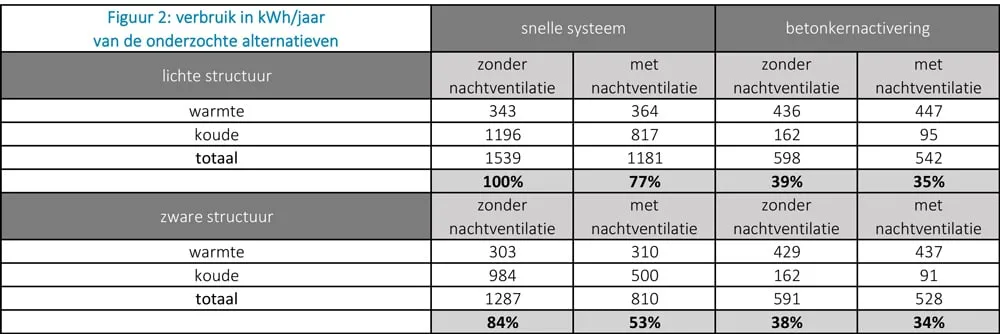
Figure 1 shows the difference in energy consumption between the various options. Figure 2 shows their annual energy costs. In January and December, gross heating demand (including emitter and control losses) is 8% higher in a heavyweight structure. However, this is more than offset in spring (March-May) and autumn (September-October), reducing both heating and cooling energy thanks to improved buffering of heat gains. Across the year as a whole, the heavyweight structure uses 11.5% less energy for heating and 17.7% less for cooling.
Comparisons for CCA
There is little difference between office buildings with lightweight or heavyweight walls. The floors and ceilings are already heavyweight and accessible, since concrete core activation has been installed. Thermally activated building systems (TABS) therefore account for most of the heat capacity, leaving the walls with only a minor role. However, the difference between a heavyweight and lightweight structure is significant when using a fast-response heating system. With fast-response systems, a heavyweight structure results in 16% lower energy costs than a lightweight structure (100-84).
Since concrete core activation is controlled to prevent heating and cooling on the same day and to allow the concrete mass to work passively as much as possible, the difference narrows during the shoulder seasons. In the cooling season, TABS perform 10% better than fast-response cooling systems in a lightweight structure, but still perform 10% worse than in heavyweight buildings, where the thermal mass can be used passively.
Effect of additional night cooling with CCA
In summer, the thermal capacity of both lightweight and heavyweight buildings is fully utilised and charged. Night ventilation needs to remove heat from the structure by transferring it to cooler air, so that the released buffer capacity can be used again from the morning onwards. In lightweight structures, the temperature will fall quite quickly at night. Indeed, care must be taken to ensure that the temperature does not drop below the comfort level overnight, which would mean heating the building again in the morning. A heavyweight structure has plenty of thermal capacity available, so the temperature falls more slowly at night. This allows night ventilation to run throughout the night and remove much more heat from the structure. During the day, more buffer capacity is then available to absorb heat gains. When we examine the effect of night ventilation on lightweight and heavyweight structures, both equipped with CCA, we see a slight 2% increase in heating demand, but a 42% and 44% reduction in cooling demand respectively.
General conclusion
The case study, summarised here, shows that a heavyweight structure with fast-response heating systems reduces energy costs by 16% compared with a lightweight structure.
Night ventilation reduces cooling costs by 23% in lightweight structures. In heavyweight structures, the reduction is 47%. More importantly, using concrete core activation cuts energy costs by up to 61% compared with fast-response systems. In this case, there is virtually no difference between lightweight and heavyweight structures. Activated building components provide sufficient thermal buffering in the concrete floors.
Overall, the SmartGeotherm case study allows us to conclude that concrete core activation, when correctly applied and combined with geothermal energy, can be a highly efficient technology that cuts energy costs by two-thirds. It also provides substantial buffer capacity, increasing the flexibility of heat or cooling production.
The full study is available at www.febe.be.
Question about this story? Ask your question
Keep following this
Get an email when a new story is published. No account needed.
- SubjectGeneral







