











Timber construction and fire safety: a perfect combination
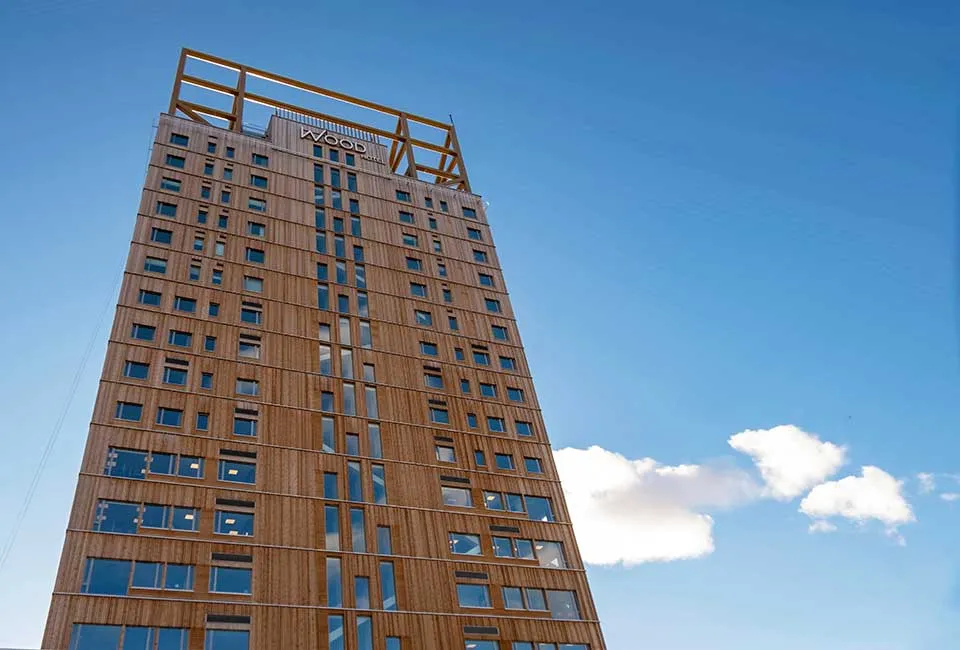
The days when timber buildings were seen as a guarantee of a devastating inferno, a misconception that unfortunately spread like wildfire in the past, are long gone.
Timber construction performs exceptionally well in terms of fire resistance and reaction to fire, including when combined with other materials. Even the fire service and insurers stress that timber construction and fire safety make a perfect combination.
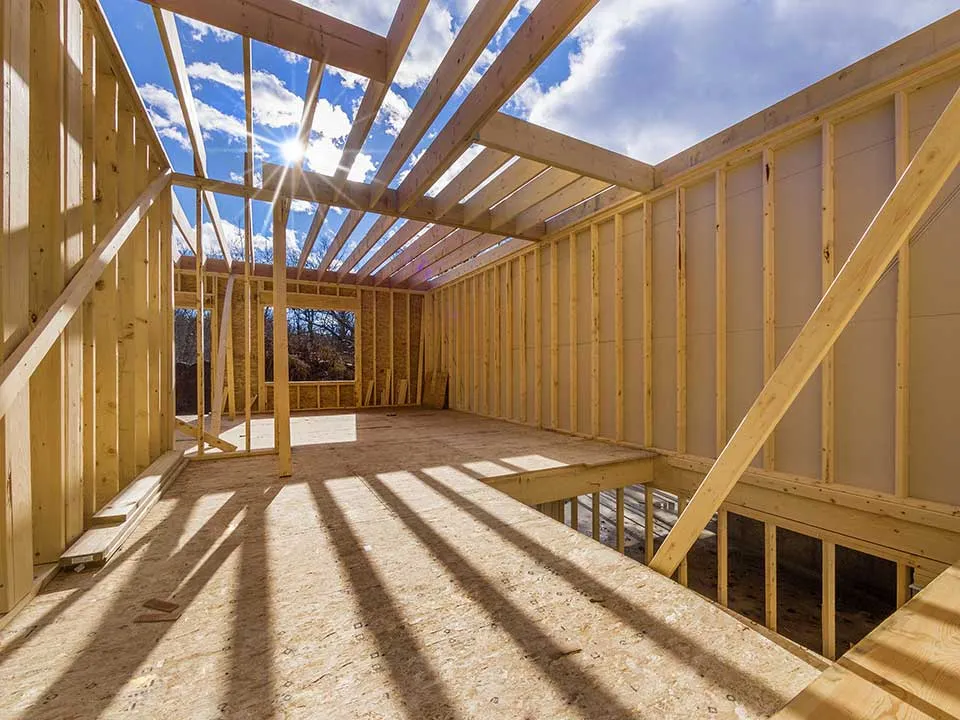
One important area in which timber performs exceptionally well is fire resistance: the ability of a building element to continue fulfilling its function during a fire. A beam with high fire resistance helps ensure that a floor in a burning building does not collapse for a long time. When timber catches fire, a charred layer forms on the outside. This protects the inner part of the timber from igniting. That is why trees remain standing after a forest fire.
“The fire resistance of timber is no myth, it is pure physics”
Oversizing
The rate at which different types of timber char, also known as the charring rate, is set out in tables based on a large number of experimental results. In construction, this property is used to calculate the thickness required for exposed load-bearing timber elements. Designers add an extra thickness to the amount needed to carry the specified load. This additional thickness can char in a fire without compromising the required load-bearing capacity during the period set by fire regulations. This technique is known as oversizing. The calculation methods used are set out in Eurocode 5. Timber does not necessarily need to be combined with another material to achieve good fire resistance, although such combinations are certainly possible and also guarantee good results. For example, a home may have a timber structure or frame, a brick façade and plasterboard internal lining. Special fire-resistant boards or fire-retardant coatings are also sometimes applied. When the timber structure is encapsulated in this way, its fire resistance is, of course, determined by the specific combination of materials. The combination of facing brick, a timber load-bearing structure and plasterboard internal lining, which is fairly common in Belgium, performs well in terms of fire resistance.
Favourable reaction to fire
A building material’s reaction to fire describes how it affects the development of fire and smoke. This includes, among other things, the time to ignition, flame spread, smoke production and the formation of flaming droplets. Timber is combustible, but compared with many other building materials, its reaction to fire is relatively favourable. Studies by organisations including the Netherlands Institute for Physical Safety (NIFV) show that the main causes of house fires are products not made of timber, such as clothing, bedding, mattresses, curtains, deep-frying fat and paper. Moreover, the construction method has no effect on the likelihood of a fire, how it develops or how it spreads. In short, human behaviour appears to be the main cause of fires, certainly not the use of timber as a construction material. Statistics and research by the U.S. Fire Administration support this conclusion.
Endorsed by the fire service and insurers
The fire service is also a fan of timber construction. “The fire resistance of timber is no myth, it is pure physics. In a fire, timber chars evenly at a rate of approximately 1 mm per minute, making it possible to predict accurately both its fire resistance and the likelihood of structural failure in a fire. As a result, firefighting can even be safer in timber frame buildings than in traditional buildings or steel buildings,” says Stefaan Onraedt, Captain with Hulpverleningszone Noord-Limburg and Level I Prevention Adviser. And what about fire insurance for timber construction? Wauthier Robyns, spokesperson for the professional association of insurance companies (Assuralia), explains: “Insurers know there is a world of difference between the artisanally built timber buildings of the past and modern timber construction. What matters most to insurers is preventing the fire from spreading. The fire risk of modern timber structures designed with fire safety in mind is not significantly different from the standard level. Premiums for such structures are therefore comparable to those for similar buildings made from other materials.”

More information? Visit www.houtdenatuurlijkekeuze.be.
Question about this story? Ask your question
Keep following this
Get an email when a new story is published. No account needed.
- SubjectGeneral







