











Using bitumen intelligently and sustainably? Derbigum shows the way.
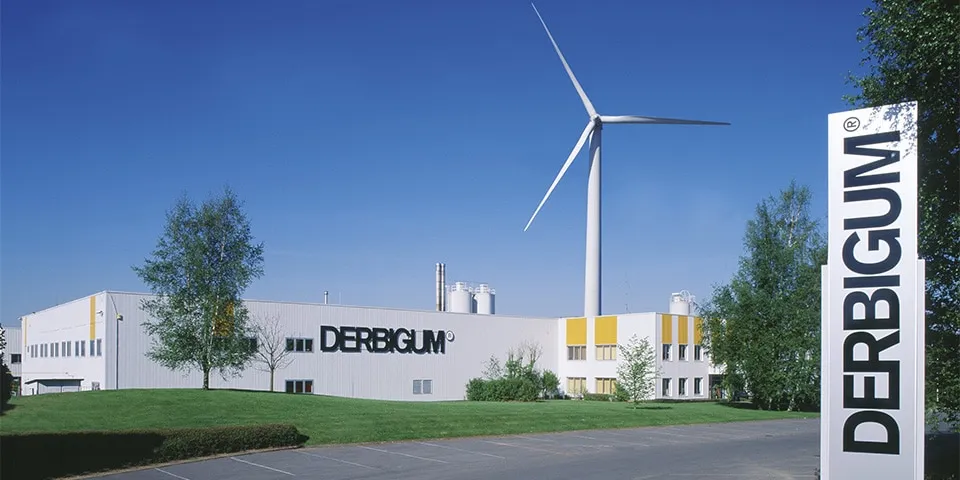
Globalisation and consolidation are affecting building materials manufacturers too. Yet Derbigum, the only Belgian manufacturer of roofing membranes, is holding its own. The family business is adapting nimbly by keeping its finger on the pulse of market changes: recycling and further ecological developments in its roofing membranes, and meticulous service for its customers. To give this new momentum an extra boost, a new CEO has been appointed: Grégoire Morel.
Derbigum is stepping up its efforts in recycling and alternative raw materials. A deliberate and considered choice.
Grégoire Morel: “Of course, as a manufacturer of bituminous roofing membranes, it makes sense to make every effort to use available raw materials better and more responsibly. Derbigum was once a pioneer in recycling bitumen as a new raw material. The current situation certainly calls for us to step up our efforts in this area.”
Derbigum has a plant-based waterproofing membrane. Yet most of its production still consists of bituminous roofing membranes, made from a raw material derived from petroleum. How does this fit with current trends in ecology and the environment?
Grégoire Morel: “At first glance, bitumen and ecology may indeed seem to have little in common. But that is not the case! This poor image is partly due to a certain confusion between bitumen and tar. Both waterproofing products, black and semi-fluid, were once used on roofs, but they are two completely different products. Tar is obtained by distilling coal, and has been proven to be carcinogenic. Bitumen, on the other hand, is not harmful to health, as demonstrated by various scientific studies.
Bitumen is, of course, a petroleum-based product, but as a raw material for waterproofing flat roofs, it is the most ecological solution available. External reports now confirm that Derbigum roofing membranes have a service life of at least 40 years. And this is a proven service life: during the latest survey, roofs that were 45 years old were even inspected and found to be in good condition. Independent studies, such as the recent life cycle assessment (LCA) by Dubokeur in the Netherlands, also support this. Derbigum NT, our roofing membrane made from recycled material, achieves an excellent result and is awarded the label for a sustainable choice and top environmental performance. Bitumen therefore scores better environmentally than other waterproofing materials, particularly when it can be recycled without any loss of quality.
Moreover, contrary to popular perception, a Derbigum roof does not necessarily have to be stripped at the end of its service life. The existing top layer can begin a 2nd life as an underlay and, together with a new Derbigum top layer, start the next 40-year cycle. And if the roof does need to be stripped, the Derbigum roofing membrane is fully recyclable and can be reused in the production of our circular membranes in the NT range, with no loss of quality.
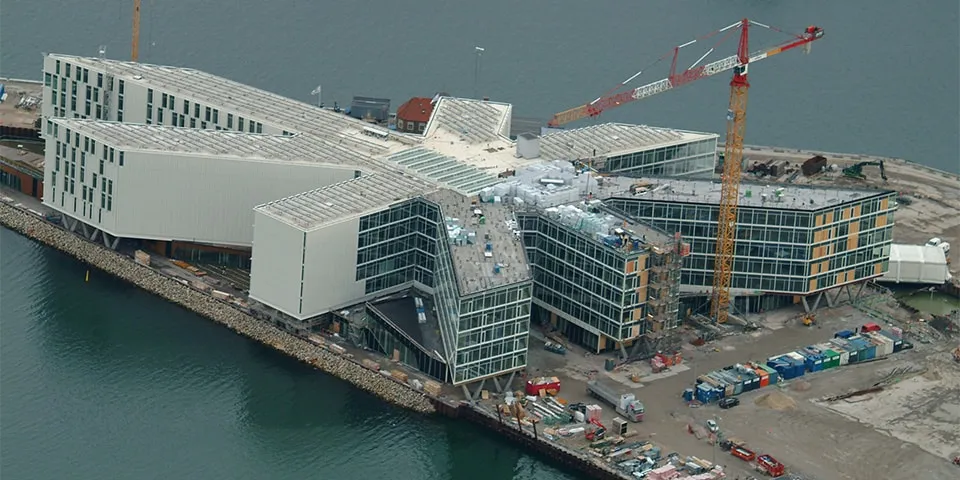
However, the fact that we manufacture petroleum-based roofing membranes does not preclude us from being fully committed to finding alternatives to bitumen. This led to the Derbipure roofing membrane. For this ecological roofing membrane, made from plant-based oils and resins, we are also very vigilant about the origin of the raw materials. Derbipure was launched as early as 2010, well before ecological products received so much attention. Unfortunately, the market has yet to give this product the attention it deserves. The new UN building in Denmark is an excellent example of Derbipure in use”.
So, in your view, a bituminous roofing membrane is a perfect fit for the circular economy?
Material for recycling
Unfortunately, governments have not yet fully embraced the circular economy, despite paying plenty of lip service to reuse and similar concepts. As long as governments continue to classify old bituminous roofing membranes as waste, it is not easy to collect enough material. For us as a manufacturer, the current area covered in Belgium is too limited to provide enough high-quality secondary raw materials: this needs to be considered at European level. Unfortunately, cross-border transport of waste between European countries is not straightforward, and the often extensive paperwork is a major obstacle. We face the same issue with our subsidiaries in neighbouring countries, and generally call for administrative simplification when it comes to the circular use of secondary raw materials, with, of course, a guarantee of full transparency and traceability. More active government support in this area would certainly be welcome!”.Grégoire Morel: “Absolutely… just look around you at all the flat roofs covered with roofing. For us, they represent a strategic stockpile: the ideal raw material for our circular approach. If recycled correctly, bitumen can be reused again and again in new waterproofing membranes, without any loss of quality. Mastering this process is at the heart of our expertise. So, for us, old bituminous roofs are not waste, but an important raw material.
At Batibouw, Derbigum signed the Green Deal Circulair Bouwen. More recently, it also signed the Voka Charter Duurzaam Ondernemen. What role does Derbigum see itself playing in initiatives like these?
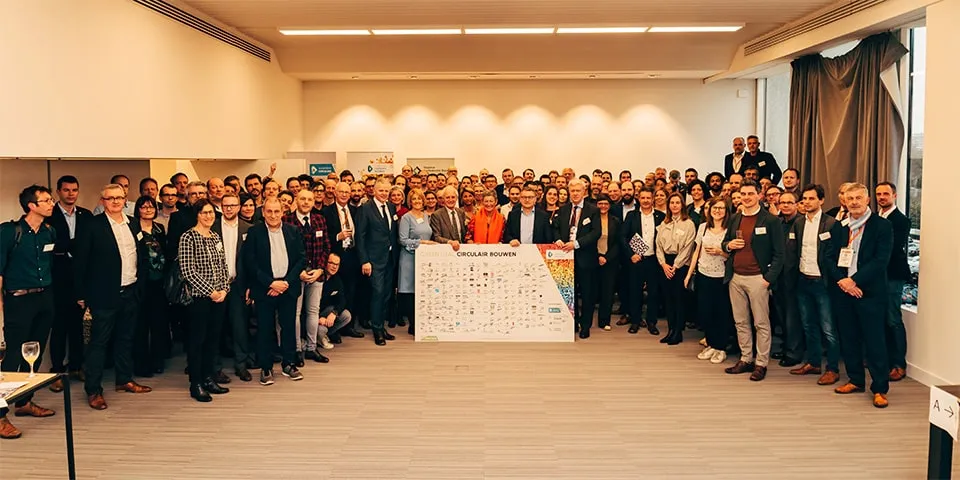
Signing of the Green Deal Circulair Bouwen at Batibouw
The Voka Charter Duurzaam Ondernemen, an initiative supported by the United Nations, is an excellent programme that gives us a clear dashboard for the way we work. Only companies that take enough of the right initiatives over a 3-year period will ultimately be allowed to use the UN logo. Derbigum has always been a frontrunner in this area. We have already taken numerous steps towards sustainable business practices. In addition, we are currently installing the new production line, and a new investment has been approved to install an additional recycling unit later this year, which will significantly increase our recycling capacity”.Grégoire Morel: “For Derbigum, commitment to the environment is part of its DNA, long before it became a hot topic in the news. It was simply less visible to the outside world. That is why we can only welcome initiatives of this kind. In both cases, they also provide a platform for facilitating new initiatives.
The new production line you mentioned is due to come into operation in early 2020. What additional capabilities will it offer compared with the current lines?
Grégoire Morel: “The new production line is a milestone in the company’s history. The existing production lines have been in service for some time. Of course, they have always been well maintained and upgraded when needed to meet the latest technological standards, but we cannot deny their age.
The new line has been designed to offer us unprecedented versatility and production speed. It will enable us to concentrate 90% of production on this line.
New line in trial set-up at the manufacturer’s premises
Digitalisation is also making its presence increasingly felt in the construction sector. How is Derbigum responding?One of the two existing production lines will be retained to manufacture highly specialised coated roofing membranes”.
Grégoire Morel: “All sectors are going through digitalisation, but I do feel that the construction sector remains fairly traditional in this respect. We are seeing rapid digital progress among designers and architects, while other players, such as roofers, are moving a little more slowly.
AppRoof References
We are also seeing that the new generation of roofers is much more familiar with using smartphones, social media, digital tools and so on. They therefore expect these applications to be used much more in their professional work as roofers. We do our best to meet their expectations, although they are not always expressed very clearly”.Here too, we want to take on a pioneering role and help introduce these applications to our sector. The digital journey also fits perfectly with our “Customer Intimacy” strategy and “Delight” management, for both our external customers and our own people. Our focus is on making it easy and enjoyable to work with Derbigum, so that we can create added value compared with our competitors. We are making excellent progress with architects: just look at the growing use of BIM, our Approof Projects and Approof References apps, and other applications.
How do you see Derbigum developing in the future?
Grégoire Morel: “We are a Belgian roofing manufacturer with a personal touch. The added value we can create by offering our customers, roofers, and their customers, investors, sustainable and high-performance waterproofing solutions is crucial. Our great flexibility, both in our service and in our response times, is also a major strength of our business. This agility allows us to respond easily to new market trends. Looking ahead, the most important thing is that we remain flexible in reaching our customers, approaching them in the right way and putting them at the centre of everything we do”.
How do you see your role as CEO of Derbigum?
Grégoire Morel: “As CEO of Derbigum, I head a Belgian family-owned group with a strong local presence and a reputation for quality and innovation. Derbigum has a history spanning almost 100 years and is the partner of choice for many roofers, architects and private individuals. It is my job to build our energy and initiatives on the strengths and reputation of our group, while adapting our organisation to changes in the market.
The “Customer Delight” we spoke about must be built on “Employee Delight”: I see it as my responsibility to create a working environment where people feel good, so that day in, day out, they can give their best with passion. Happy employees make happy customers!
But it must also be a working environment where everyone has the opportunity to develop, with a clear emphasis on team spirit: winning together, losing together, getting back out there together and enjoying ourselves together.
What our partners greatly appreciate about Derbigum as a company is our fair approach and our expertise. As a result, they have a great deal of confidence in the service we provide, or, as JW Marriott put it: If you take care of your people, they will take care of your customers.”.
Question about this story? Ask your question
Keep following this
Get an email when a new story is published. No account needed.
- SubjectGeneral







