











Vertical screens or projecting screens: which fabric shading solution is best for your project?
Text and images DUCO
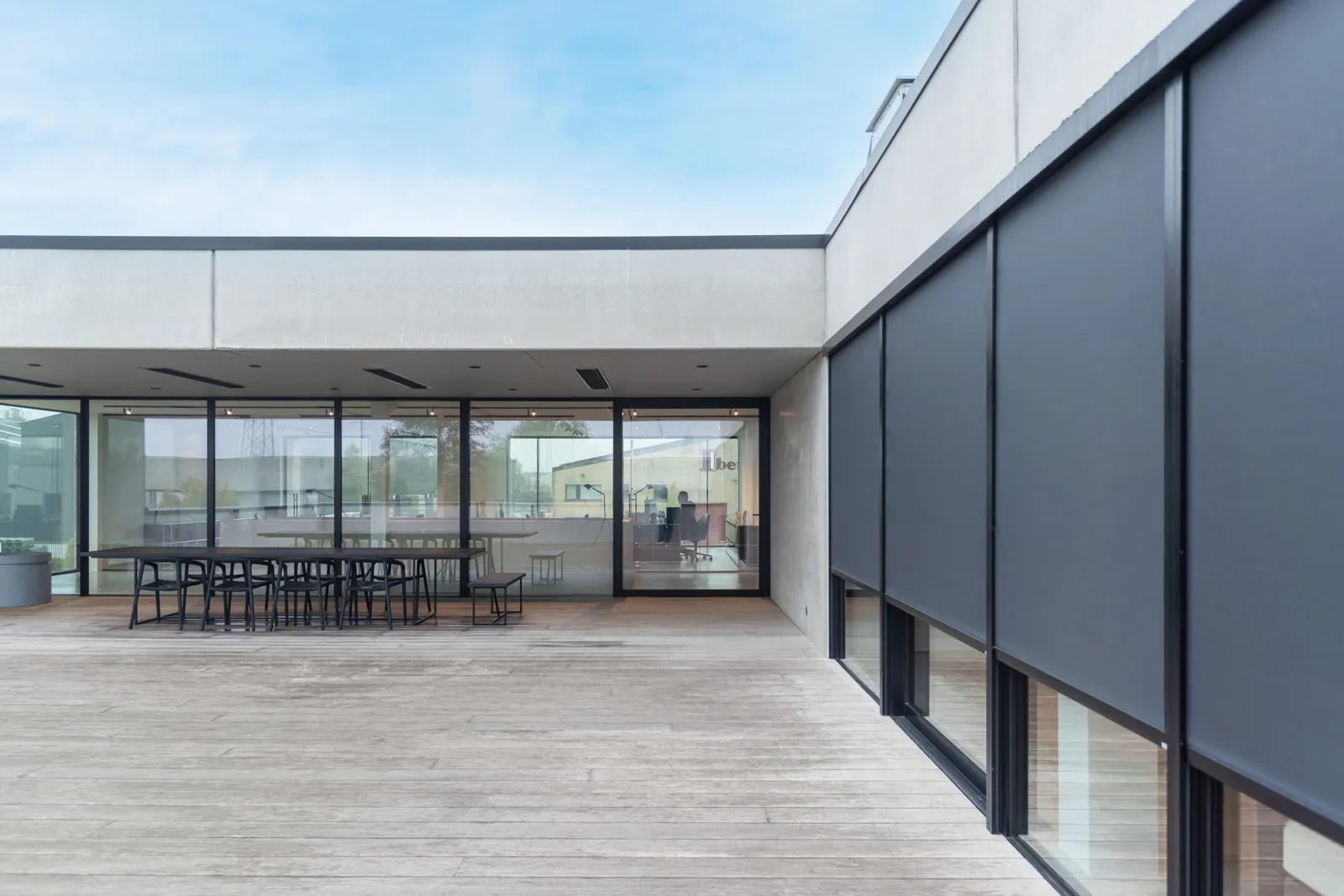
With summer on the way, solar shading is once again a hot topic. Good solar shading not only protects against the sun, but also helps create a comfortable indoor climate and save energy. At DUCO, we offer two main types of fabric shading: vertical screens and projecting screens (CAP). But when should you choose each one?
Vertical screens
Vertical screens are the most traditional type of fabric shading. The solar shading fabric moves straight down in front of the window. These systems are motor-operated and available in a range of versions, from basic solar shading to advanced systems combining ventilation, solar shading and acoustic performance.
A few examples from our range:
DucoScreen Front 150: solar shading for visible or concealed installation, available in sizes up to 6 metres
DucoScreen Top 120: a system installed invisibly behind the outer leaf or visibly; ideal for combining with DucoTwin 120 when solar shading alone is required
- DucoScreen Front 150 Curtain Wall: specially developed for curtain walls, with linked side guides
- DucoScreen Front 95: compact, storm-resistant solar shading, ideal for renovation and new-build projects
- DucoTwin 120 ZR: combines natural ventilation and solar shading in one system with acoustic attenuation
Advantages:
- Versatility: suitable for small to very large dimensions (up to 6 metres)
- Wind resistance: all vertical screens are available in a FIX version and can therefore withstand wind speeds up to force 10
- Linking options: screens can be linked to create a uniform façade appearance
- Operation: all fabric shading is motor-operated. The grilles, however, can be operated manually or by motor.
- Multifunctional: can be combined with ventilation (DucoTwin systems)
- Insect-screen function: the fabric also serves as an insect screen in all versions
Disadvantages:
- Limited daylight: when the fabric is fully closed, less natural light enters
- Visibility: some versions are visible on the façade
CAP projecting screens
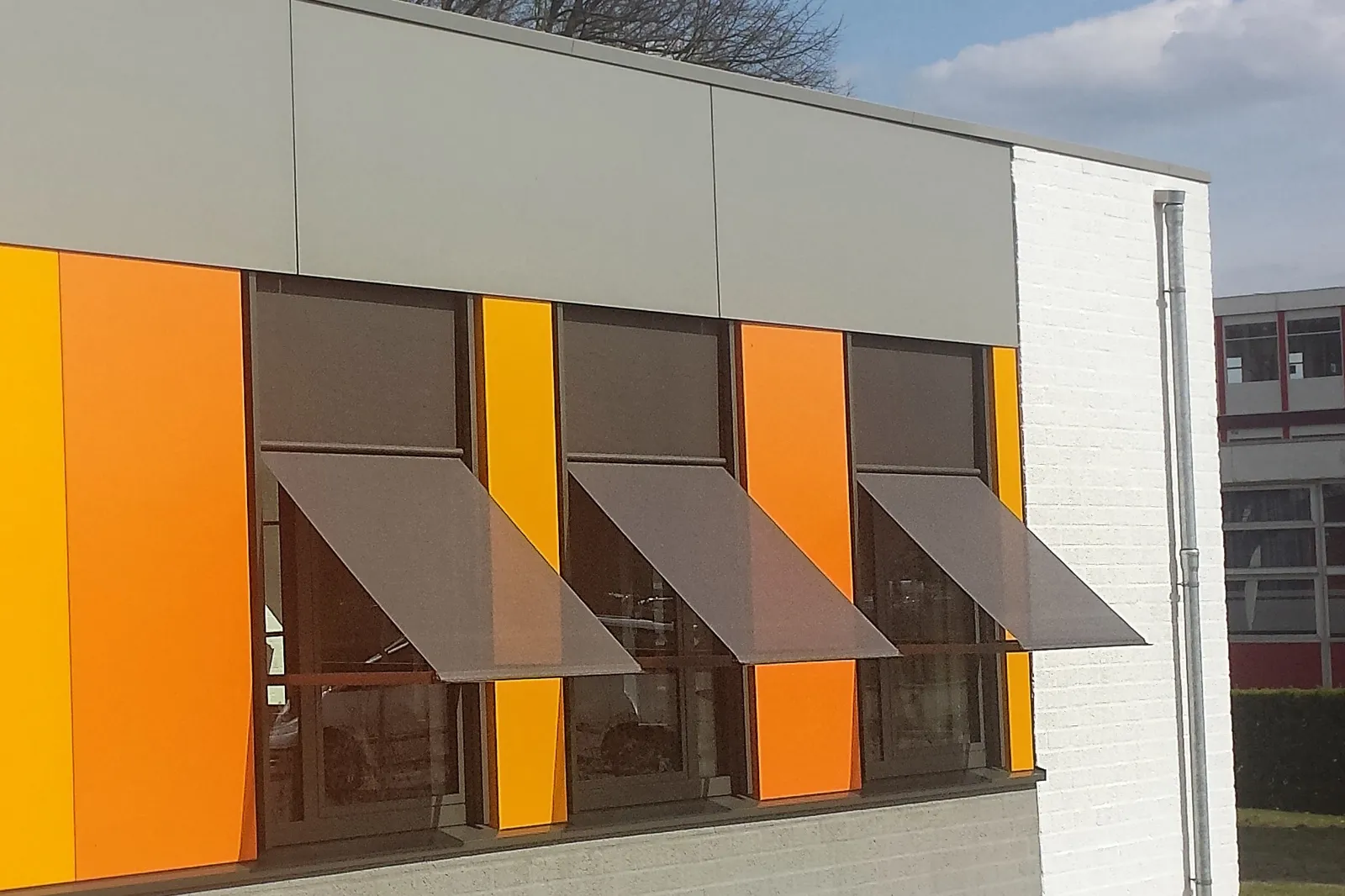
Projecting screens use a clever two-stage system. The solar shading fabric first descends vertically, then automatically projects outwards at an angle of up to 90°. This unique operation keeps the sun’s heat out while allowing plenty of natural light in for a pleasant atmosphere.
A few examples from our range:
- DucoScreen Front 150 CAP: a projecting screen that first descends vertically and then projects outwards to an angle of up to 90°; installed in the cavity or in front of the window
- DucoScreen Top 120 CAP: a concealed system with a projecting-arm function for an optimum balance of light and heat; installed above the window, discreetly visible or concealed
- DucoTwin 120 ZR CAP: combines ventilation, acoustic attenuation and projecting-screen solar shading in one system with acoustic attenuation
Advantages:
- Optimum balance of light and heat: keeps heat out while allowing plenty of light in
- Flexible solar shading: the adjustable angle lets you choose exactly how much sun and shade you want
- Motorised operation: always supplied with user-friendly motor control
Disadvantages:
- Wind sensitivity: withstands wind speeds of up to 50 km/h (a FIX version is not available)
- Cannot be linked: screens cannot be linked to one another
- Wind protection required: must always be fitted with wind protection
- Higher cost: more expensive than vertical screens because of the more complex mechanism
When should you choose each system?
Choose vertical screens when:
- you need maximum protection against wind and weather (high-rise buildings, exposed locations)
- you want to link several screens for a uniform façade appearance
- you need large dimensions (up to 6 metres)
Choose projecting screens (CAP) when:
- you want to retain plenty of natural light while keeping out the heat
- you are in a sheltered location (low wind loads)
- you want flexible solar shading (different angle settings)
- your project is in an urban setting with lower wind loads
Practical considerations
Ventilation integration
Both systems are available in versions combined with ventilation through our DucoTwin range. These systems combine natural ventilation and solar shading in one elegant solution, creating an optimum indoor climate.
Installation and maintenance
Vertical screens are generally easier to install and maintain. Projecting screens require greater expertise during installation because of their more complex mechanism.
Fabric choice
For both systems, you can choose from a range of solar shading fabrics, each with its own characteristics in terms of light transmission, colour and texture.
Our recommendation
There is no universal ‘best choice’, it depends entirely on your specific situation. Vertical screens are the safe, versatile option that works in almost all circumstances. Projecting screens are the premium choice for those who want the best of both worlds: effective solar shading without sacrificing natural light.
Have questions about which system is best suited to your project? Contact us for personalised advice. Discover our fabric shading solutions on our website

Have a business enquiry for DUCO? Get in touch
Companies in this story
Keep following this
Get an email when a new story is published. No account needed.
- SubjectGeneral
- CompanyDUCO







