











Who will be the master builder?
The sustainability transition undoubtedly represents the biggest post-war recovery plan… What are we waiting for?
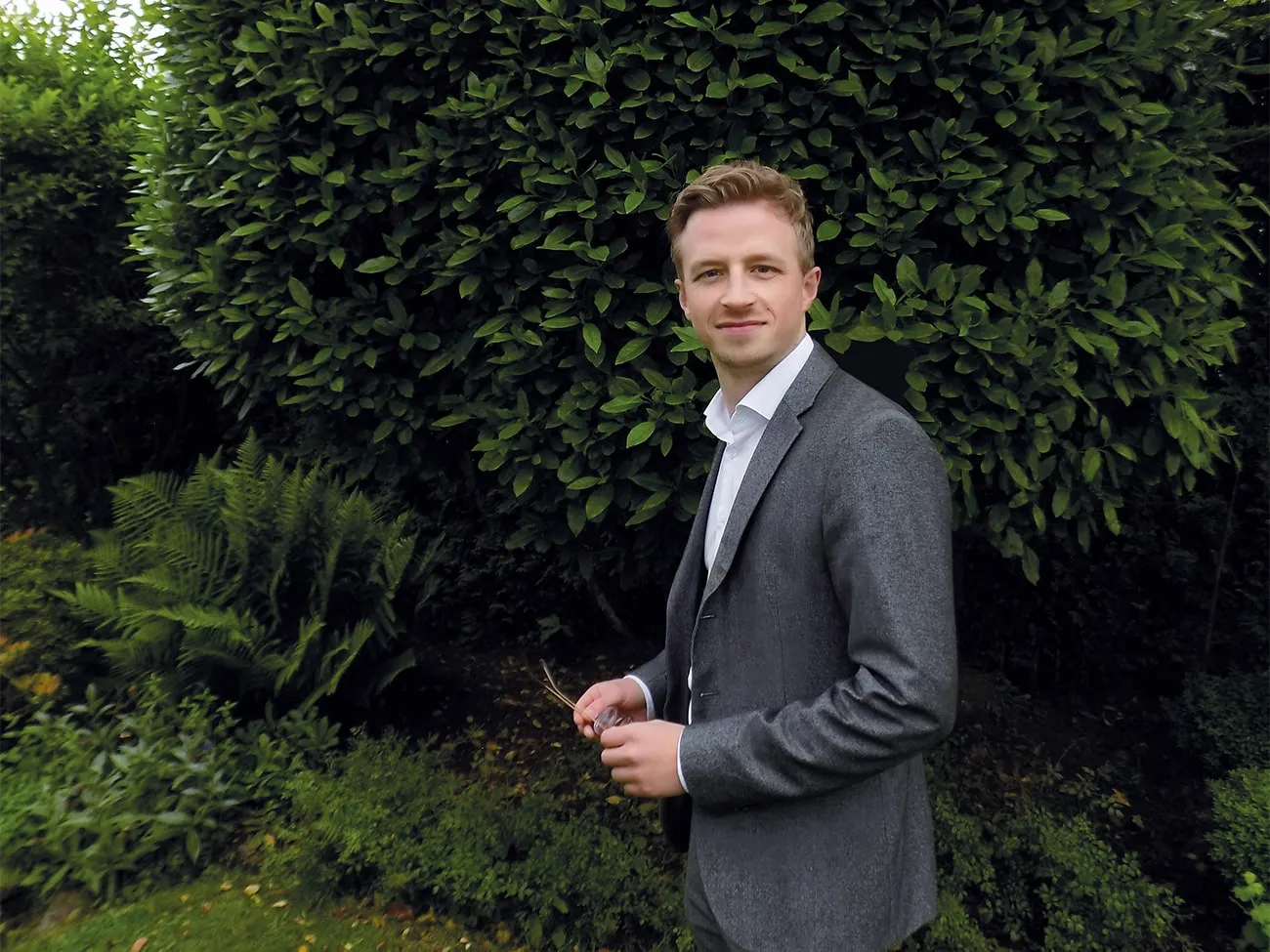
In this edition of ‘De Pen’, Stijn Maeyaert, a public contracts specialist at Tender Law, makes the case for a positive sustainability transition in the construction sector and beyond. This transition goes hand in hand with social engagement, collaboration between the public and private sectors, and a healthy dose of daring. The achievement of climate targets must be seen in its true perspective: a challenge, but also a promising opportunity.
With its tax shift towards zero-emission company cars, the federal government has clearly set the tone for the gradual greening of Belgium’s vehicle fleet. European leaders are meanwhile continuing to discuss a complete phase-out of sales of vehicles with combustion engines by 2030.
Developments such as these show that achieving climate targets will become one of the major undertakings in Flanders and will shape much of the political and economic agenda in the coming decades. The planned nuclear phase-out in 2025 clearly brings these targets into even sharper focus in our region.
Yet it remains important to see the major opportunities alongside all the challenges of a sustainability transition. Our own short-sightedness and scepticism are often the biggest barriers to a forward-looking vision. Research shows that even business owners continue to underestimate the pace of technological change. Moore’s Law remains difficult for the human mind to grasp. Many energy-efficiency and sustainability projects have also become economically viable in recent years. Unfortunately, business policy decisions are still too often shaped by habit, herd behaviour, rigid regulations and structures.
Through the Green Deal, the European Commission intends to mobilise more than €1,000 billion by 2050 to help businesses achieve ambitious climate targets. This includes supporting companies in researching and developing new technologies. The public sector also faces a huge challenge. In March 2018, De Tijd had already highlighted the enormous shortfall in public infrastructure investment compared with neighbouring countries.[1] This need for investment goes hand in hand with other challenges, such as an ageing population, the green transition, increasing diversity, addressing spatial planning and the ever faster-changing international market in which our businesses must compete. How all these projects can be delivered within existing budgetary constraints remains a major question mark.
Ideally, established forms of collaboration between the public and private sectors, including public-
private partnerships (PPPs), public procurement and concessions, would also give governments, citizens and businesses the opportunity to jointly finance a socially supported transition pathway. Does the success of infrastructure funds and cooperatives in recent years not show that private savings, too, can help fund socially beneficial investment? With public-sector participation and guarantees, businesses, supported in part by citizens and their savings, should be able to bring ambitious, high-risk projects to market, accelerating the greening of our living environment and strengthening our country’s international competitiveness.
[1] https://www.tijd.be/politiek-economie/belgie/economie/sire-het-land-brokkelt-af/9988392.html
De Pen is passed on to Kathleen Dewulf, Managing Partner at Global Estate Group.
Question about this story? Ask your question
Keep following this
Get an email when a new story is published. No account needed.
- SubjectGeneral







