











World first: anti-collision system compliant with future European standard EN 17076
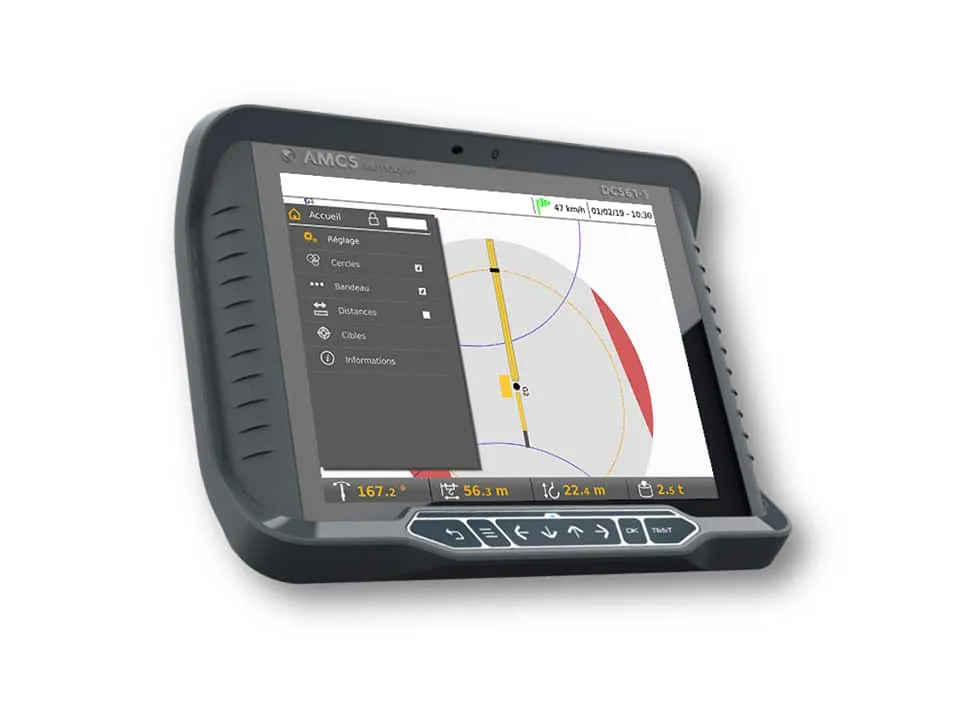
Europe is working on future standards for anti-collision systems for tower cranes and mobile cranes. Following several months of development and testing in real-world conditions, RDS Electronics is launching its brand-new AMCS anti-collision solution, compliant with EN 17076.
The upgraded system is equipped with safety components in accordance with EN 13849-1. With performance level PL d, the AMCS DCS 61-S anti-collision system is compatible with future lifting equipment control systems and has also been SIL 2 certified in accordance with the EN 61508 standard.
The DCS 61-S, distributed exclusively by RDS Electronics in Belgium and the Netherlands, is a world first in the field of cranes and anti-collision systems. The product, which is continually evolving, has been developed to incorporate a range of new functions, including anti-collision management between tower cranes and mobile cranes, and between tower cranes and concrete pumps. The unit is installed on tower cranes and mobile cranes, transmits information over a radio network and constantly tracks the position of each machine using GPS antennas. While older anti-collision systems were limited to simply deactivating restricted zones temporarily, the new system automatically detects the movements of mobile cranes and integrates with tower crane controls. This allows it to create an interference zone for the machines concerned in a sophisticated way.
In real time, in 3D
The DCS 61-S calculates the distances between every component of the cranes, including the position of the cab, as well as their movement speeds, in real time and in 3D. The system can therefore intervene in the control mechanism, slowing the tower crane's jib or trolley before bringing it to a complete stop at a preset distance from the mobile crane. The unit on the mobile crane emits an increasingly loud audible signal as it approaches a restricted zone or interference zone. Unlike older anti-collision systems, the DCS 61-S also allows restricted zones to be activated or deactivated remotely, and interference management to be disabled between certain components, such as masts or jibs. The DCS-61-S system for mobile cranes also retains its two other functions, which are essential for maintaining productivity and safety on site.
- Zoning: the system allows users to quickly create restricted zones in 3D directly on screen by combining geometric shapes with perimeters and static obstacles
- Data logger: the DCS 61-S continuously records and stores data on events, movements and all crane parameters, so they can be viewed directly on the system screen in the cab and/or downloaded to a USB stick.
From anywhere in the world
The DCS 61-1 for mobile cranes offers the added benefit of a 3G/4G GSM modem, allowing crane output to be monitored accurately and in real time from anywhere in the world. The latest innovation, IoT Lifting, comprising a web platform and mobile app, makes it possible to manage AMCS units, collect crane data, generate statistics, monitor productivity and remotely diagnose crane systems in real time. The new anti-collision system is easier than ever to install and programme, thanks to the screen installed in the crane operator's cab, which provides all the information needed to operate the machine in real time.

First experience in the field
A few months ago, the DCS 61-S for mobile cranes was installed on its first site. This was the future Les Ardoines, station, east of Vitry-sur-Seine in France. At this Grand Paris Express site, both the mobile crane and the two tower cranes were fitted with the DCS 61-S. An additional challenge was interference from another site with a tower crane and an overhead bridge crane. The upgraded anti-collision system proved a hit, demonstrating both its effectiveness and its necessity. The DCS 61-S's success was recognised with the Technical Innovation of the Year award at the 2020 Trophées Grues à Tour, presented at JDL last September.
Safety and efficiency come first
Safety and efficiency are priorities for RDS Electronics. The new anti-collision system is therefore ideally suited to the need for immediate decision-making on site to ensure productivity and safety. In addition to AMCS anti-collision systems, RDS Electronics sells and hires out Orlaco camera systems for tower cranes, mobile cranes, telescopic cranes and lattice boom cranes. These allow crane operators to work more safely and efficiently, as they are no longer dependent on others and can therefore respond more quickly. Operators can also maintain a correct posture for optimum ergonomics. In short, RDS Electronics' systems, with the innovative DCS 61-S anti-collision system as the perfect example, ensure safety and productivity in the working environment at all times.
Question about this story? Ask your question
Keep following this
Get an email when a new story is published. No account needed.
- SubjectGeneral







