A dream restored to its former glory
Text Koen MortelmansImage Kathleen Burnay / Beliris en Jean-Luc Deru
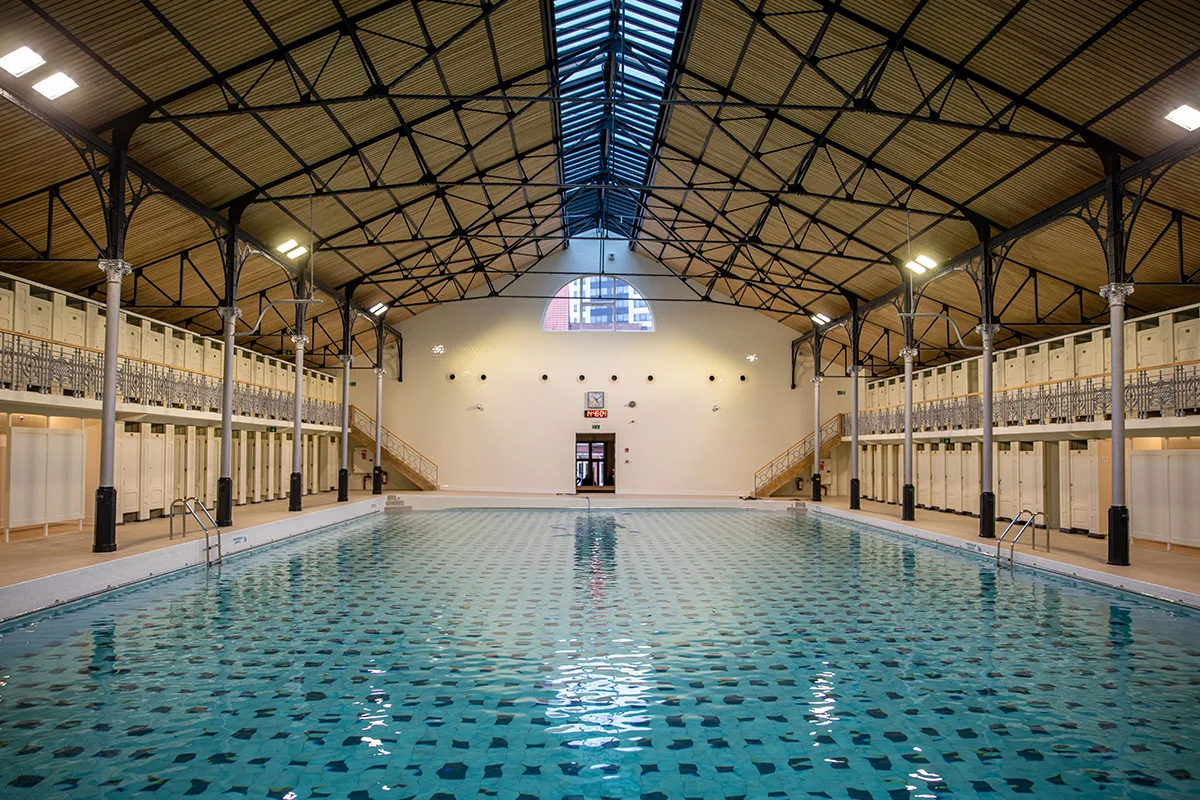
Ixelles swimming pool is the oldest indoor swimming pool in the Brussels-Capital Region. It has been a protected monument since 2007. The recent renovation and restoration works not only restored it to its former glory, but also improved access to the building and enhanced swimmers’ comfort.
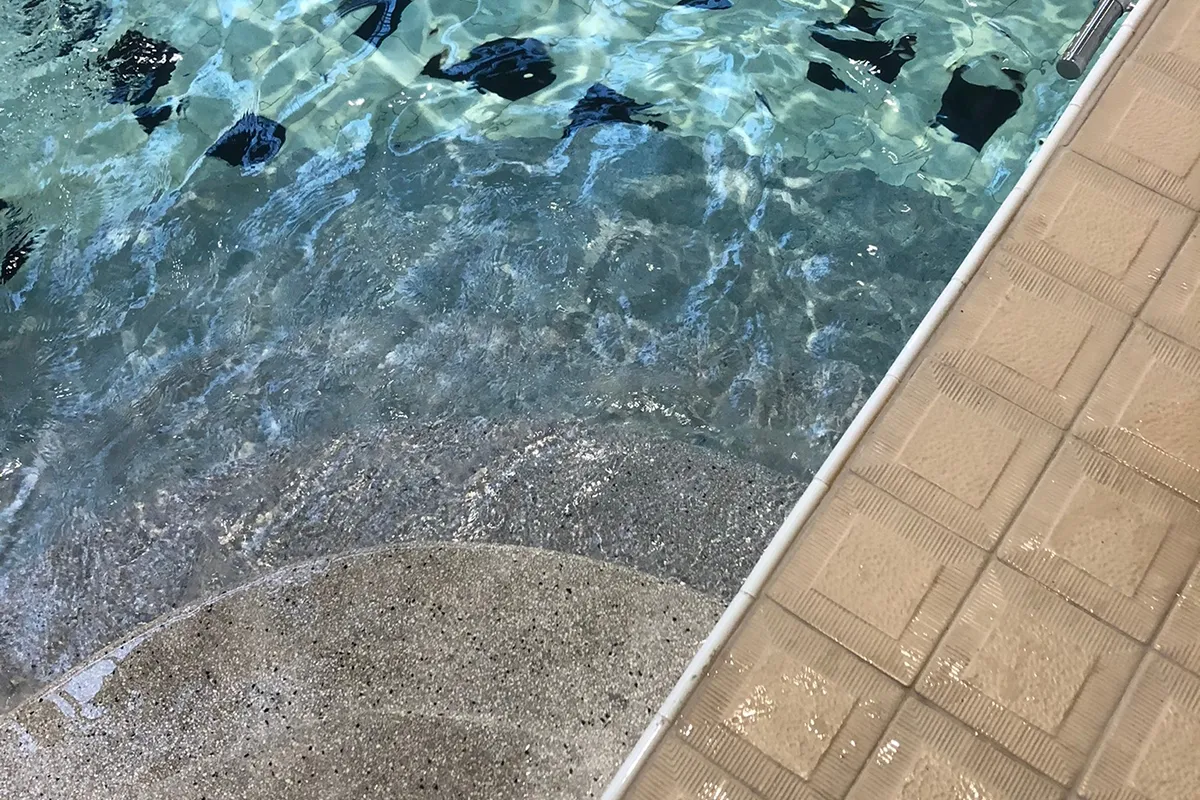
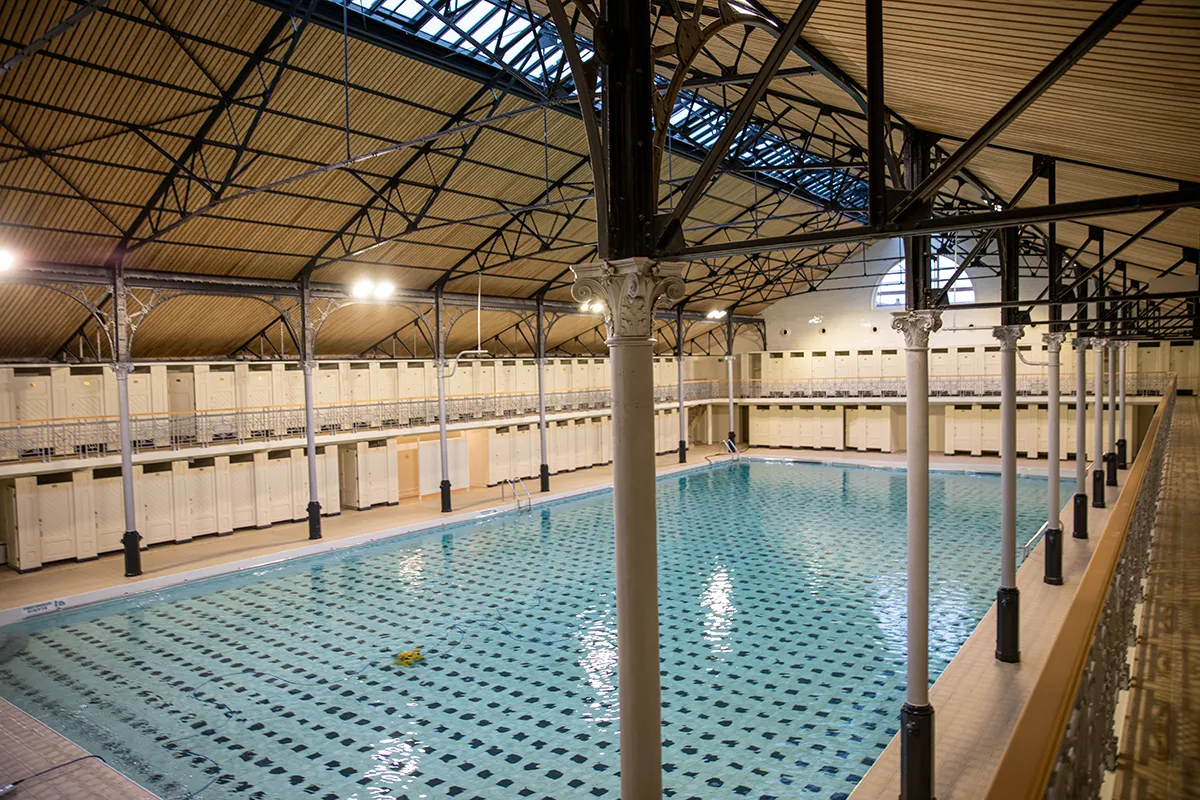
Measuring 29.20 metres long and 14.40 metres wide, the pool was designed by French engineer François Hennebique and is one of the earliest examples of reinforced concrete. The building was designed by Belgian architects Alexandre Cooremans and Jules Rau. Work began in April 1900, but the pool did not open until more than four years later. Unlike the open-air pools common at the time, this pool could remain open all year round.
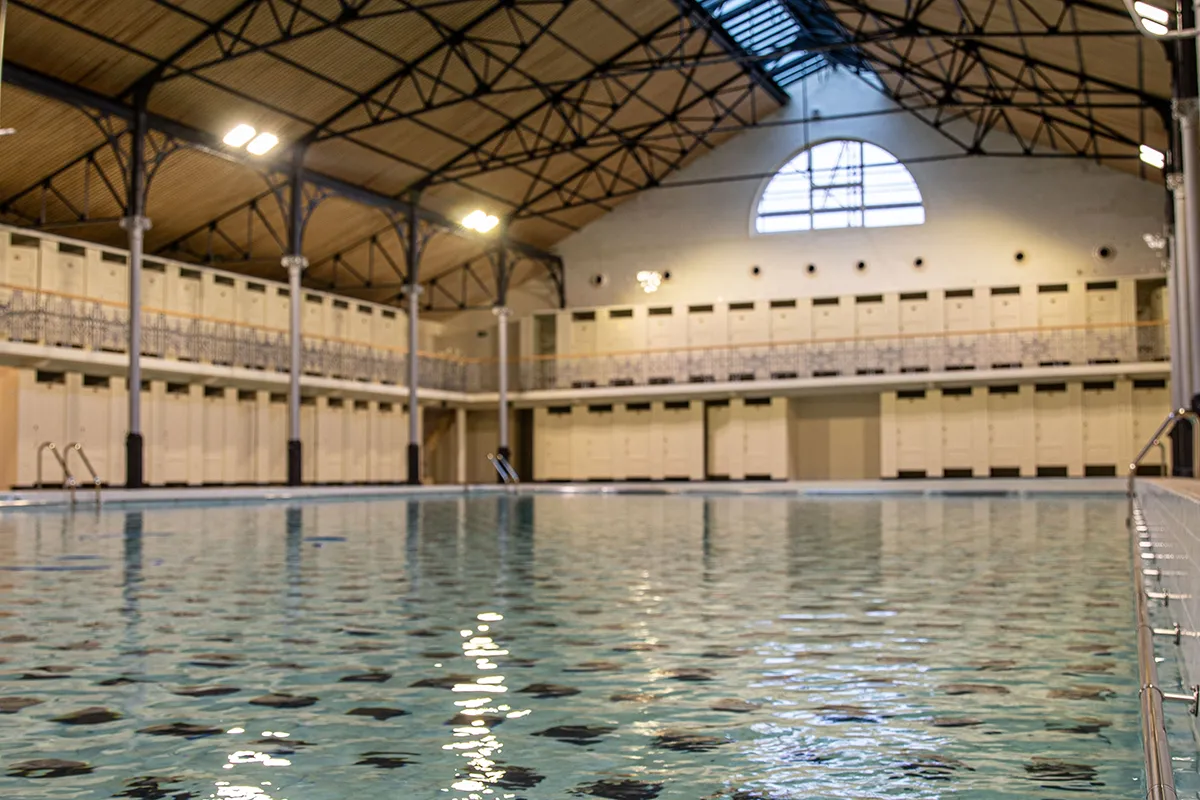
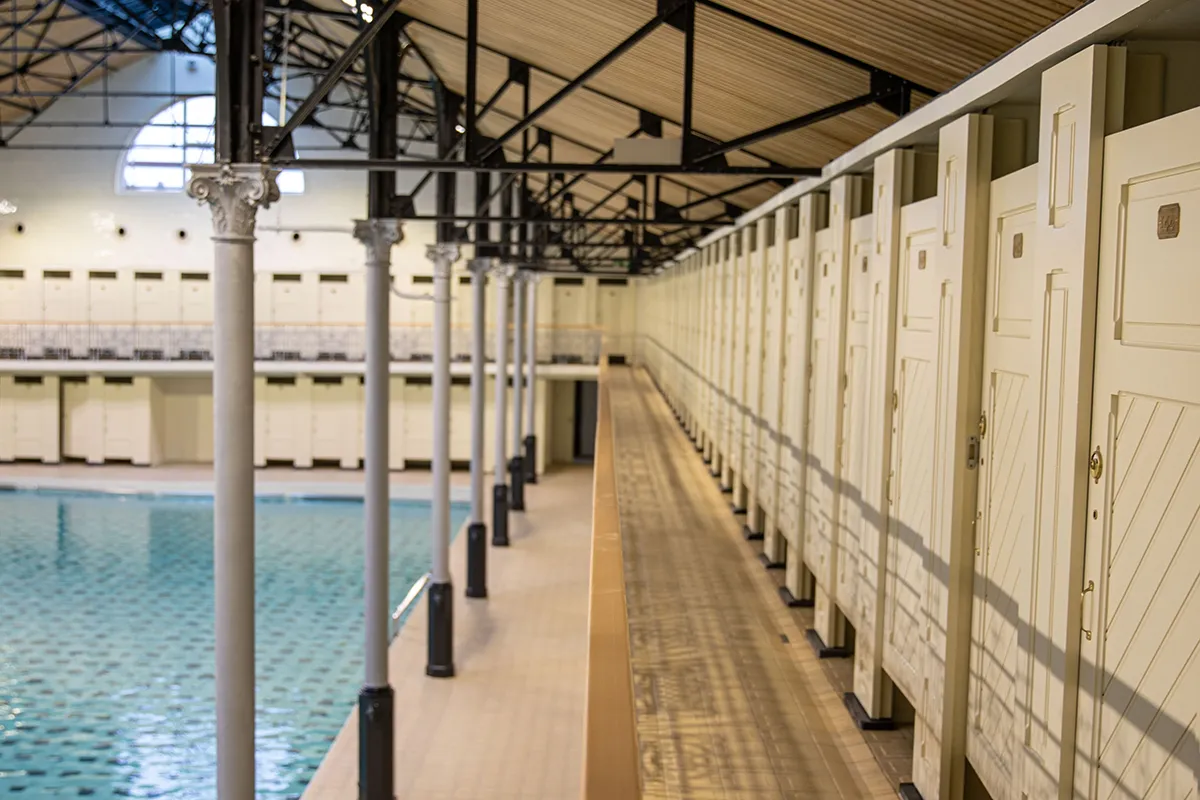
The chosen pool layout, with an entrance block separated from the swimming hall and a gallery of changing cubicles, remained in use until the 1950s. The separate baths from the early years were replaced by showers in the 1960s. “To reconcile the preservation and use of the original changing cubicles with current hygiene regulations, we had to adapt the route so that swimmers walk through the disinfectant footbath with their shoes in their hands before reaching the individual cubicles,” explains Elien De Swaef, spokesperson for client Beliris.
“Lifeguards open and close the cubicles. The entire layout of the building has been adapted to clearly distinguish between the areas where shoes are worn and those where people go barefoot.”
Renovation and restoration
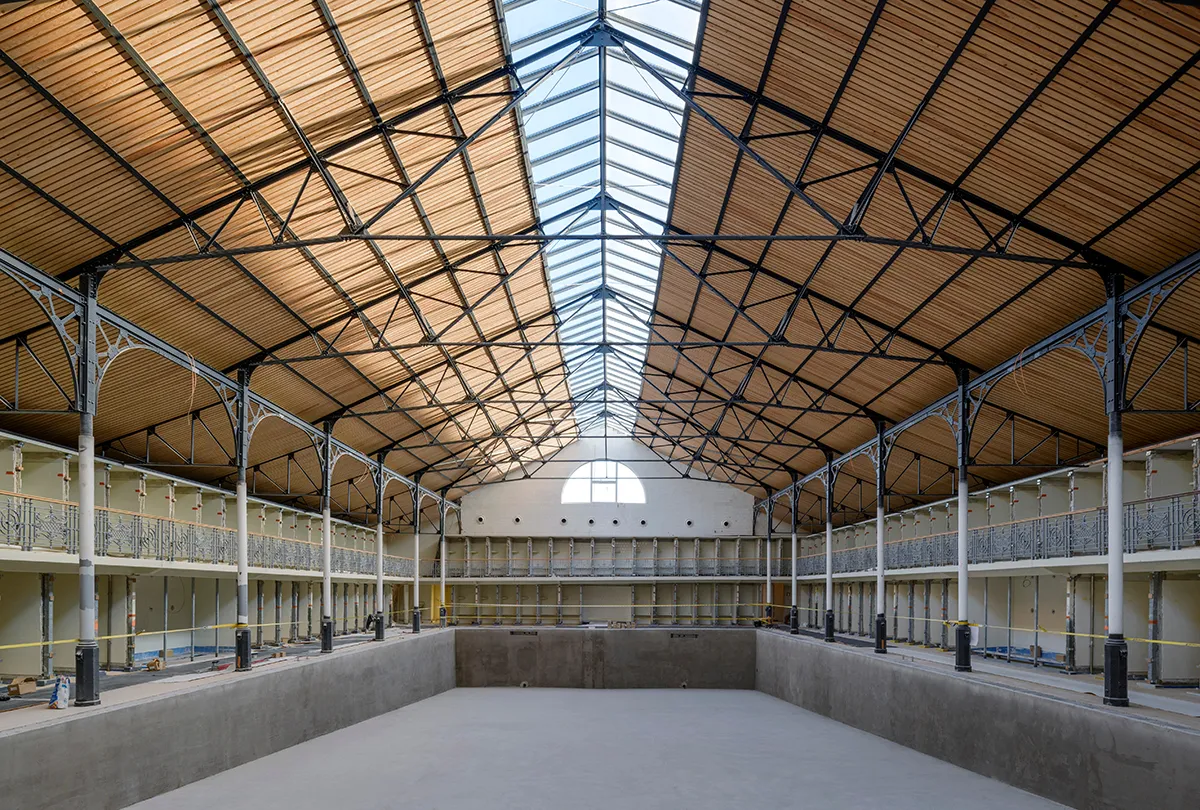
The protected parts were restored during the recent works. “These include the swimming hall, the filter room, the central corridor from the street entrance and the former director’s residence. The swimming pool’s offices are now located there,” says Elien De Swaef.
The floor of the swimming hall is approximately 1.80 metres above street level. In the past, it could only be reached by stairs. “We demolished two unprotected volumes on either side. This allowed us to create a bicycle parking area in the space freed up on the right, and a new entrance on the left. This meant we did not have to alter the protected entrance dating from 1904, while ensuring that accessibility meets current regulations and comfort standards.” Another outbuilding was retained, but converted into sports and teaching rooms for activities including first aid and the theory component of lifesaving. Group changing rooms and technical spaces are housed in a completely new volume. The new entrance is equipped with a ramp and lift for people with reduced mobility, including voice control for people with visual impairments and buttons positioned low enough for wheelchair users.
The wooden ceiling lining in the swimming hall is a new addition. It improves both the acoustics and the atmosphere. The faience tiles on the walls and in the pool were retained, although badly damaged ones had to be replaced. “It was not easy to find a manufacturer able to reproduce the tiles to the original design in small quantities. The same applied to special elements such as friezes and skirting tiles,” explains Elien De Swaef.
Improved energy performance
Work began in 2020 and lasted four years, much longer than the two years originally planned. During the works, it became clear that the skylight in the swimming hall had to be completely dismantled and replaced with a new structure. “We used triple glazing, which, together with other energy-saving measures, improved the building’s energy performance. Some of the roof windows can be opened to provide natural night-time ventilation and, in the event of a fire, smoke extraction. New air handling units and a CHP system enable us to generate electricity and heat at the same time. The movement of the electricity-generation motor also produces heat, which we use to heat the pool water and the water in the sanitary facilities.”
Beliris invested €7.4 million in this special project, while the municipality of Ixelles contributed €5.4 million, partly funded by a regional government grant. Beliris, the main investor, was established as a public body under a cooperation agreement between the federal state and the region, with the aim of enhancing Brussels’ status as the capital of Belgium and Europe. It delivers construction, renovation and restoration projects in mobility, social housing, green spaces, urban renewal, culture and sport. Beliris’ first project was the Belliard tunnel. Ixelles swimming pool is a welcome addition to its impressive portfolio …
Question about this story? Ask your question
Who worked on it
- ClientBeliris (Brussel)
- Renovation architectsAAC Architecture (Brussel), greisch (Brussel) en Ecorce (Luik)
- Main contractor(s)In Advance en Valens (Brussel)
Keep following this
Get an email when a new story is published. No account needed.
- SubjectMonuments