Huis van de Vrije Schippers, Ghent | Craftsmanship of the highest order
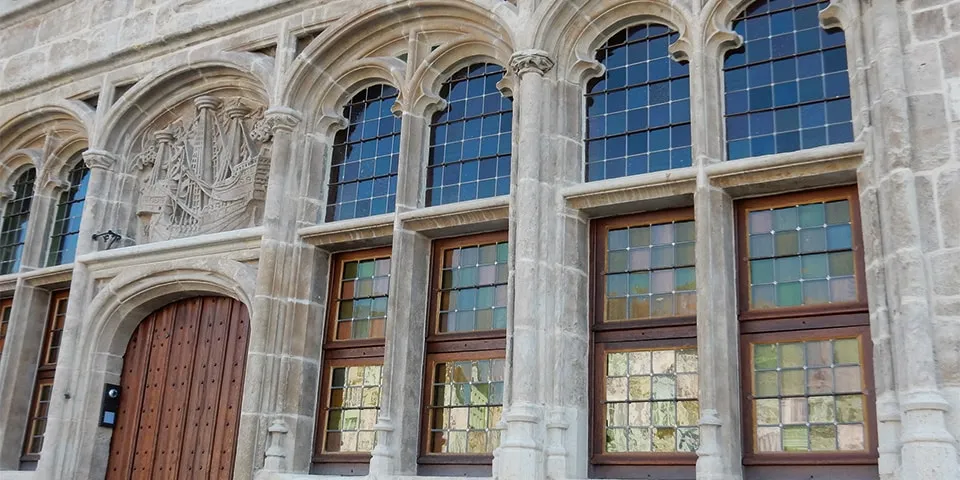
Restoring stained glass is specialist work of the highest order. One of the rare experts in this field is Glasraamatelier Erwin Snijders from Moerbeke-Waas. It is no surprise that this craft artist was involved in the renovation of Huis van de Vrije Schippers in Ghent. And he worked his magic, with the stained-glass windows once again shining in all their glory.
Restoring stained glass is a highly technical undertaking in which insight and precision are crucial, especially when the pieces are part of a listed monument. “To deliver lasting work that respects the historical context, the original materials and the heritage value of the building, you need an in-depth knowledge of the types of glass, the various materials and the possible cleaning techniques,” says Erwin Snijders. “You learn the basics during your training, but only experience and passion can give you the maturity needed to bring complex projects to a successful conclusion.”
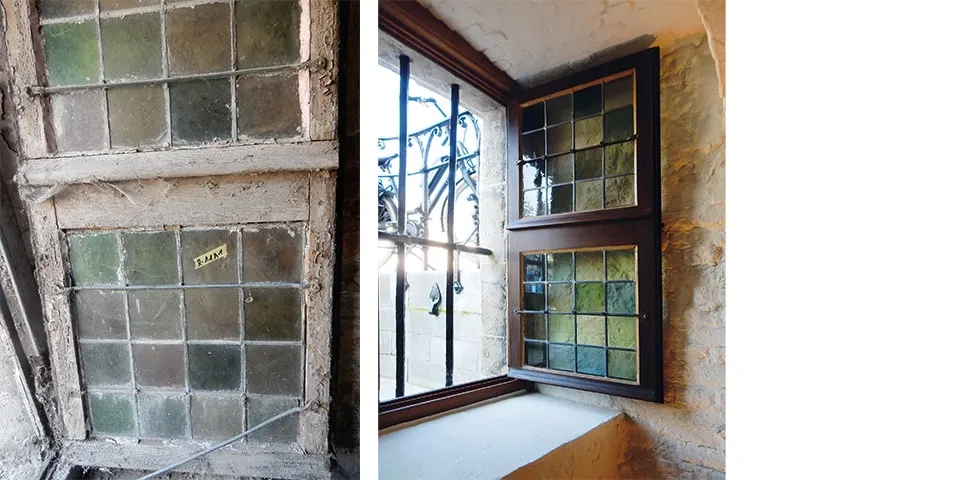
An example of the magic Glasraamatelier Erwin Snijders works: a stained-glass window before and after restoration.
The decision is made to re-lead the panels
It is this maturity that sets Erwin Snijders’ studio apart. Since 1993, it has restored stained-glass windows in historic buildings across the country and beyond. At Huis van de Vrije Schippers, the work involved 219 windows in wooden frames (109 m²) and 36 in natural-stone frames (16 m²). “As the lead came had deteriorated and a great many pieces of glass needed replacing, it was decided to re-lead all the stained-glass panels. The old, mouth-blown greenish panes were cleaned and reused. The visually jarring yellow and pink panes added to the front façade during a previous restoration to brighten up the building were replaced with green ones, like those found in the best-preserved façade in the adjoining Hazewindsteegje. These panes are German-made and were produced using the same traditional method, so they too are mouth-blown.”
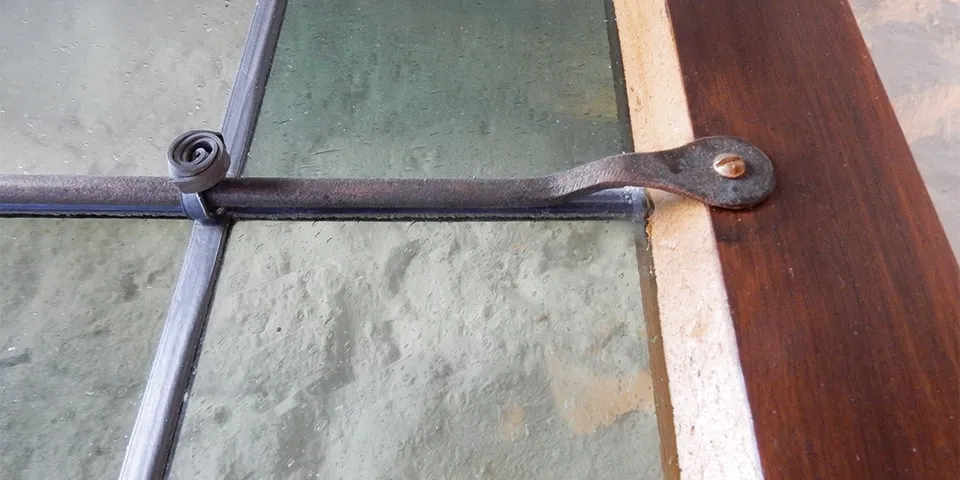
The iron saddle bars had been badly affected by corrosion, so they were recreated in copper.
And there was more…
As the iron saddle bars with their forged ends had been badly affected by corrosion, they were recreated in copper. “This kind of commission is also part of our area of expertise,” says Erwin Snijders. “A few copper examples were still in place in Hazewindsteegje, and these were conserved. To complete the picture, we reinstated the stained-glass windows using the traditional method, with linseed-oil putty. Given the large number of stained-glass windows and the prestige of Huis van de Vrije Schippers, this was a very rewarding project for us. Technically, it was right up our street, and the result speaks for itself. Simplicity is the ultimate sophistication…”
Question about this story? Ask your question
Wie aan Huis van de Vrije Schippers werkte
- architect
 CallebautMentioned in Huis van de Vrije Schippers, Ghent | Restoring the historic guildhall
- contractorMonument VandekerckhoveMentioned in Huis van de Vrije Schippers, Ghent | Restoring the historic guildhall
- glas-in-loodramenGlasraamatelier Erwin SnijdersIn this story
Keep following this
Get an email when a new story is published. No account needed.
- ProjectHuis van de Vrije Schippers
- SubjectMonuments
- CompanyGlasraamatelier Erwin Snijders