Acoustics in timber construction: the details make all the difference
Text Tim JanssensImage AMS, LOW Architecten, VK architects+engineers, part by Sweco, Sweco Belgium
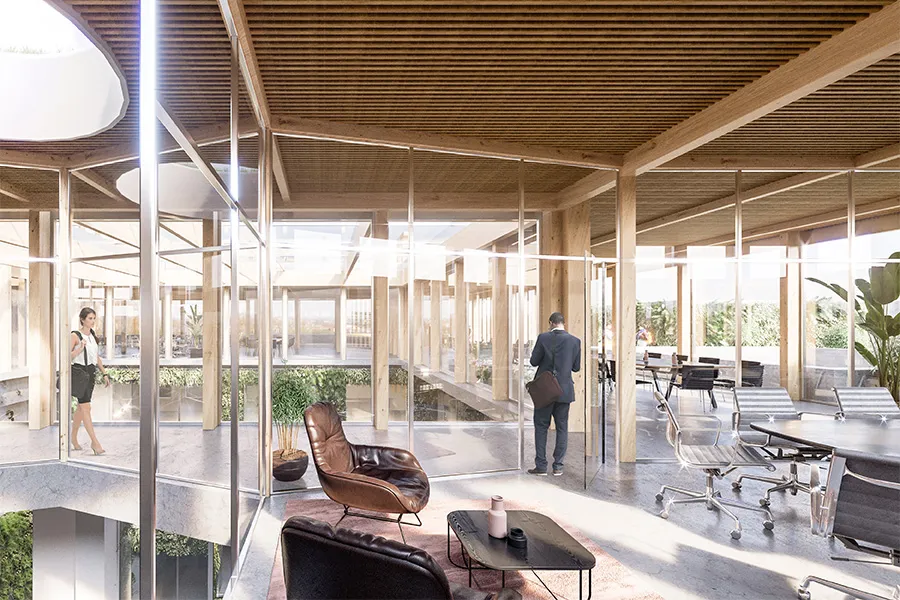
Thanks to the European 2050 targets and the associated requirements for CO2 reduction, timber construction is rapidly evolving from niche to mainstream. The same is true of acoustics, which is increasingly recognised as a prerequisite for a successful building project. However, reconciling the two is no easy task, as traditional acoustic principles for mass construction cannot simply be applied to CLT and other timber structures. “Bringing in an acoustics specialist from the outset is therefore well worth doing,” say Tom Vandervorst and Lieve Van der Spiegel, two prominent members of Sweco’s newly formed acoustics team. “If you want to get the best possible results within budget, the key is to bring architecture, structural engineering and acoustics together in a straightforward, economically viable solution.”
There was a time when acoustics was one of the few remaining gaps in Sweco Belgium’s range of services. In keeping with the forward-thinking interdisciplinary engineering and architecture practice it is, the company has now firmly addressed this, starting last year. Both acoustic consultancy VENAC and the acoustic specialists at VK architects+engineers have since been incorporated into the Sweco group. It is a work in progress, but the ultimate aim is clear: to work across disciplines and share expertise with other fields within the company. Tom Vandervorst, former managing director of VENAC and Acoustics Team Manager at Sweco Belgium for the past year, knows this is essential to staying ahead in today’s construction industry. “Acoustics is a live issue, as awareness grows that the level of acoustic comfort in buildings has a bearing on the health and wellbeing of their users. We are often only called in when a problem has arisen, but fortunately there are also construction professionals who take a proactive approach and routinely consult an acoustic engineer.”


Collaboration with architecture and structural engineering
Lieve Van der Spiegel has also noticed that greater importance is being attached to good acoustics. As manager of the acoustics team at VK architects+engineers, part of Sweco, she is a strong advocate of collaboration with other construction disciplines. “Acoustics does not exist in isolation, but is also shaped by the choices made by architects and structural engineers. You can come up with all kinds of solutions to improve acoustic comfort at a later stage, but that takes time, money and flexibility. If, on the other hand, you build it into the design process from the outset, you can avoid many problems (under- or over-dimensioning, higher costs, increased CO2 emissions …) and optimise acoustic comfort in an economically responsible way. This is not just about specific acoustic details, but also broader design decisions: determining the intended sound level in each zone, incorporating acoustic buffers based on the spatial layout … In short, the watchword is to think things through and weigh up the options in advance, which requires meticulous coordination between architecture, structural engineering, building services, sustainability and acoustics. The challenge is to bring these different aspects together in a straightforward, economically viable solution. Otherwise, you risk having to scale back your environmental or acoustic ambitions for budgetary reasons, and that is clearly not the aim.”
Timber and acoustics: a complex relationship
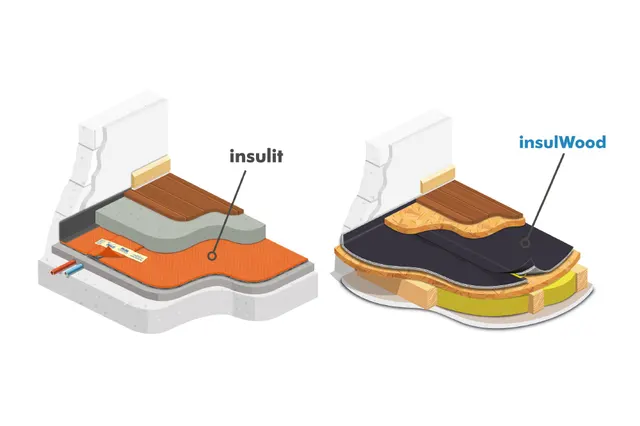
Within acoustics as a specialist field, timber construction occupies a particular position. The acoustic principles that apply to conventional mass construction cannot simply be transferred to CLT and other timber structures. “One of the main differences is that timber construction has a lighter supporting structure. This means there is not enough mass to achieve the required sound insulation, so a specific approach is needed. Low-frequency sounds are also a major issue. Footfall, for example, is a significant problem that cannot simply be solved with a conventional floating screed. In addition, exposed CLT structures can cause a great deal of sound to radiate into neighbouring spaces. All this means acoustic detailing sometimes has to go a long way: structural breaks, resilient strips between a timber floor panel and a CLT wall, in accordance with the mass-spring-mass principle …” explains Tom Vandervorst. “Other challenges are that the acoustic performance of materials is usually tested on a concrete floor slab, even though the results can be very different for a CLT floor slab, and that manufacturers connect their CLT elements in different ways, resulting in different levels of flanking sound transmission,” adds Lieve Van der Spiegel. “As potential acoustic problems are therefore not apparent from the figures manufacturers provide in advance, it is useful to involve specialists who can see beyond them. We have developed our own calculation programme to produce better designs based on actual measurement results from our projects. That makes a crucial difference.”
Leave nothing to chance
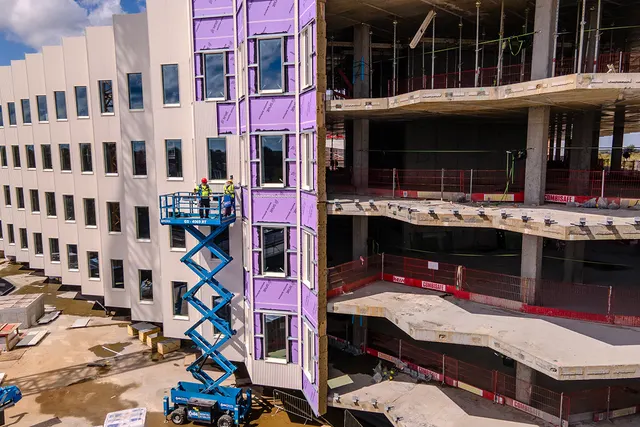
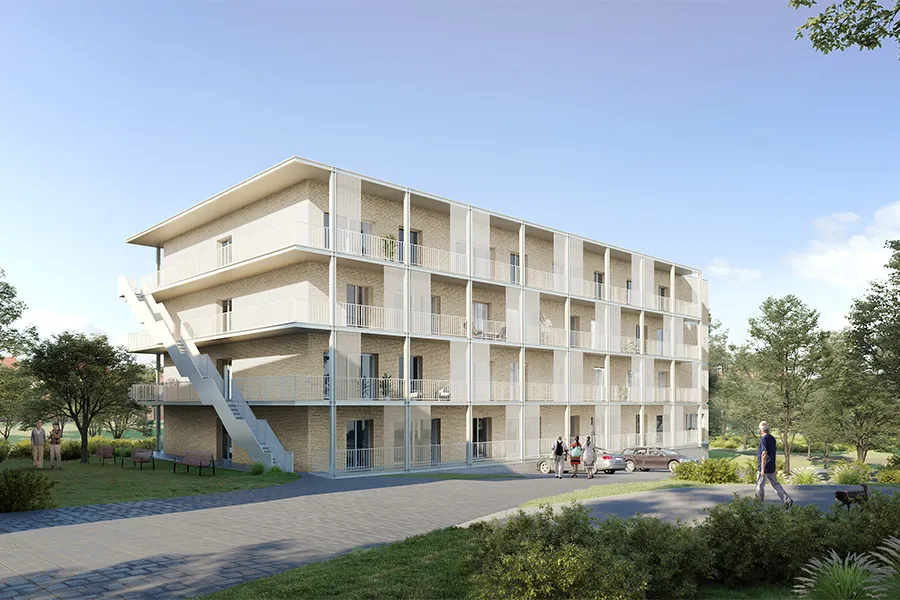
Sweco Belgium and VK architects+engineers, part of Sweco, have no shortage of projects from which to distil reliable acoustic data. “One example is TechniCité in Doornik, a pilot project in which the floor levels are entirely in CLT. We achieved very good results in reducing flanking sound transmission by placing the partition walls on resilient strips and providing structural breaks where the partition walls meet the façade panels, among other measures.
We are currently working on another ‘hybrid project’ on Reyerslaan in Brussels, where the partition walls are made of CLT. The new Infrabel headquarters at Zuidstation, an office building of 30,000 m², is to be built entirely in CLT,” says Tom Vandervorst. “Several CLT office buildings are also going up near Brussels Airport,” adds Lieve Van der Spiegel. “Another notable project under way is the renovation of the Flemish government’s ministerial offices on Materlaarsplein in Brussels, including a CLT extension on top. In short, timber construction is no longer confined to niche projects. All the more reason to leave nothing to chance when it comes to acoustics. Sweco Belgium is keen to lead this market evolution and has extensive expertise to ensure the particular requirements of timber construction are properly
addressed.”
Een zakelijke vraag aan Sweco Belgium? Get in touch
Companies in this story


Keep following this
Get an email when a new story is published. No account needed.
- SubjectAcoustics
- CompanySweco Belgium
- CompanyVK architects+engineers