“BIM continues to deliver benefits every day, even in operation”
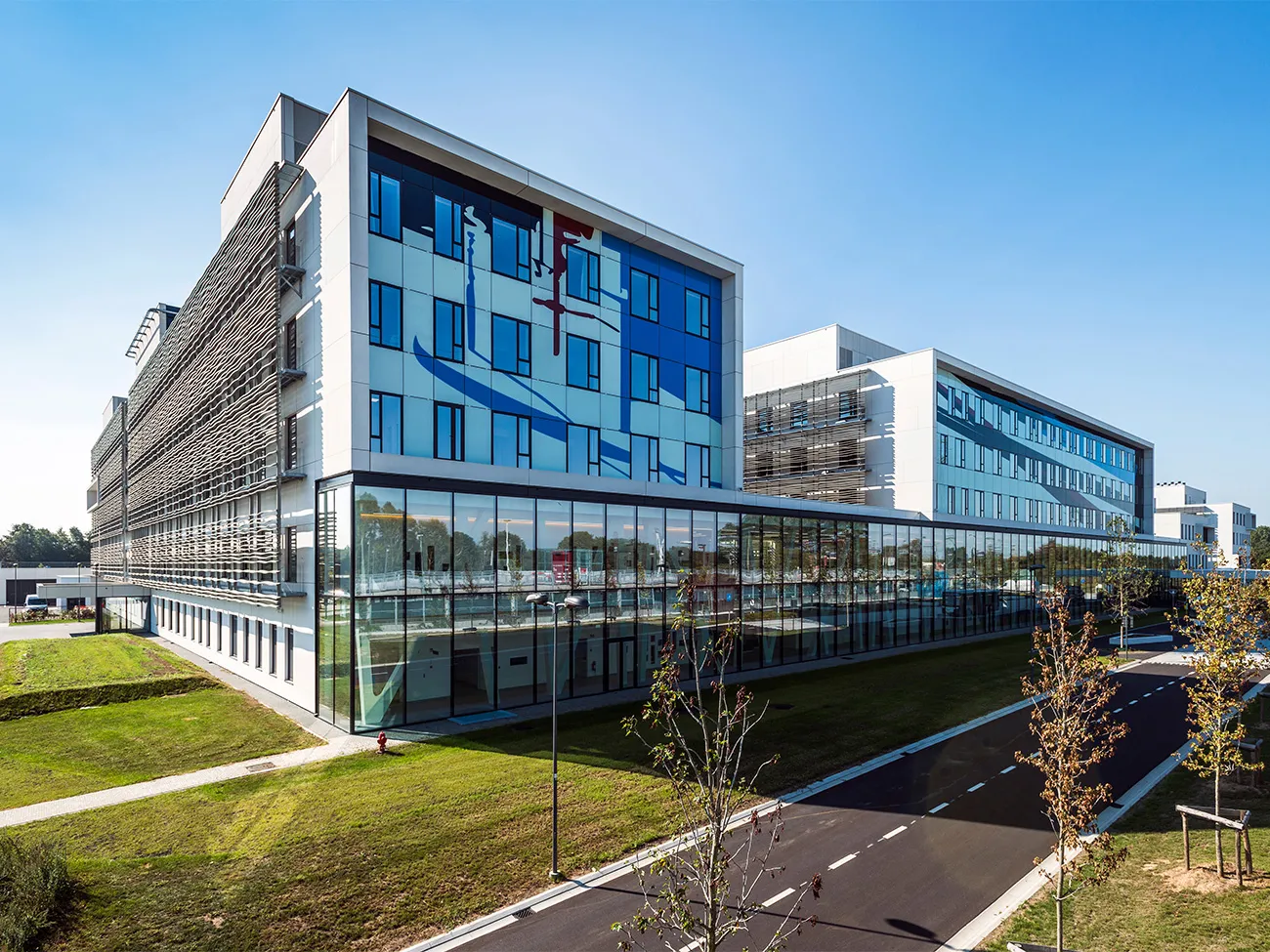
BIM is now firmly established in the construction industry, but ten to fifteen years ago it was still a distant, almost inconceivable dream. The project that paved the way in Belgium was AZ Sint-Maarten in Mechelen, which opened its doors on 15 October 2018. Technical director Jan Claesen looks back on the pioneering years and explains how BIM continues to prove its worth every day in the operation of the new hospital: “It is already clear that we will more than recoup the cost of the lessons we learned back then.”
How did the idea of using BIM for the design, construction and operation of AZ Sint-Maarten come about?
Jan Claesen: “AZ Sint-Maarten was a €350 million project. We were acutely aware that delivering such a vast and complex project within the target timescale and budget would be a huge challenge. Nobody was familiar with the scale of the task, so I set out to find a project management tool that could help us keep track of everything and make it all manageable. We hoped to identify and resolve any unpleasant surprises involving the programme, budget management, communication and coordination at an early stage, in other words during the preparation phase, so that we would have everything in order during construction. We also wanted to avoid losing crucial information along the way. After searching online, receiving a tip from our software supplier Autodesk and making enquiries in academic and architectural circles, BIM emerged as a deus ex machina, having already delivered promising results in the Netherlands and France. That is how things got under way.”
BIM was still a distant prospect in Belgium at the time. Did you have to contend with so-called ‘teething problems’?
“Of course, that was inevitable. There were no precedents in Belgium fifteen years ago, so initially neither we, nor the architect or the engineering consultancies involved, fully understood what it would entail. On the one hand, we ran up against technological limitations, such as unsuitable software and insufficient computer capacity and processing speed.
On the other, we were starting from scratch in terms of structure and working methods. Despite this, we decided to implement the BIM methodology from the design phase onwards, alongside Peggy Bovens’ BouwData working method (PB calc & consult) to keep the budget under control.”
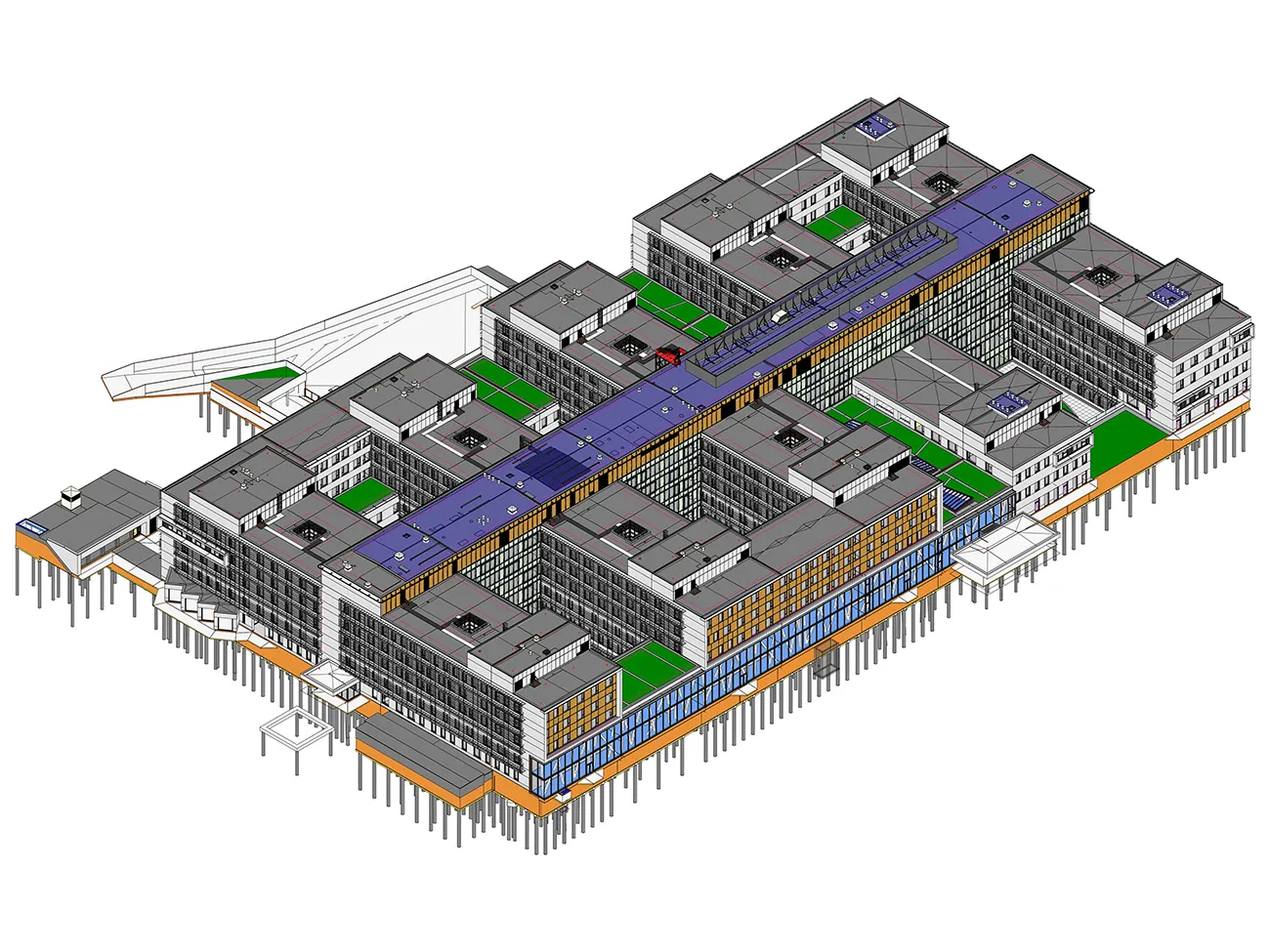
In your view, what was the main added value of BIM in delivering the new hospital?
“It was not just the standard clash detection and the practical and financial benefits that came with it, but also the openness and transparency we were able to ensure through the shared BIM model. This inevitably involved an intensive learning process for the contractors, but once they had got through that, the BIM methodology really began to pay off: drawing up the programme, deriving quantities, resolving clashes with building services … All the key decisions were made during the preparation phase, so we did not have to spend the construction phase bogged down in daily discussions and meetings. In terms of project duration, efficiency and reducing defects and waste (easily 10 to 15%), it made a huge difference. Difficult as things sometimes were, there was always a positive dynamic around the project. Given how complex and ambitious the delivery of AZ Sint-Maarten was, it can certainly be called a remarkable achievement.”
Looking back, are there things you would do differently? Have you learned any lessons?
“Certainly. With what we know now, we would focus much more on the hospital’s fifty-year operational life and make more effective use of the information in the BIM model. Because we lacked experience at the time, we did not impose a fixed structure on the architect and engineering consultancies, so everyone added data to the model as best they could. But what was useful to certain construction partners at the time is not always what we need now in operation. As the client, we would therefore set out clearer ‘rules of the game’ and impose very specific minimum requirements: how should painting work be recorded in the model? Should different types of doors be distinguished? Can we easily generate quantities for taps and valves? All this would make later maintenance and technical interventions much easier.”
You have now been operating the hospital for two years. How useful is BIM in the new hospital’s day-to-day running?
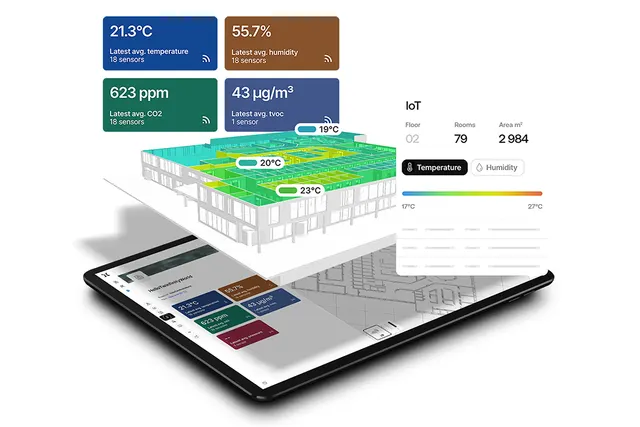
“Extremely useful! Less than a year after opening, we had an operational, up-to-date schedule for facilities and technical maintenance, as well as a long-term financial plan based on the BIM model, which we have been using every day ever since. Instead of gathering all sorts of information for maintenance, documentation and so on, we can derive everything from the BIM model in just a few clicks. And if technical or structural modifications or renovations are needed, we can refer back to and build on useful as-built models. In terms of time saved and efficiency, it makes a world of difference. It is already clear that we will more than recoup the cost of the lessons we learned back then, partly because the hospital is much easier to manage. Thanks to BIM, we can keep everything on track with a small technical team, whereas otherwise I would need at least two additional staff members to manage projects.”
The delivery of AZ Sint-Maarten was a resounding success. Do you feel it is seen as a BIM exemplar?
“Certainly, partly because we applied it to every discipline from the outset (architecture, building services, finishing and so on). We are regularly contacted by people and organisations from Belgium and abroad who want to know exactly how we approached it, what the pros and cons are, and what they should take into account … I am convinced that our project helped make BIM commonplace, and almost a standard. I am very pleased about that, because I also felt it was our duty to give something back to society in return for the government support we received to deliver the project. I think we certainly succeeded!”
Question about this story? Ask your question
Who worked on it
AZ Sint-Maarten
- communicatie- en comfortvoorzieningenTelevic Healthcare
- contractorDemoco Group
- ramenPeter Moeskops
- Clientvzw Emmaüs (Mechelen)
- architectTripod architecten
- main contractoribens
- levering van muurhandgrepenEmotrade
Keep following this
Get an email when a new story is published. No account needed.
- ProjectAZ Sint-Maarten
- SubjectBIM