“BIM facilitates the transition to circular construction”
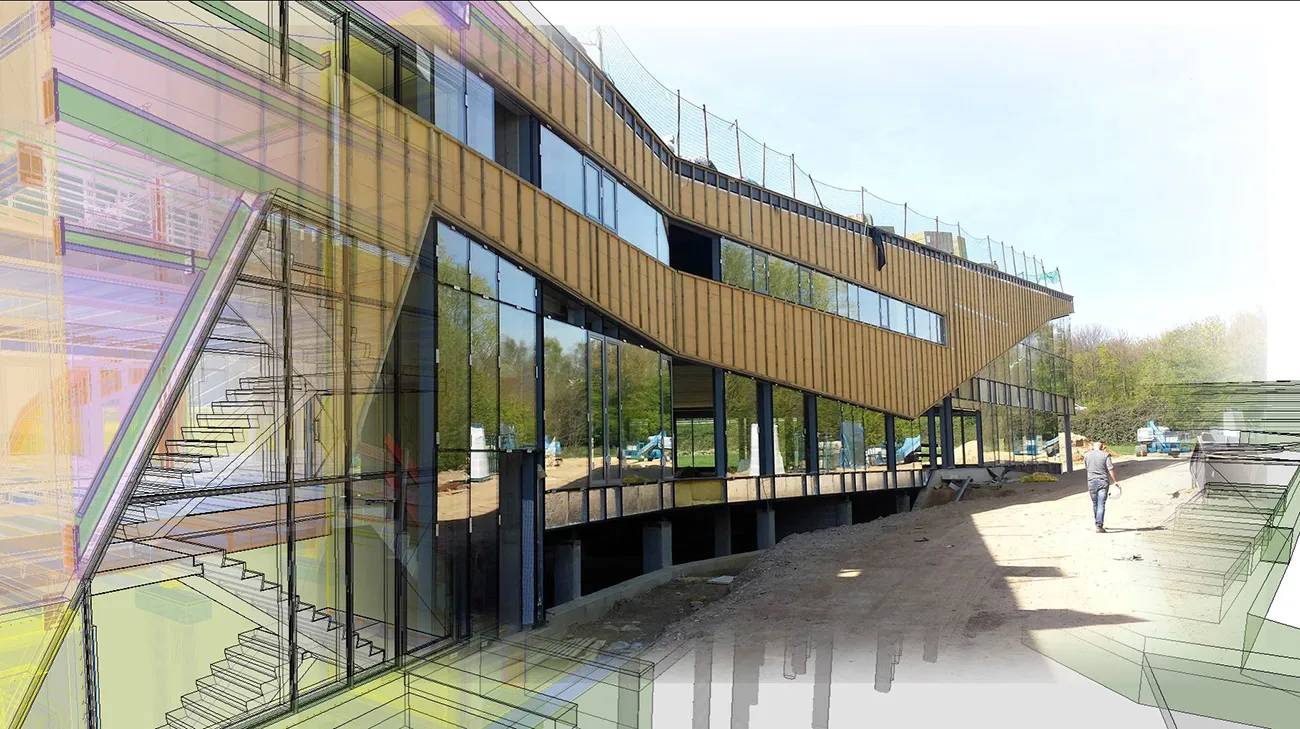
Circularity is the new holy grail in the construction industry. Smart digital tools can help make circular construction future-proof and economically viable. In a podcast by architectura and Circubuild, Joeri Beneens (Beneens), Véronique Orens (Yugening Architecture) and Johan Klaps (Madaster Belgium) explained how BIM can play its part, including as an ideal starting point for creating a materials passport.
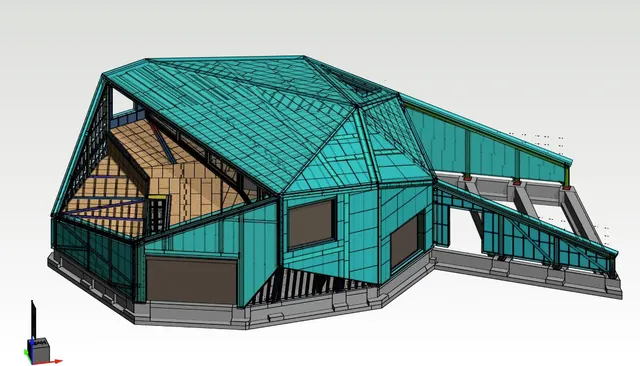
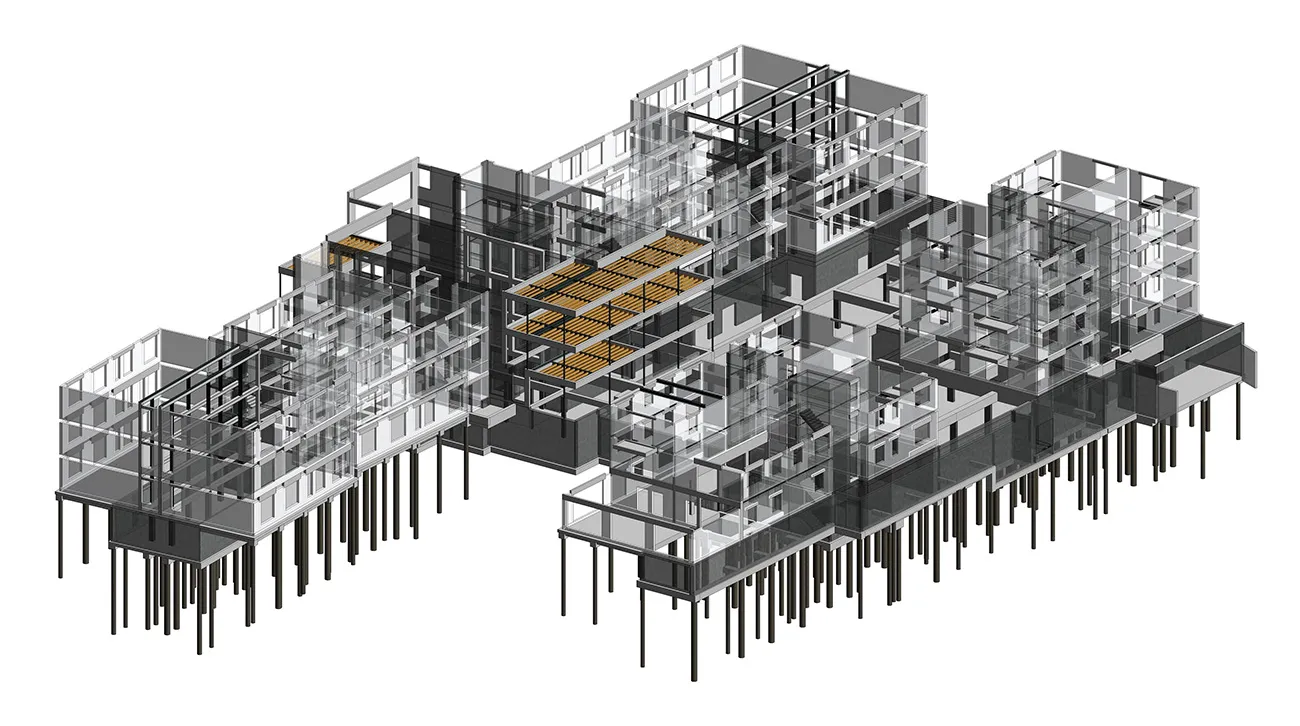
“BIM is currently the most widely used tool for creating a 3D representation of a building. But it wasn’t invented because we suddenly wanted to pursue ecology from a position of moral superiority. No, the fact that we can now build much more efficiently and circularly is simply one of BIM’s many positive consequences,” stresses Véronique Orens. “In 2022, however, BIM is just a speck on the radar. What comes after BIM? Perhaps ‘BAM’ (Building Artificial intelligence Modeling), where drones scan buildings and project them directly into the Metaverse? It’s hard to say what the next step will be, but the whole BIM story could well trigger a social revolution that is difficult for us to imagine today …”
Many more possibilities
“It is hard to overstate the importance of BIM at the moment,” agrees Johan Klaps. “The step from BIM to a materials passport, and therefore to a practical guide for circular construction, is relatively small. Once you’ve got all the technical parameters right, the process is largely automatic. The information contained in the BIM model can be used to produce concrete results. That is BIM’s main advantage at present. Hopefully, in the future it will offer us many more
possibilities.”
Joeri Beneens also sees the value in creating a materials passport using BIM. “It’s one of the best ways to make further use of our BIM drawings once the building in question is complete. As well as recording all the materials used, their technical data sheets and how they can be assembled and disassembled, we could also give each building element a kind of circularity score. We could link every building material to a unique NFC tag, allowing us to monitor the building in question throughout its entire lifespan. By combining all these tools, we could effectively introduce a deposit-return system for our building materials. Even after they have been dismantled and stacked somewhere, we could quickly retrieve all their characteristics and data by scanning them. These are significant advantages when it comes to circular construction.”
The start of a revolution
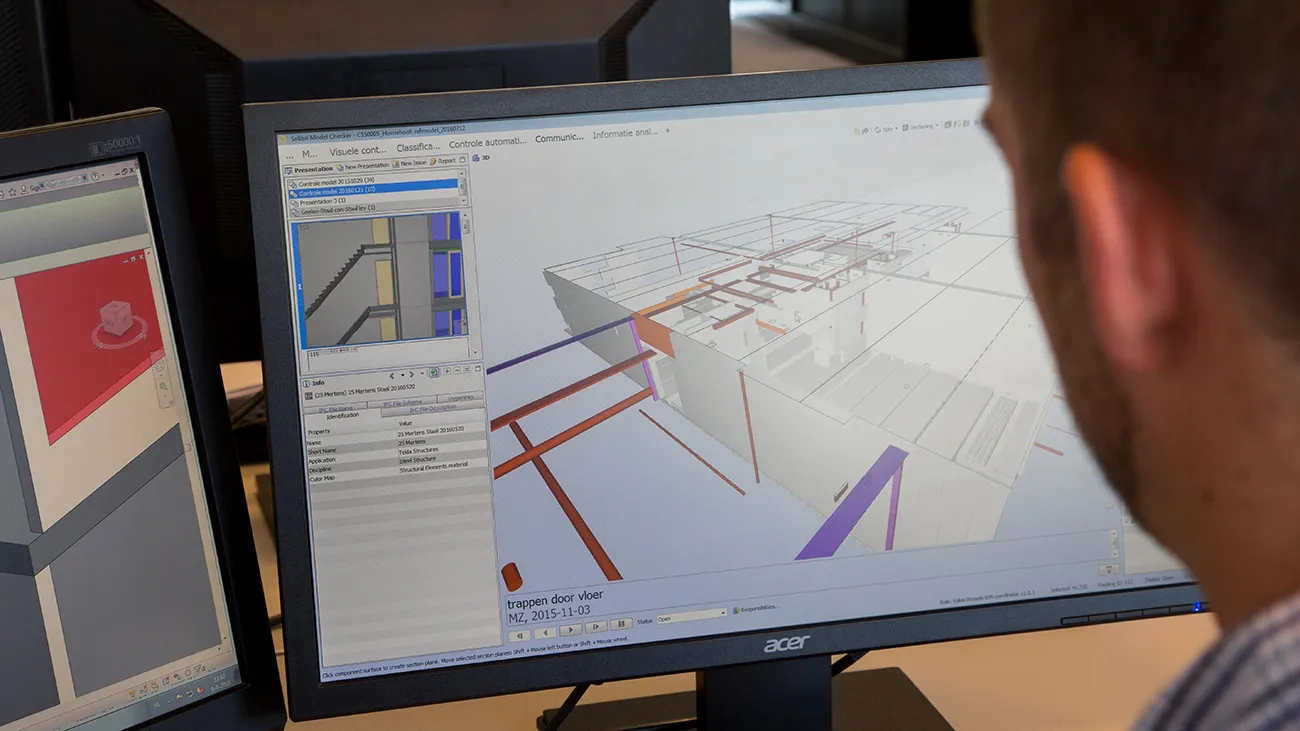
But what would such a materials passport actually look like? And what additional information would it provide compared with BIM? “BIM is the starting point, the data platform to which we then add extra layers of information, such as product information, energy performance data and information on the valuation of materials, to create a fully fledged ‘passport’. As well as the circularity score mentioned earlier, we can also assign a score showing how easily a building can be disassembled,” explains Johan Klaps.
Klaps believes that the major revolution of the future will be the valuation of materials: “Today, we’re all discussing construction costs going through the roof. If materials can be found at all, they’re very expensive. But once a building has been completed, those materials have no value in themselves. If we can ensure they still have value when a building reaches the end of its lifespan, that will have a huge impact on the building’s commercial value and how it is financed. At some point, we will no longer be able to afford, economically, to work without a materials passport. That is ultimately what we need to achieve to create greater circularity and sustainability. BIM is worth its weight in gold because it greatly facilitates this essential transition.”
Question about this story? Ask your question
Keep following this
Get an email when a new story is published. No account needed.
- SubjectBIM