Concrete and steel construction
Strengthening and connecting: the keys to a sustainable concrete industry
Text Els GoethalsImage FedBeton

The concrete industry is all too often labelled conservative. FedBeton’s initiatives prove just how wrong that is. By focusing on digitalisation and professionalisation, the trade federation is actively helping to build a sustainable future for the ready-mixed concrete sector.
With his in-depth knowledge of the sector and his role as chair of the trade federation FedBeton, Geert De Maeyer is a leading voice in the industry. “I have held this position for four years now, and I am pleased to represent the sector’s interests with government authorities, policymakers and other stakeholders,” he says. “As a Belgian federation, we build bridges across the three regions. At FedBeton, we represent every business in the ready-mixed concrete sector, from producers to concrete mixer operators and concrete pump hire companies. Ready-mixed concrete still has a long way to go! It is the most widely used building material in the world and is essential to the construction of infrastructure and buildings, from foundations to entire structures.”
Taking concrete steps towards climate goals
“Of course, we all need to make an effort to keep the planet liveable for future generations,” says De Maeyer, who emphasises that many tangible results have already been achieved. “Belgium is already one of the world’s leaders in low-CO2-footprint concrete.”
The federation sees three key levers, one of which is sustainable production. “The perception of the concrete industry as a polluting sector is inaccurate. Technological innovations make it possible to produce concrete more sustainably and use materials more efficiently. One example is the development of low-CO2 cements. Concrete can also be a fully circular product. When separated as a clean fraction during demolition, it can be fully recycled. An increasing number of projects show that, provided they meet the relevant quality requirements, recycled concrete aggregates can be reused in new concrete and construction applications. Thirdly, digitalisation, automation and AI also create opportunities, from more efficient and environmentally friendly production to solutions for staff shortages.”
“In short, concrete remains the sustainable foundation of the construction industry,” the chair continues. “By encouraging innovation among our members, we as a trade federation are committed to a more environmentally friendly future for the sector. That is why we place a strong emphasis on sharing knowledge, including through networking events and webinars.”
CSC: a global quality standard
“CSC certification, developed by the Concrete Sustainability Council, is an important milestone in the drive towards greater sustainability. By actively promoting these quality standards, FedBeton encourages responsible business practices in the sector. This is an important step towards a sustainable future and a liveable planet,” explains De Maeyer. “It is an internationally applicable certification system for companies in the concrete, cement and aggregates sectors. FedBeton is the ‘Regional System Operator’ for Belgium and is responsible for advising on and facilitating CSC certification. Certification itself is awarded by independent certification bodies. BREEAM, a leading benchmark for sustainable and environmentally friendly construction, also officially recognises CSC as a quality label.”
Tackling bottlenecks
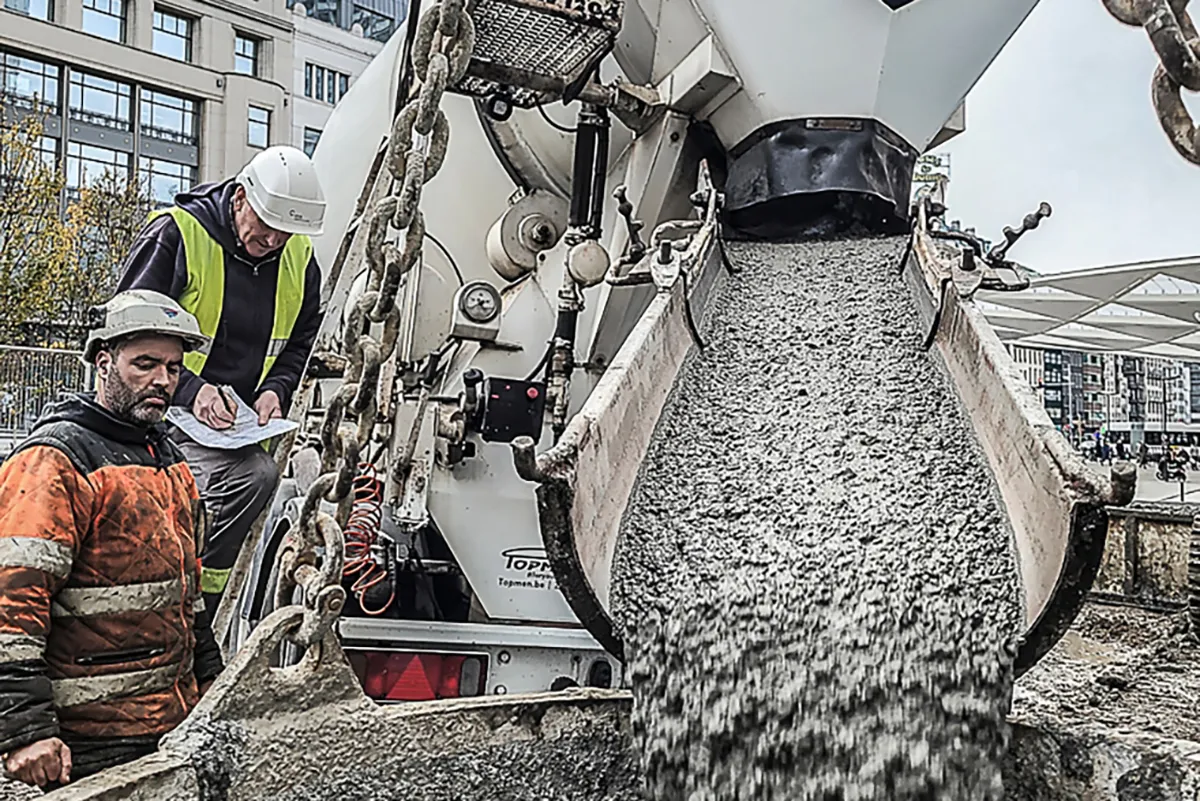
“FedBeton also facilitates certified training courses for concrete mixer drivers and concrete pump operators, in collaboration with Constructiv. These are roles that are currently in high demand in the sector,” says the chair. “Obtaining the Constructiv certificate ensures that trainees meet the training requirements set out in the BENOR regulations. Through this offer, we as a federation aim to help address the shortage of workers in these hard-to-fill occupations. Finally, we always look for opportunities to join forces with specifiers, government authorities and other trade federations. By working together, we increase the likelihood of better alignment and enforcement of regulations. This enables us to raise the standard across the entire sector.”
Question about this story? Ask your question
Keep following this
Get an email when a new story is published. No account needed.
- SubjectConcrete and steel construction