Better protection for people and property with precast concrete
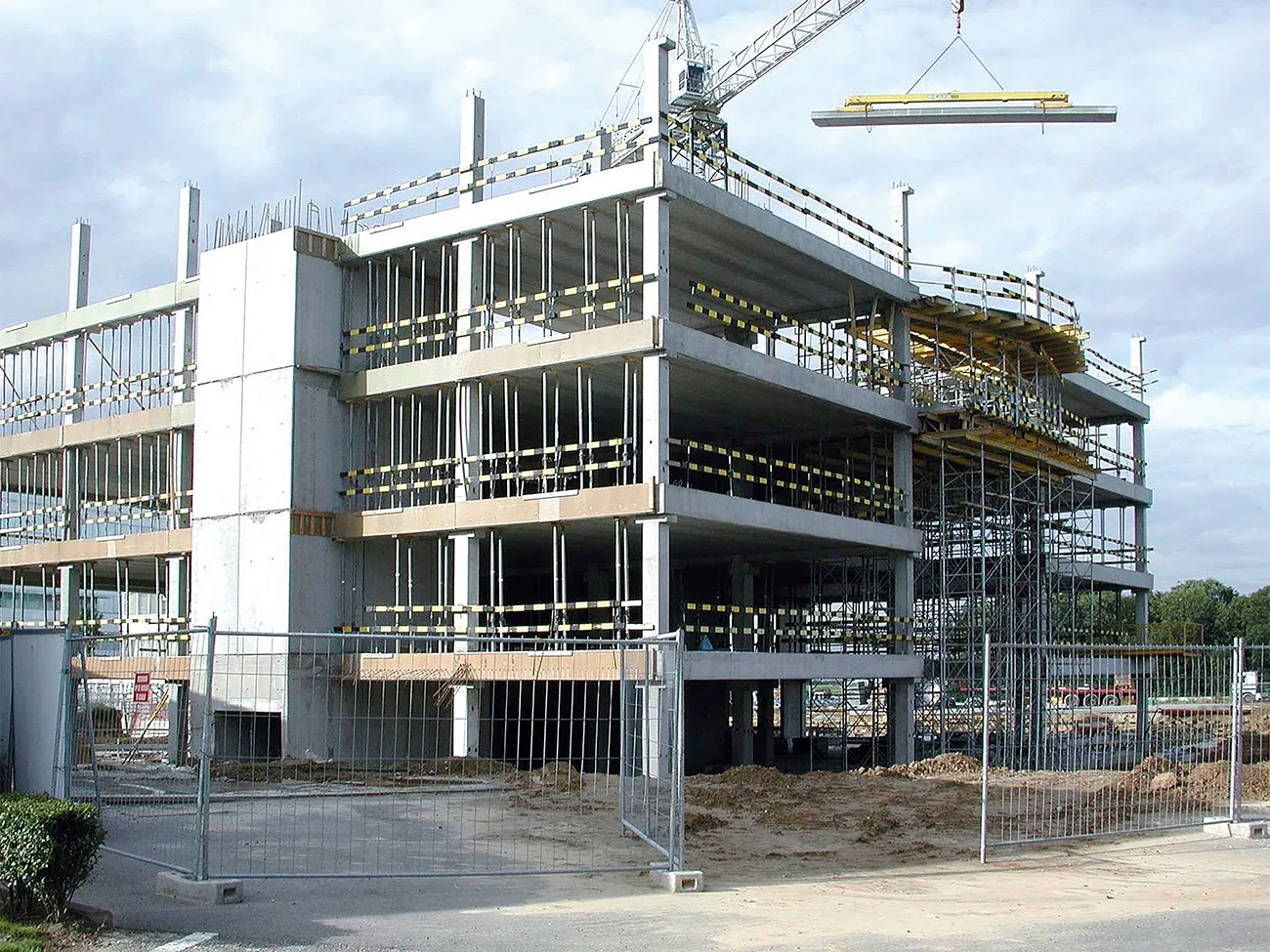
The aim of fire safety is to limit harm to people and damage to property. A key part of this is preventing buildings from collapsing. The stability of the structure must be guaranteed for long enough to allow evacuation and intervention by the fire brigade. It is also important to prevent fire spread between buildings. Concrete is characterised by excellent behaviour in a fire: it is non-combustible, non-flammable and does not emit smoke or toxic gases. It also offers good fire resistance, retaining its load-bearing function during a fire, which makes it the material of choice for fire-safe structures.
The point at which a structure collapses after a fire breaks out is determined by the loads and temperatures, combined with the corresponding strength and stiffness. In concrete structures, the reinforcing steel is the weak link. Because of its high thermal diffusivity, a measure of how quickly the temperature in a material rises, it heats up faster
than concrete. Steel also loses strength more quickly. The strategy for increasing the fire resistance of a concrete load-bearing structure is therefore to slow the heating of the reinforcing steel.
Increasing the concrete cover, the concrete cross-section, the reinforcement cross-section and/or the effective depth can significantly improve the fire resistance of a concrete structure at the design stage. This applies to both reinforced and prestressed concrete. Precast elements therefore have their full fire resistance as soon as they leave the factory. This means that the structure’s fire resistance does not depend on installation and finishing on site. What is more, concrete requires no maintenance, even after many years of service, so its fire resistance is guaranteed throughout the building’s entire service life.
Most concrete products have a standard fire resistance of 60 minutes or more. The additional cost of increasing fire resistance to 240 minutes or more is limited to a few euros for conventional cross-sections and a maximum of 20% for I-sections. In many cases, it is also technically feasible to repair a concrete structure after a fire. Economic considerations
may, however, lead to a different decision.
Concrete structures not only offer high fire resistance, but also have a high capacity to absorb damage thanks to their robustness and ability to redistribute loads. This is why collapses caused by fire are rare. Designers must, however, give due attention to overall stability in the event of a fire. Thermal expansion, deformation and restraint forces in particular must be taken into account. A building’s shape and dimensions, as well as its structural system, are important to how it behaves during a fire.
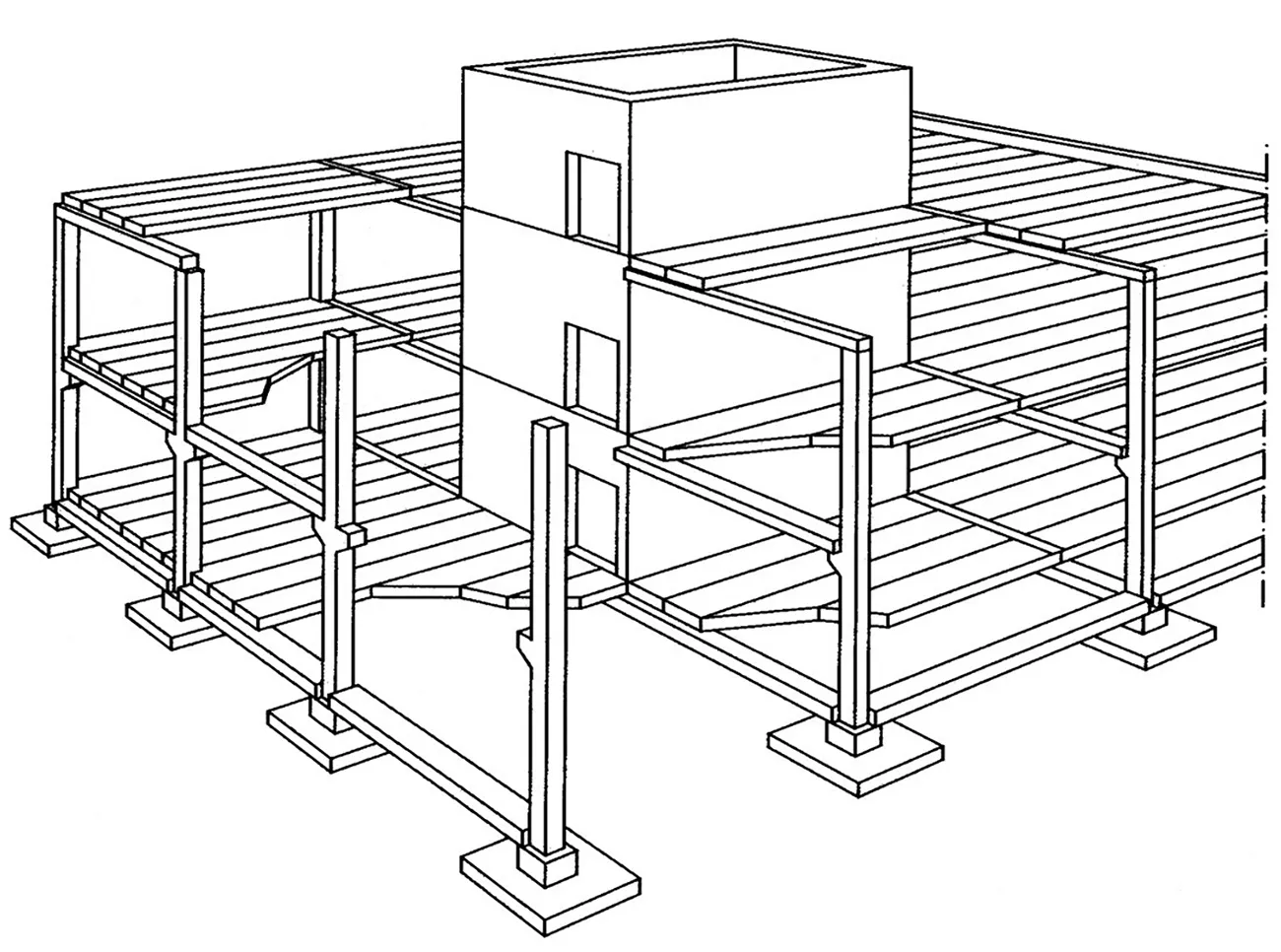
The best solution is to position the horizontal bracing centrally and connect all other elements to it with pinned joints. Precast concrete structures are ideally suited to this. This design also eliminates the risk of shear failure in the columns, as they can rotate at their joints. The structure will therefore not collapse outwards, allowing the fire brigade to approach the burning building safely. Nor will it collapse suddenly, as deformation will first cause visible cracking in the elements and connections.
The fire resistance of reinforced or prestressed concrete elements is calculated in accordance with NBN EN 1992-1-2 + ANB, which also includes tabulated values. Specific provisions for some concrete products, such as hollow-core slabs, are included in the relevant product standards.
There are few known cases of concrete structures collapsing as a result of fire. This shows that precast concrete structures are fire-safe. When properly designed and built, precast concrete structures can even withstand extreme, long-lasting fires. Concrete not only makes it easy to meet fire safety requirements, but also allows for repairs after a fire.
Question about this story? Ask your question
Keep following this
Get an email when a new story is published. No account needed.
- SubjectFire safety