Fire-safe insulation in renovation projects: the law, the practice and the way forward
Text Frie Van der PlankenImage iStock
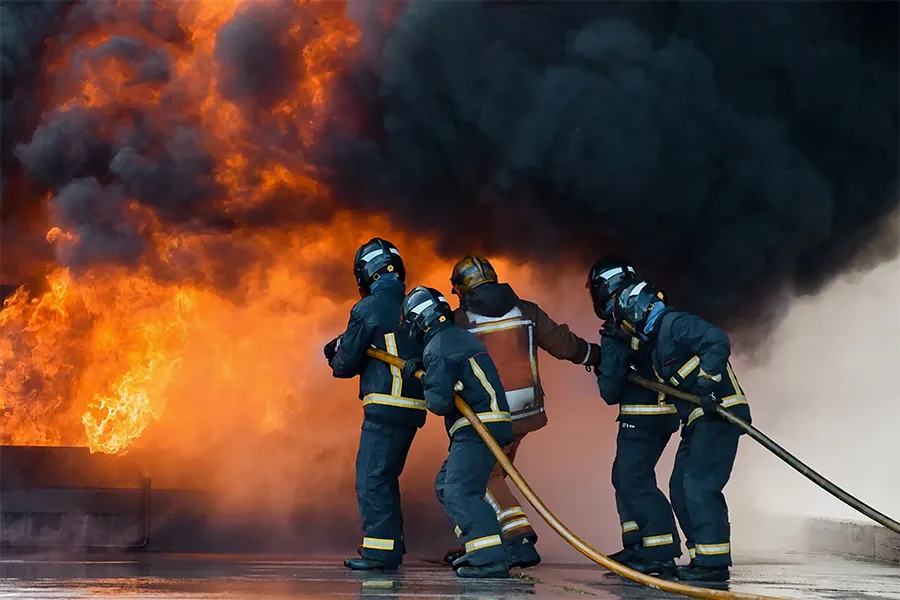
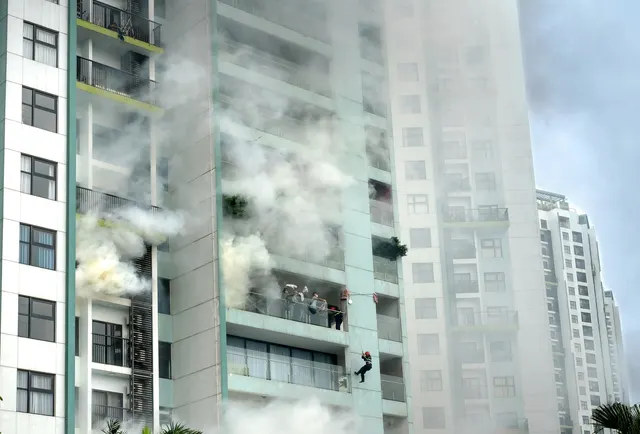
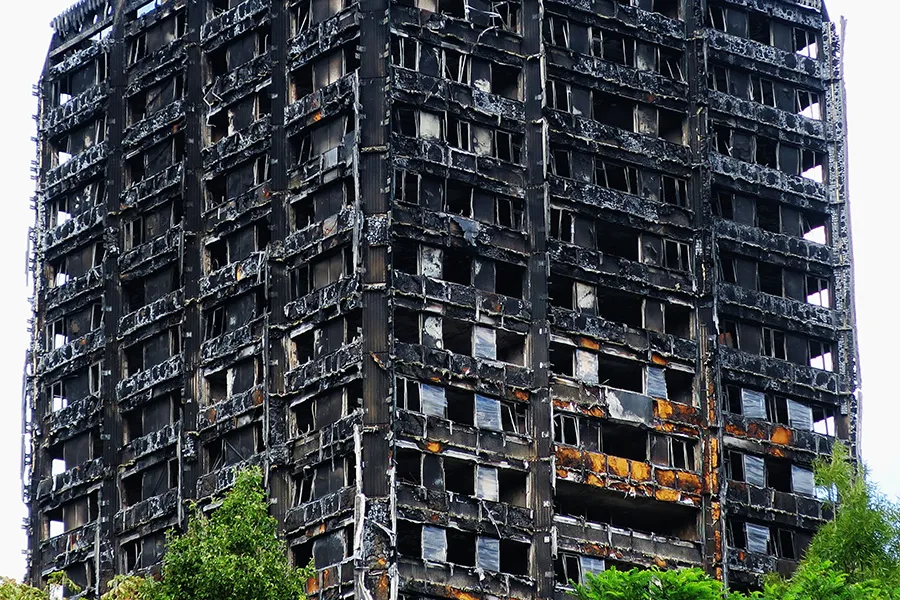
Since 1 July 2022, the Royal Decree on ‘Basic Standards for the Prevention of Fire and Explosion’ has been expanded to include new fire safety requirements for façades. In the wake of dramatic fires in high-rise buildings such as London’s Grenfell Tower, this is clearly a good thing. However, the Royal Decree applies only to new buildings and extensions. This raises the question: what about renovation projects? Is it possible to ensure fire safety in these cases, let alone mandatory? And what role does the fire service play?
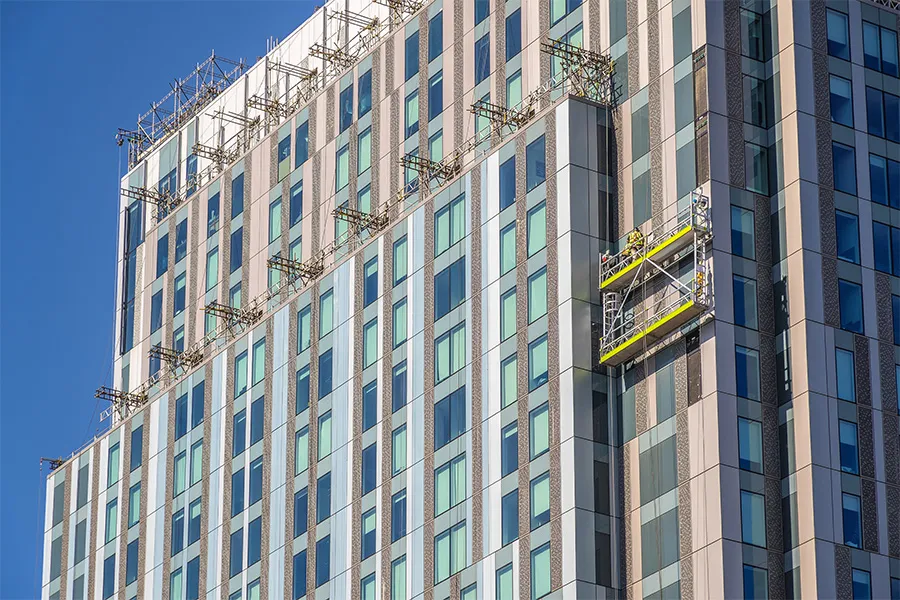
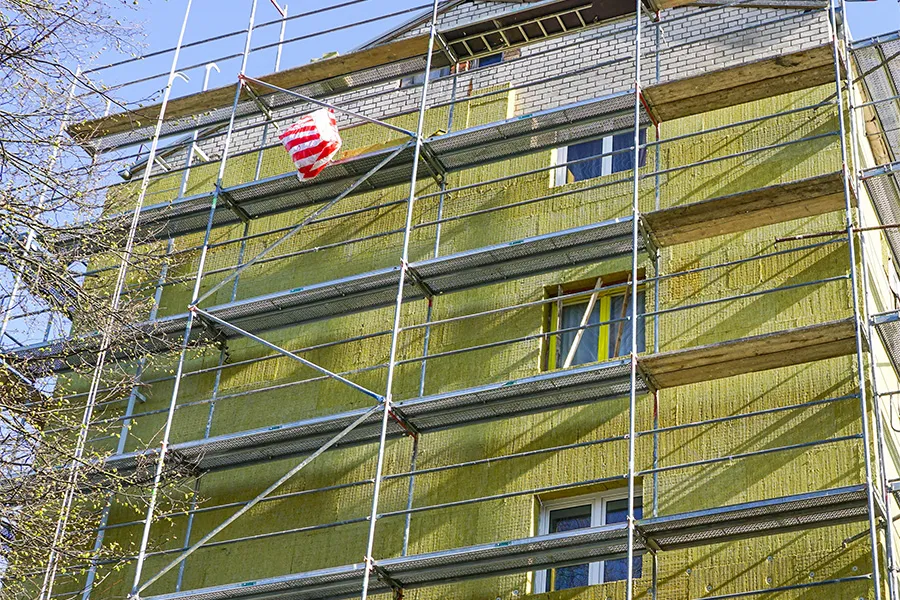
Following the recent revision of the Basic Standards, the materials used for façade cladding and façade components, including insulation, must in many cases be non-combustible in new medium- and high-rise buildings. This helps prevent fire from spreading through the façade system. The risk is also high during renovation work, even though the legislation does not apply in these cases. Bart Vanbever, Senior Expert Fire Safety at Agoria, explains: “The problem with renovation work is that you often have to dismantle existing structures and safety systems. Take the façade, for example: if you remove part of it, a large opening suddenly appears. If the insulation materials used are left unprotected at any point during the work, a fire can spread upwards very quickly if combustible materials have been used. On top of that, the work itself already brings higher fire risks, while the level of fire safety is lower. Fire detection systems, for example, often have to be switched off or removed during the construction phase.”
The ‘forgotten’ construction phase
The Basic Standards apply only to the finished result of the work. What happens during the construction phase therefore goes unobserved. This brings us back to the issue of unprotected insulation: if the material is combustible, it creates a highly unsafe situation, in both new-build projects and renovations. After all, the fire service has no visibility of what is happening. There is also the question of safety coordination, Vanbever points out: “The Royal Decree on temporary or mobile construction sites, which sets out the rules on safety coordination, is theoretically a very good concept. The rules are clear. In practice, however, fire safety is often treated rather as a poor relation in safety coordination files. Even for tall, high-risk buildings, people often reach for a hot-work permit as the first and only solution that comes to mind. The intention should be to think ahead: how will you compensate for the reduced level of safety during construction? Consider site fire detection, organisational measures and so on. These issues are not really examined in depth.”
In the Netherlands, the ‘forgotten’ construction phase has been addressed through the Borgingsprotocol, which prescribes specific fire safety measures for new-build façades at every stage of the construction process, including during the work. Vanbever says: “The Borgingsprotocol is certainly something Belgium can learn from, but I do wonder whether those measures are actually being applied as extensively as intended. I doubt a construction site in the Netherlands is all that different from one in Belgium or France. In my view, it depends mainly on the sector: in the nuclear industry, there is more likely to be a strong focus on fire safety during the work, but I suspect the situation is different for an ordinary block of flats or shopping centre.”
Where do we go from here?
A set of ‘Basic Standards for Existing Buildings’ seems the obvious solution for ensuring fire safety during façade renovation work. But is such a thing even possible? Peter Rutten, major in the risk management and fire prevention department of Brandweer Zone Antwerpen, says: “People have been working on a similar Royal Decree for existing buildings for a long time, but it is no easy task. There are buildings dating from, for example, 1600 and others from 1960, and they are constructed in completely different ways. That is precisely why these standards have yet to materialise: it is very difficult to draw up regulations that can be applied in every situation. It might be possible, however, to require the principles of the current Basic Standards to be applied whenever insulation is added. And if that is not possible for one reason or another, an equivalent solution could be devised.”
Peter Roseleth, director of the Prevention Department at Brandweer Brussel, agrees: “It would already be a great step forward to have clear requirements for insulating buildings during renovation, as well as requirements for the construction phase, such as the Dutch Borgingsprotocol. Responsibilities also need to be defined. The fire service cannot determine and monitor everything. Study firms, architects and contractors also have a major responsibility.”
Is there also a way to improve safety coordination during the work? Vanbever believes there is, although legislation is not the top priority: “I think we have sufficient means at our disposal in this country in terms of legislation, at least as far as safety coordination is concerned. The main problem is how it is applied, and in particular, how we raise awareness among all the parties involved. Better statistics would already help a great deal. If we know what is going wrong, we can address it and launch targeted campaigns. Clear figures would also provide the necessary basis for allocating more resources to enforcement and possibly for further developing requirements to ensure fire safety, both during and after the work. That seems to me the best way forward.”
Question about this story? Ask your question
Keep following this
Get an email when a new story is published. No account needed.
- SubjectFire safety