Sint-Niklaas pioneers circular kitchen
Text Stad Sint-Niklaas en Tim JanssensImage Stad Sint-Niklaas
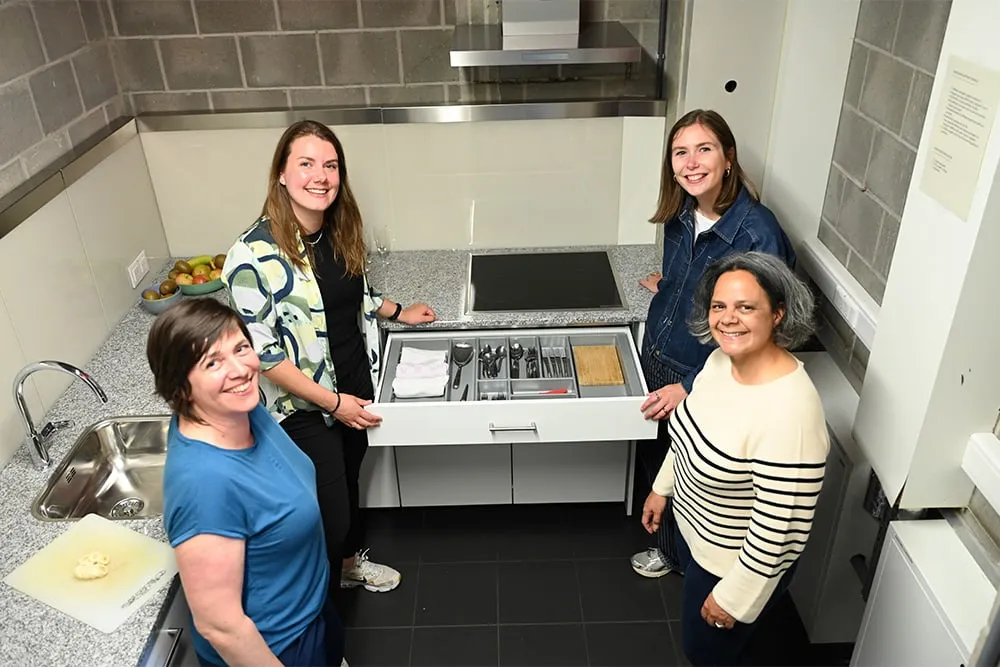
A circular kitchen is the ultimate goal for many building and property owners, but unfortunately, putting circular principles into practice is not always straightforward. The City of Sint-Niklaas shows that it is indeed possible. When renovating the kitchen at the ’t Bau-huis events complex, it opted for a fully circular concept, including a buy-back model.
In September 2011, ’t Bau-huis was inaugurated in Sint-Niklaas. This multifunctional exhibition and events venue was created by renovating and extending an old warehouse beside the railway embankment, to a design by B-architecten. Since then, it has hosted numerous trade fairs, concerts, parties, meetings and community events. After thirteen years of intensive use, the kitchen was due for replacement. Together with the other support facilities, it is located in a service zone between the central foyer and the two event halls: the 1410 m² main hall and the 640 m² acoustically treated hall. The City of Sint-Niklaas took the opportunity to make a sustainable choice. Through Van Hoecke, a local family business that supplies drawer systems to kitchen and interior fitters in the Benelux, it was introduced to Chainable, a Dutch scale-up specialising in circular kitchens.
A deliberate choice for circularity
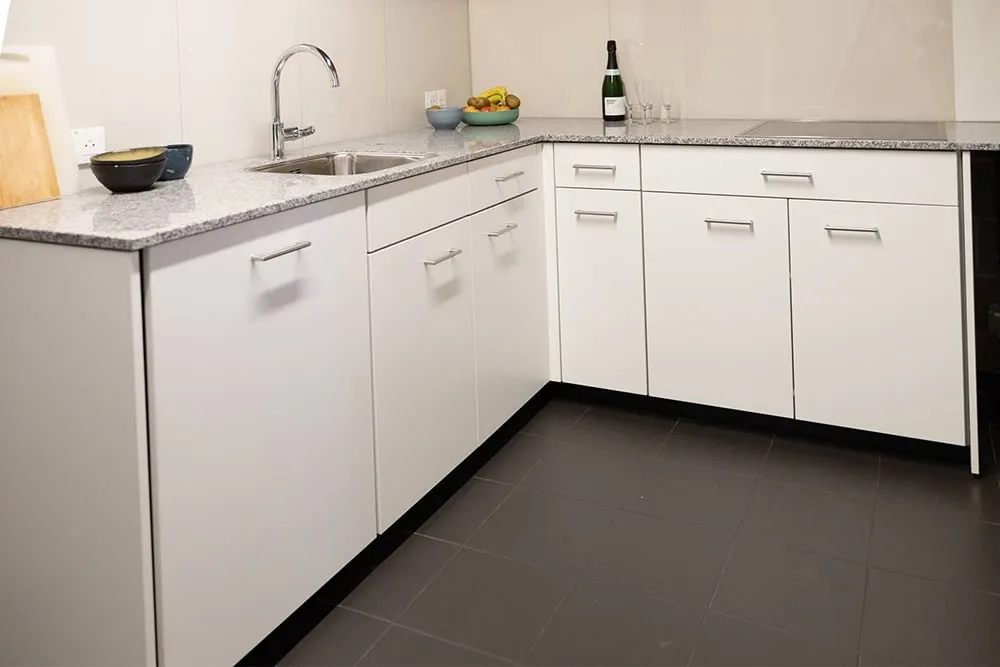
The circular kitchen at ’t Bau-huis is built around a modular steel frame with click-together components. This makes it easy to repair parts, make adjustments and dismantle the kitchen. It also extends the kitchen’s service life and prevents the materials used, which in principle last an average of twenty to sixty years, from ending up in landfill too soon. The buy-back model offered by Chainable is another attractive feature. Under this arrangement, the manufacturer is responsible for any necessary repairs for twenty years. If customers want a new kitchen, Chainable takes back the old one and even refunds a percentage of the purchase price. “As a city, we want to help build a more sustainable society. That is why we consciously choose circular products,” says Ine Somers, Alderman for the Economy, Events, Tourism, City Promotion and Digitalisation in Sint-Niklaas. “We are extremely proud to have recently put the first circular kitchen in our area into service. This was made possible in part by the Sint-Niklaas-based family business Van Hoecke. We attach great importance to this local connection.”
A new standard in kitchen design
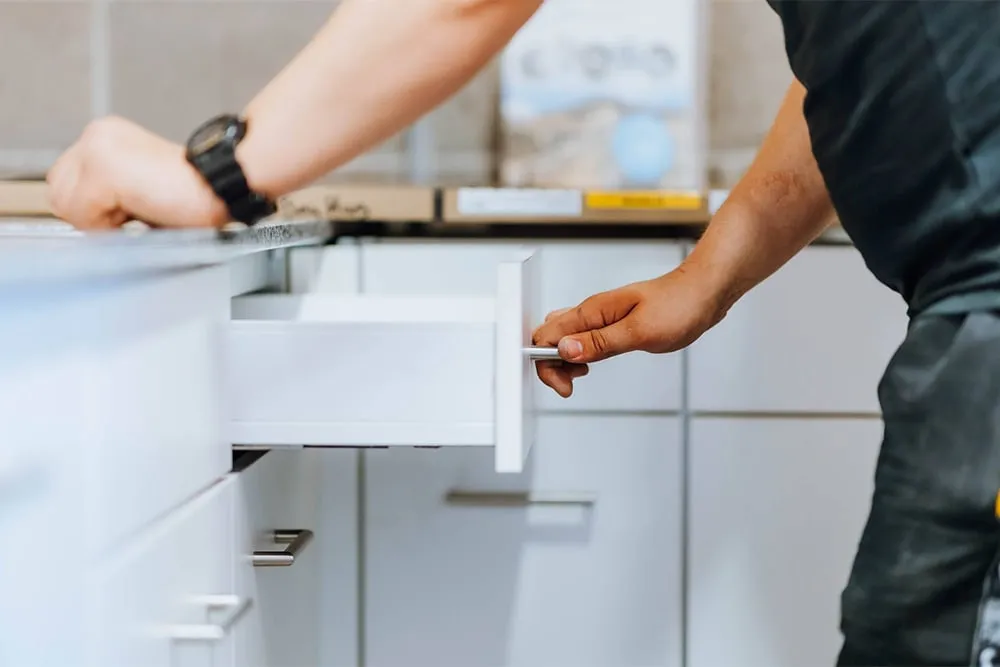
Van Hoecke’s close involvement in this pioneering project is no coincidence. The company supplies the drawer systems and hinges for Chainable’s kitchens, and ’t Bau-huis is its first Belgian reference project. Through their forward-thinking projects, the two companies are setting a new standard in kitchen design and paving the way for the circular transition in the furniture and joinery industry. For the LEGRABOX drawer system in the new kitchen at ’t Bau-huis, Van Hoecke used an Environmental Product Declaration (EPD) for the first time. “We believe transparency is essential to establishing a circular economy,” says Martijn Holsderver, architect and project adviser at Van Hoecke. “An EPD provides full transparency and objectivity, backed by extensive data, to measure and account for environmental impact. This EPD enables us to map the impact of the materials and the processes behind them. It is therefore an important milestone for us, Chainable and the City of Sint-Niklaas!”
Question about this story? Ask your question
Keep following this
Get an email when a new story is published. No account needed.
- SubjectKitchens