Fewer and fewer accidents at work in construction
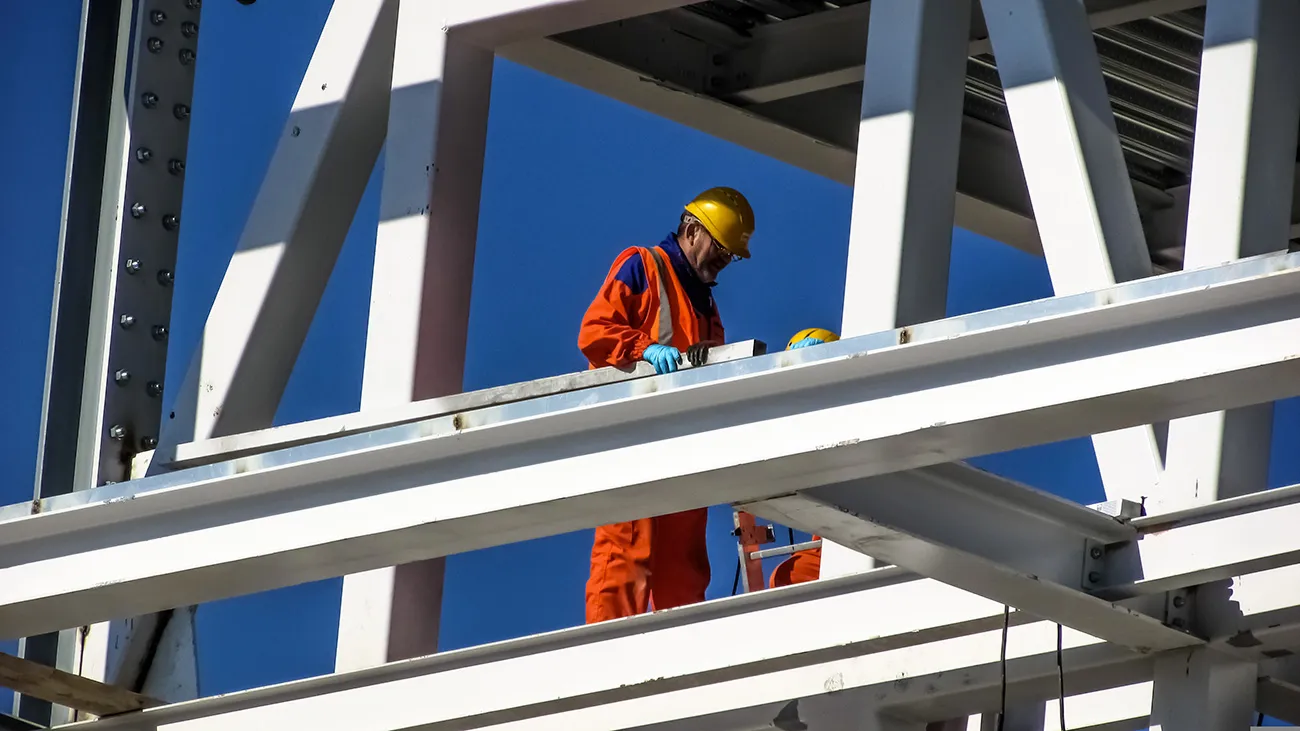
The recent tragedy in Opoeteren, in which a seventeen-year-old trainee died after being struck on the head by a concrete beam, is a tragic exception to the rule. Overall, however, the number of accidents at work in construction is falling sharply. Between 2014 and 2021, the figure fell by 19.5%, according to an analysis by Embuild based on figures from Fedris, the Federal Agency for Occupational Risks. This is proof that the many efforts made by construction federations and companies are paying off, although that is no reason to let our attention to safety waver. Every accident is one too many, and always will be …
For decades, construction has laboured under a stubborn reputation as an unsafe sector. Yet the number of accidents at work on sites in our country has fallen year after year. Between 2014 and 2019, the figure dropped by 14%, from 10,369 to 8,899 accidents resulting in at least one day of incapacity for work. Then came the coronavirus year of 2020, when the number fell by a further 13.7%. In 2021, accidents rose again to 8,341, a logical development after sites operated below capacity at the height of the pandemic and the risk of accidents at work was lower during that period. More importantly, the number of incidents in 2021 was lower than before the pandemic (down 6% compared with 2019). The positive trend is therefore continuing …
Important caveats
Even so, this is no reason to celebrate. Complacency and letting our attention slip are out of the question. This is clear when we look at the number of fatal accidents. That figure remained unchanged in 2021 and even rose by 14.4% compared with 2019. Another important caveat is that accidents involving the self-employed and posted workers are not included in FEDRIS figures, making it difficult to build a complete picture of safety on our sites. Vigilance is therefore essential, as Niko Demeester, CEO of Embuild, acknowledges: “Our sector is indeed becoming safer, but we must continue to make efforts every single day to make construction even less risky!”
Safety training and the Construbadge
Construction companies work closely with the trade unions to promote safety in the sector and raise safety awareness. Since spring 2022, for example, all newcomers to construction have had to complete basic safety training, one of the measures in Embuild’s safety action plan. This applies to anyone who has not worked in the sector for at least five years during the past fifteen years. The training takes eight hours and must be completed within one month of starting work. “The safety training applies to workers covered by joint committee 124, the largest joint committee in construction. However, we are urging federal Employment Minister Pierre-Yves Demagne to make it compulsory in the near future for everyone working on a construction site, including employees of suppliers, the self-employed and posted workers …” says Embuild, which is also calling for attendance on site to be recorded and checked more effectively through the general introduction of the Construbadge. “This will enable employers, trade unions and inspectors to carry out proactive checks and help combat undeclared work and social dumping.”
Towards the top tier in Europe
It remains to be seen whether the positive trend from 2014 to 2021 is also reflected in the figures for 2022. In any case, safety and risk prevention have been key priorities for Embuild for years. This is also evident from its ‘Safety my priority’ awareness campaign, through which the construction confederation aims to guide our country into the top five European countries with the fewest accidents at work. This is no minor undertaking: in 2019, the year the campaign was launched, there were still 34 accidents at work per working day. Construction also accounted for around 20% of fatal accidents between 2012 and 2021, making it one of the sectors with the highest numbers. “Being in the middle of the pack is not good enough for Belgium. With the right mindset, we hope in time to join the top tier in Europe. Workplace safety requires insight, discipline and determination. That is why we are calling on all contractors to sign the Safety My Priority charter, committing to give safety absolute priority from now on. ‘Think first, then act’ must become the motto for everyone working in construction,” says Embuild.
Question about this story? Ask your question
Keep following this
Get an email when a new story is published. No account needed.
- SubjectSafety & training