“Lifelong learning and safety are essential components of sustainable business”
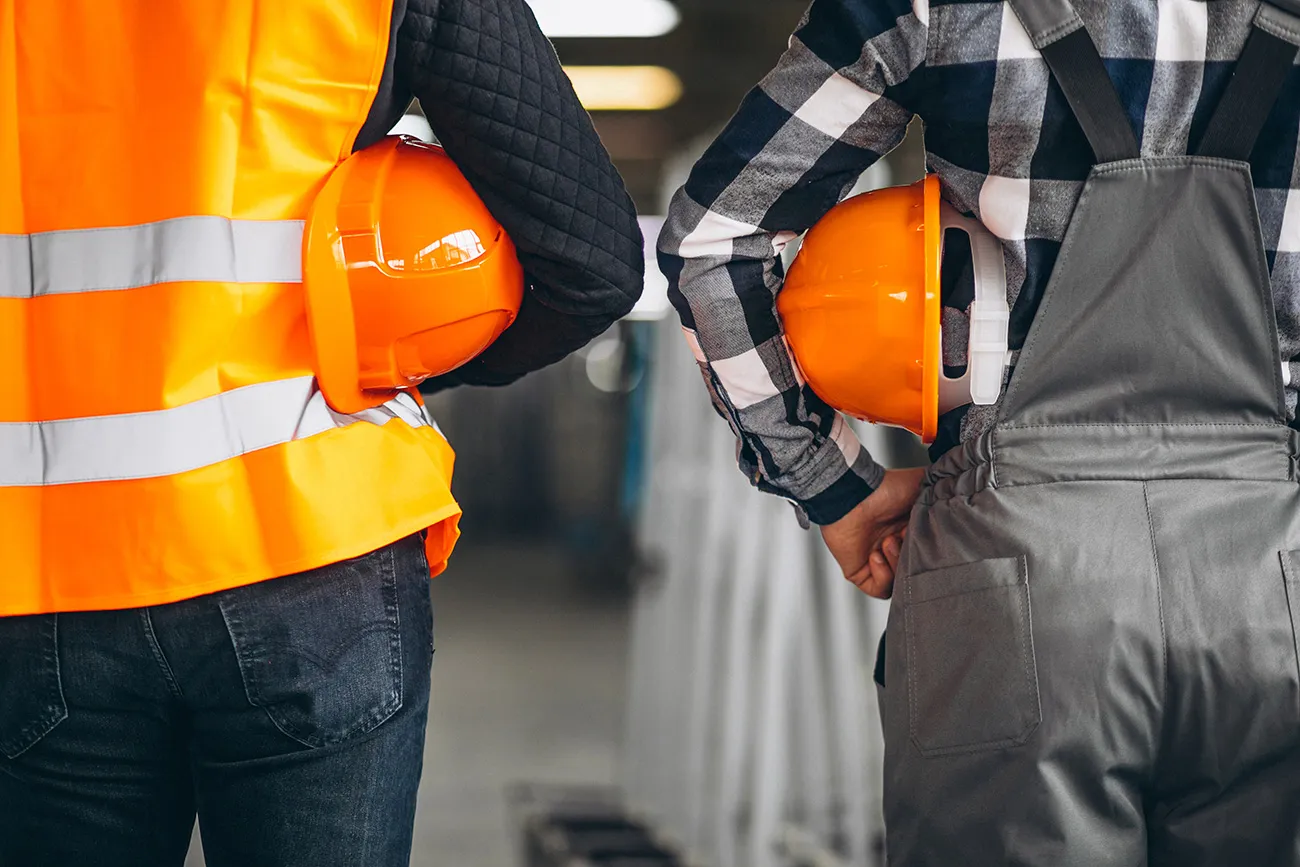
Contributing to the implementation of a comprehensive safety culture in companies and promoting lifelong learning: in a nutshell, that is the ‘mission statement’ of NOA Trainings. Over the past twelve years, the training institute has made a name for itself with on-the-job vocational training and specific courses for employers at its own NOA Academy, but it wants to broaden its scope further. “We are much more than a training provider in the traditional sense of the word,” stresses founder and managing director Ingrid Nys.
When NOA Trainings first opened its doors, safety and training were still too often little more than a box-ticking exercise for many construction companies. By 2023, attitudes had matured, and both employers and employees realise that they are anything but a luxury. Alongside general and mandatory training, company-specific training sessions are also very much in demand. “That should come as no surprise, because safety and lifelong learning are essential components of responsible employment and sustainable business,” says Ingrid Nys. “That also means we are constantly looking at how we can take this burden off our target audience, for example by introducing new services. Until now, our training has focused mainly on staff working on site. We want to extend our scope more prominently to directors and management, including specific roles such as HR managers and prevention advisers, who already often commission us directly. In this way, we hope to embed a genuine ‘culture’ of safety and lifelong learning in our clients’ DNA: not just from the bottom up, from the workplace, but certainly also from the top down, from directors and management.”
Hybrid learning
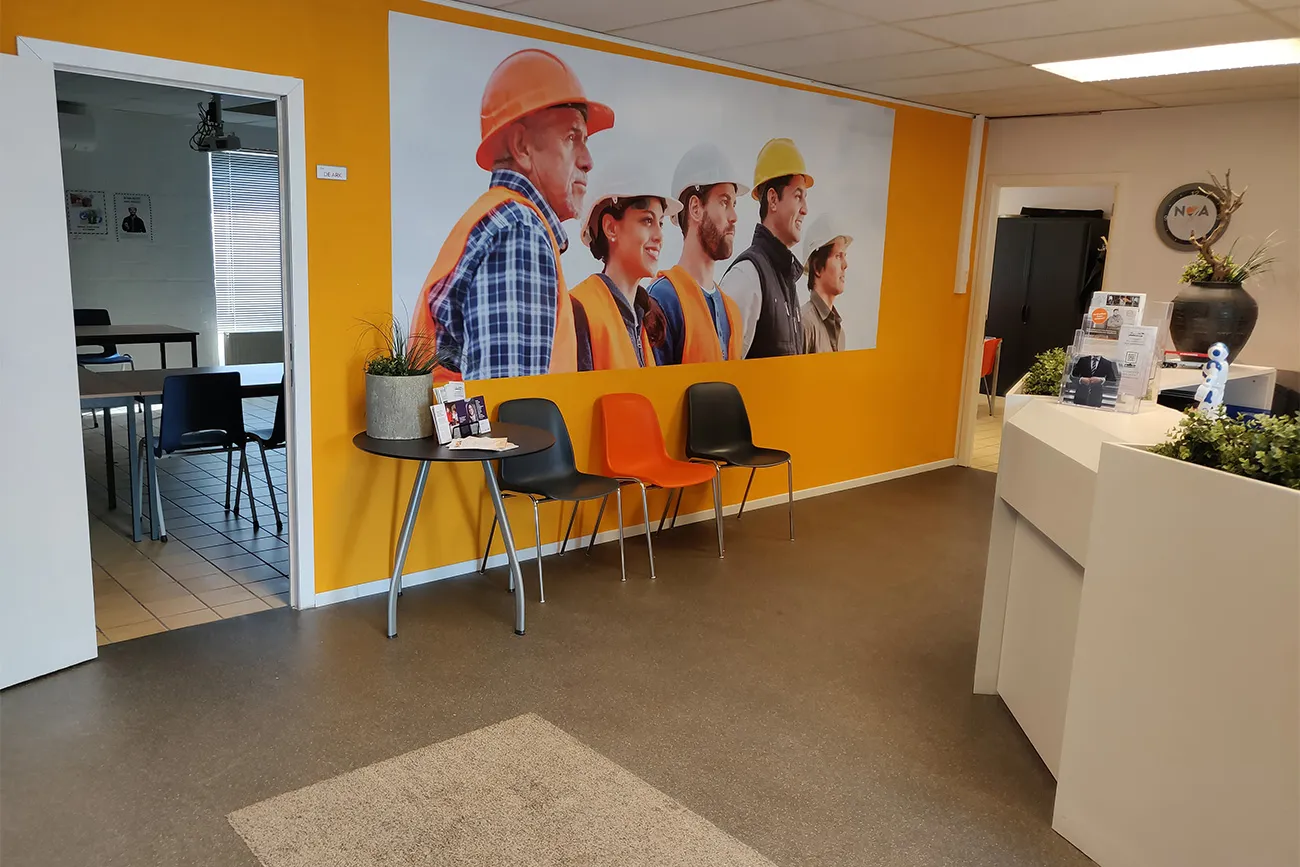
This also informs the content of our courses and educational materials. At director and management level, the focus will be primarily on ‘soft skills’ such as communication, leadership and coaching. “Our instructors are highly experienced experts with the latest knowledge and insights in their fields. Our range of training for the construction sector is therefore particularly broad, from emergency plans and evacuation procedures to basic safety training and more specialised skills such as working in confined spaces and at height, workplace first aid, and operating cranes,” explains Ingrid Nys. “The quality of our course materials and training methods also sets us apart. We don’t simply show a few slides in some meeting room. We want to offer training that delivers the latest theoretical insights in a highly practical way and demonstrates how they can be put into practice, both ‘in company’ (in other words, at our clients’ workplaces) and at our own training centre in Turnhout. We attach great importance to this ‘hybrid learning’, as do our clients. Every one of them is intrinsically motivated to ensure their employees can work in the best possible conditions. We are pleased about that, because it naturally leads to the best results.”
Anticipating trends and innovations
Keeping our finger on the pulse is an absolute priority for NOA Trainings. Construction practices are evolving at a rapid pace, including in terms of technology. “We are constantly seeking to optimise our course materials and teaching methods in response to developments in the sector, including by anticipating new trends and innovations,” says Ingrid Nys. “A good example is the imminent rise of e-trucks, which will require a different approach to driving, operation and maintenance than conventional lorries. There is still a long way to go before that happens, but we are already exploring how to develop effective training for them. We are also looking closely at the potential added value of virtual reality and e-learning to
support our courses. It has to be relevant to our educational framework and target audience, so it takes a fair amount of thought, in close consultation with clients, manufacturers and users.”
Continuing to learn throughout life
As construction practices become increasingly complex and all-encompassing, lifelong learning is a must, concludes Ingrid Nys. “In the past, it might have been enough simply to teach employees how to operate their machinery, but that is no longer the case. They work in a busy, time-critical logistics environment, where more and more processes are data-driven and automated. In other words, they are part of a complex ecosystem of activities. Training therefore needs to go far beyond how a machine works. It also needs to cover sustainability, safety, ergonomics, procedures and standards, and the overall logistics picture. We believe it is important to keep people up to date with these developments, so that they can evolve in a positive direction too. We realise that is ambitious, but it is how this company began and how we see the future: guided by our values and focused on people.”
Een zakelijke vraag aan NOA Trainings? Get in touch
Companies in this story
Keep following this
Get an email when a new story is published. No account needed.
- SubjectSafety & training
- CompanyNOA Trainings