How BIM can lead to integrated collaboration with architects
Text Kris VandekerckhoveImage Furnibo
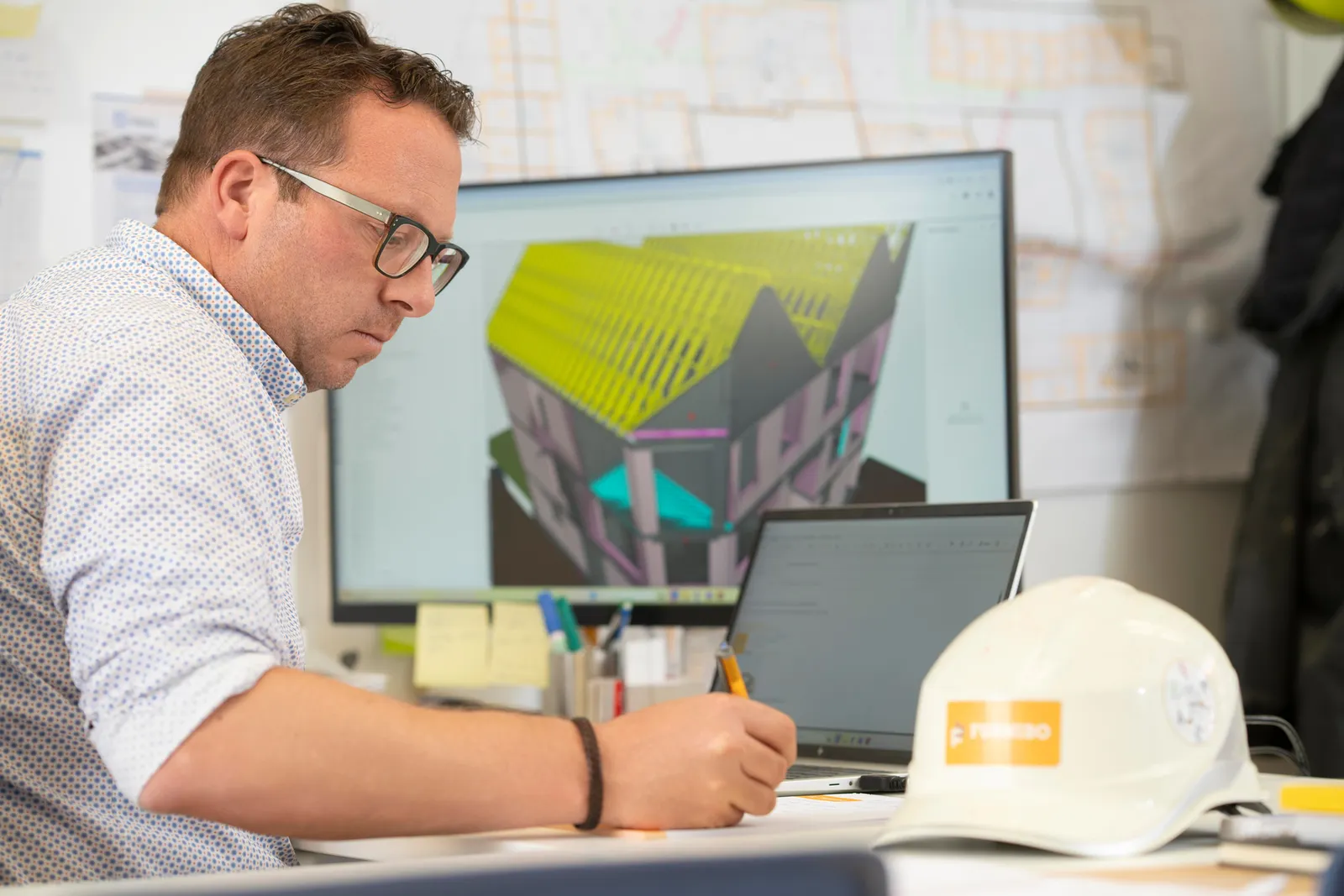
For class 8 contractor Furnibo, BIM is not simply a technology, but a fundamental way of working together. In a sector where design and construction are still too often separate worlds, the company explicitly positions BIM as a bridge between architect and site.
“For us, BIM is not software, but a method,” says Robbe Verfaille, BIM manager at Furnibo. “It guides how we build, coordinate and deliver projects digitally, together with all our partners, including the architect.”
From design to buildability
This approach did not originate in digitalisation itself, but in a strategic choice centred on buildability and control. Having worked with its own structural crews for many years, Furnibo saw a growing need to bring design and construction into closer alignment. “As a contractor, you want to control quality and scheduling,” says co-CEO Stijn D’hoore. “But that is only possible if design information is translated effectively into the reality of the construction site. BIM helps us make that translation a consistent part of the process.”
That choice led to a closed feedback loop: design decisions are not just implemented, but also evaluated and optimised based on experience on site. For architects, this means their design intent is better safeguarded through to construction.
BIM as a shared working framework
While many construction companies still treat BIM as a separate discipline, at Furnibo it is an integral part of pre-construction planning. Every project is fully developed in BIM. “For us, the model is not an extra layer on top of the design,” says Stijn D’hoore. “It is the basis for how we build.”
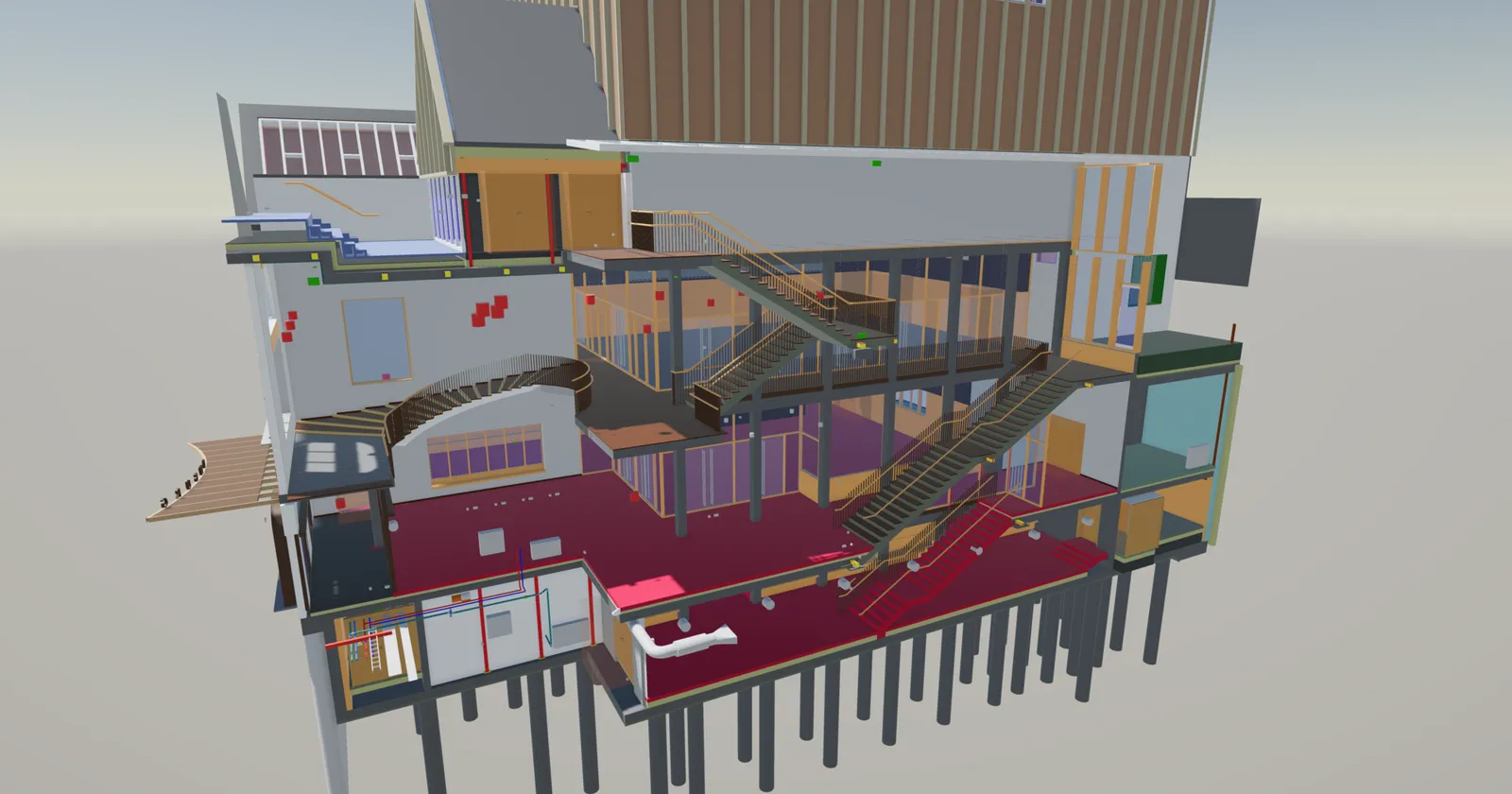
The models are developed in Revit and shared via Trimble Connect, so that site managers and foremen also work directly with the 3D model. This makes the model not just a design tool, but also a construction document. “For the site team, the model is a kind of digital manual,” says Robbe Verfaille. “But just as importantly, it ensures that design choices remain transparent. Architectural intent is clear both visually and technically, right down to the construction stage.”
Planning with precision
This context is also changing collaboration with architects. Furnibo sees BIM very much as a communication tool, not just a coordination tool. “Architects are increasingly supplying models today,” says Robbe Verfaille. “They are not always technically complete, but they do provide a strong foundation. Façades, sections and spatial relationships are far more consistent than in traditional 2D plans.”
According to Furnibo, this shifts the role of the model from representation to co-creation. “Even an incomplete BIM model is already more valuable today than a complete 2D package used to be,” the company says. “The ‘blind spots’ in the design disappear. Details become visible and open for discussion earlier, improving the quality of the end result.”
Furnibo also develops the structural models itself to production level, after which this information is shared directly with suppliers. This high level of detail ensures that the design works not only aesthetically, but also technically and logistically.
Towards a data-driven construction process
According to Furnibo, the next step is to make better use of data. Concepts such as digital twins and AI are on the radar, but first require solid data quality. “The added value of digital tools depends entirely on the quality of the input,” says Stijn D’hoore. “For architects, this also means that the more consistent and structured the design data, the greater its impact further along the process.”
It is clear that BIM is no longer an ‘option’, but an evolution reshaping the entire construction process. “The decision has effectively already been made,” concludes D’hoore. “BIM has become the standard. The question is no longer whether you use it, but when and how you get on board.”
Question about this story? Ask your question
Keep following this
Get an email when a new story is published. No account needed.
- SubjectSoftware