Buda: a landmark redevelopment project on multiple levels
Text Joaquim DupontImage Socrata
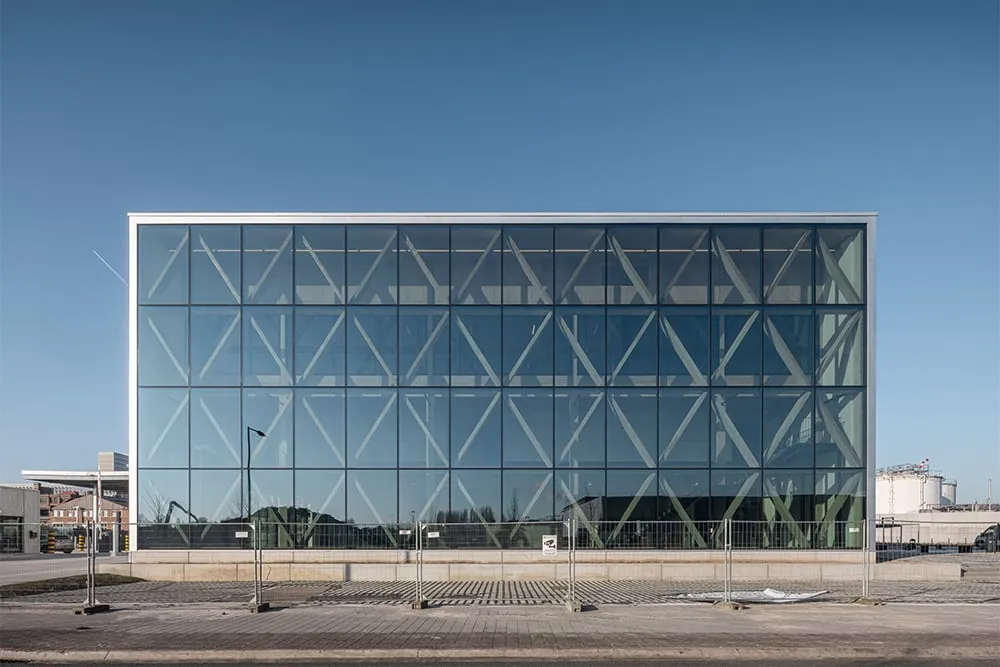
Main contractor Socatra coordinated the entire redevelopment project for the Buda business park, located alongside the canal in Neder-over-Heembeek. “We managed the project from the demolition of the old building through to the handover of the new site. Socatra managed every aspect of the works: design, landscaping and specialist systems,” explains Gilles Sanderson, Project Manager at Socatra.
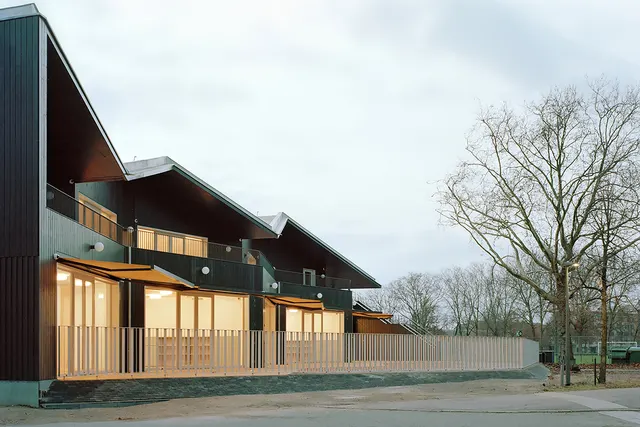
Designed by the architectural practices Atelier 229 and evr-architecten, more than
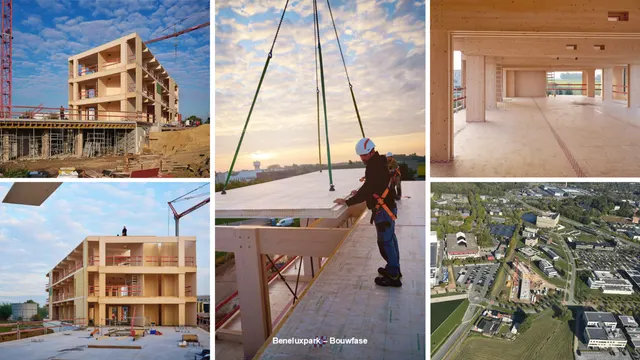
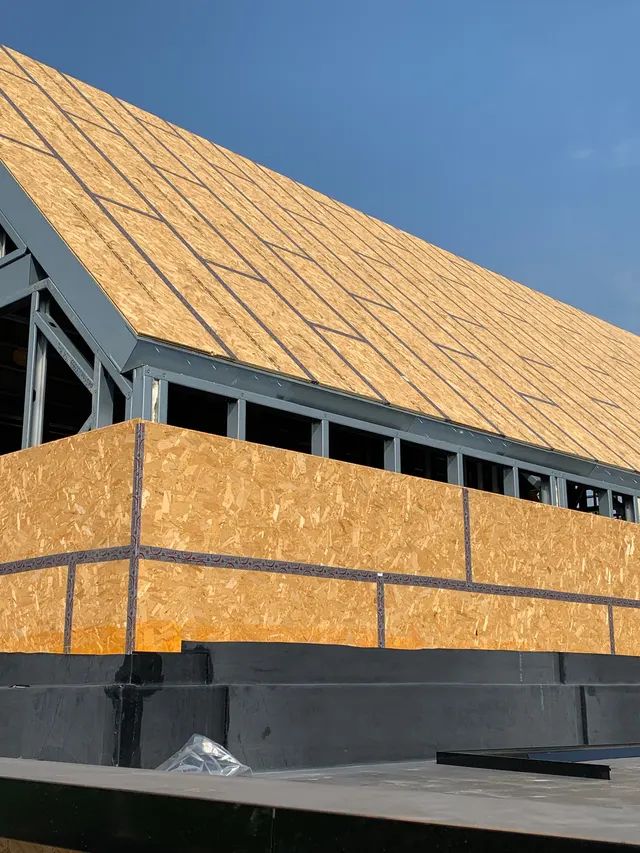
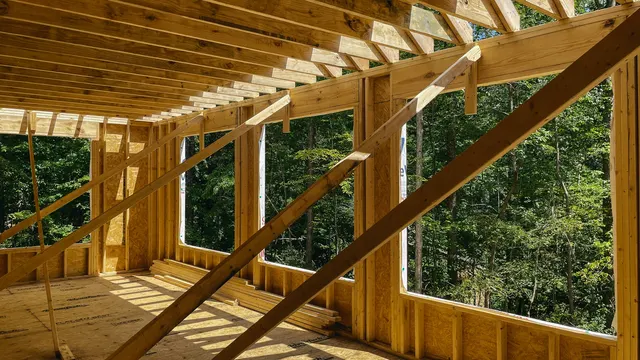
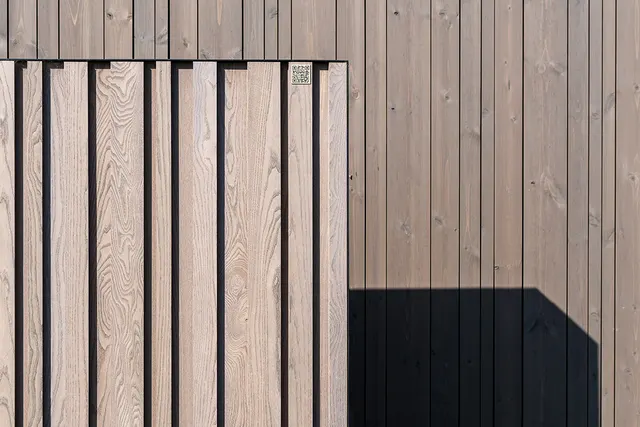
90% of the main building is made of timber, making it a model of sustainability: “With the exception of the central concrete core, the building is entirely made of timber. We subcontracted the timber structure to Structure Wood, a company that has been a trusted partner for many years. Thanks to our efficient collaboration, we were able to deliver a high-quality building, in terms of both performance and aesthetics,” says Gilles Sanderson enthusiastically.
The building stands out for its sustainability and the range of solutions adopted to ensure minimal energy and water consumption. The roof of the industrial hall is covered with solar panels, and the energy generated is used directly to power the site.
The project, which was carried out as a temporary consortium with the company Louis De Waele, also included the construction of retention basins and the installation of large tanks to recover as much rainwater as possible. This water is then reused to wash the vehicles used by the city services at the Buda site. An innovative solution was chosen to optimise energy consumption: “We used a heat recovery system for the water in the staff showers. The hot water is discharged into the sewer, where its energy is recovered to reheat the water for the sanitary facilities,” says Gilles Sanderson.
In keeping with the sustainability approach, the specification also required materials to be transported via the adjacent canal: “In particular, we transported excavated earth and prefabricated elements by water. This allowed us to demonstrate the benefits of modal shift, easing traffic congestion in the capital and reducing transport-related CO2 emissions,” concludes Gilles Sanderson.
Question about this story? Ask your question
Who worked on it
- ClientNet Brussel
- ArchitectAtelier 229 (Elsene- en evr-architecten (Gent)
- Main contractor(s)Socrata (Schaarbeek)
Keep following this
Get an email when a new story is published. No account needed.
- SubjectTimber construction