Multifunctional buildings are the new urban norm
Text Bavo BoutsenImage Jasper Van der Linden, ZIN, CONIX RDBM Architects
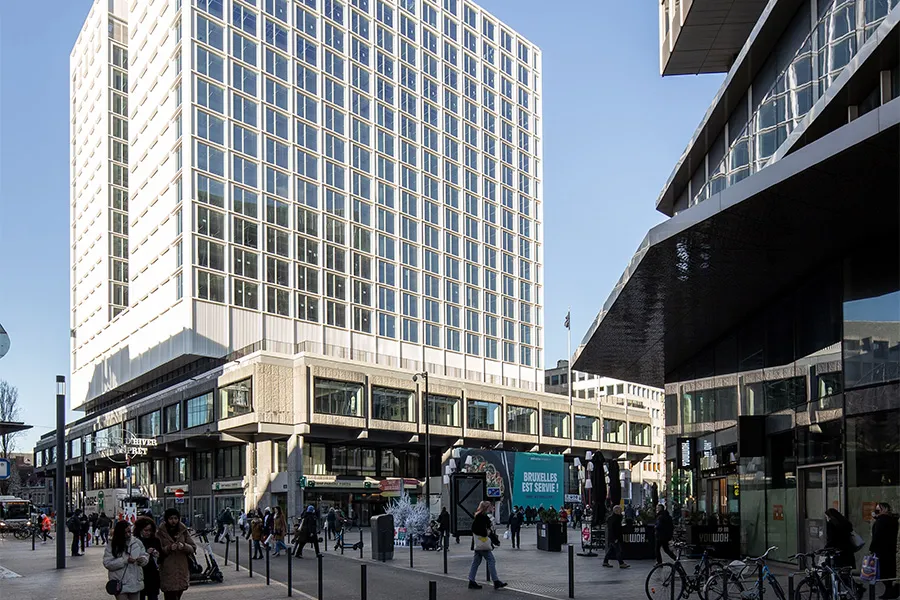
Projects that repurpose office buildings as homes are perhaps the biggest trend in urban development for the years ahead. This complex transition is a response to the range of societal challenges we face. It offers plenty of opportunities for construction companies and architects. “Historically, buildings have always been suitable for multiple uses.”
Urban planning in cities is undergoing significant change. One notable development is the growing number of conversion projects involving old factories, as well as outdated office buildings. Several factors are driving this. First, there is a clear intention to increase density and preserve as much existing open space as possible. This objective was also enshrined in legislation last year in Flanders’ construction shift. In practical terms, this means that wherever possible, uses better suited to today’s needs must be found.
The shift towards circularity
In this context, it is an undeniable fact that demand for office space has fallen in recent years. This is due to changing attitudes to working from home and the design of workplaces, both of which have accelerated since the coronavirus pandemic. As a result, many existing office units are underused or even completely vacant. Combined with the housing shortage, which remains acute in all major cities, this makes large-scale conversions essential.
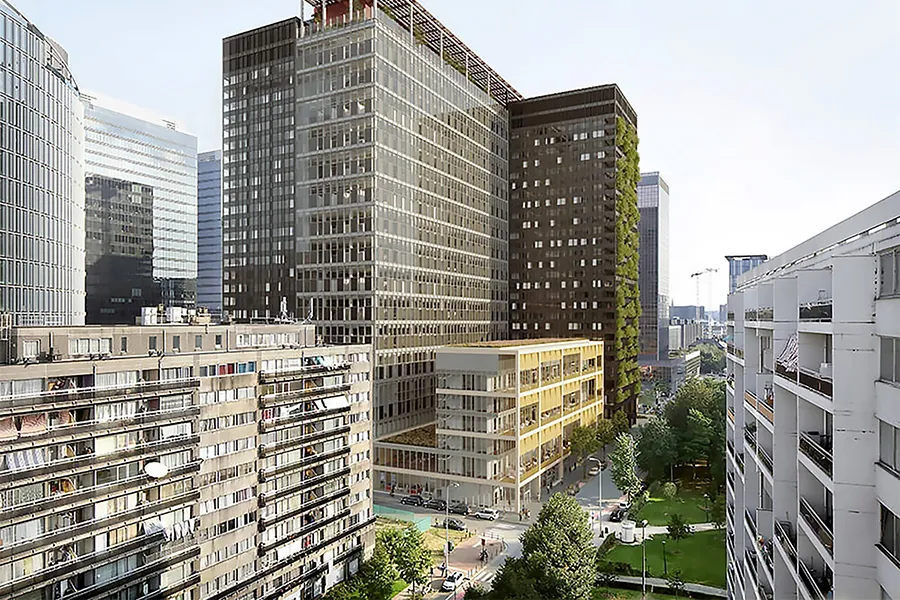
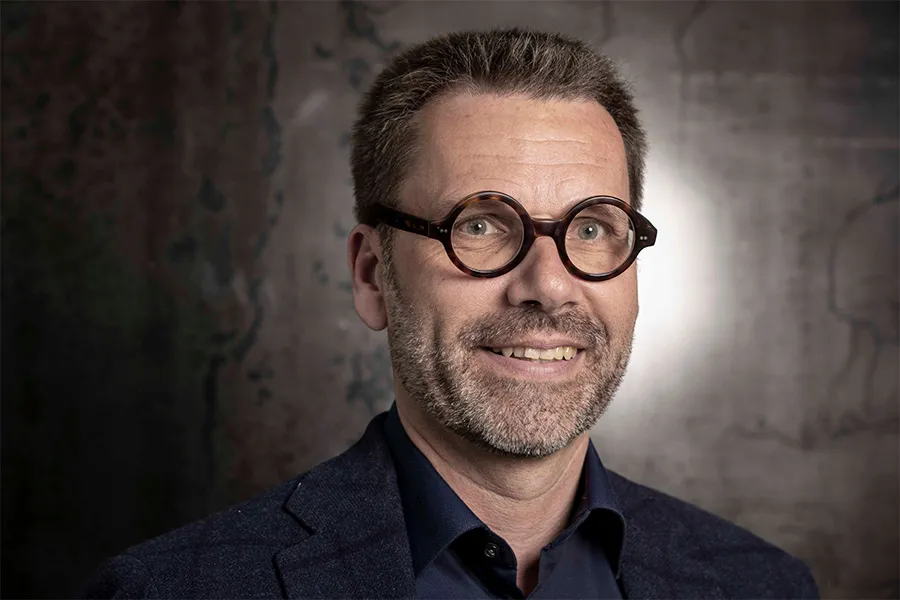
“Another important driver is the shift towards circularity. Taking circularity as a starting point is essential if large construction projects are to secure funding,” says Frederik Jacobs, architect at CONIX RDBM Architects. In recent years, the Antwerp-based practice has completed a number of conversion projects, including the Multi tower in Brussels. “Today, these account for around 15% of our projects, but we expect that share to continue rising.”
Multifunctionality
Another highly topical factor is our changing perspective on urban planning. Driven by a wealth of sociological and architectural research, urban planners are now advocating multifunctionality more than ever. This means combining several uses on a street or even within a single building. In this way, a healthier balance between people and space can be achieved, which is lacking in monofunctional buildings and neighbourhoods.
“You should always aim for mixed use, because it means heat sources are used more efficiently and therefore more sustainably,” Jacobs adds. “It is also a return to an earlier reality, when this was simply taken for granted. Historically, buildings have always been suitable for multiple uses. The same goes for reusing building materials.”
Monofunctional buildings also have very little interaction with their surroundings. Nowhere is this tension more evident than in Brussels. Decades of ill-considered urban policy in the capital have created highly monofunctional neighbourhoods, such as the North Quarter and the European Quarter. The difficulties faced in and around several Brussels railway stations, located in such neighbourhoods, can be seen as a manifestation of this.
Conversion projects gathering pace
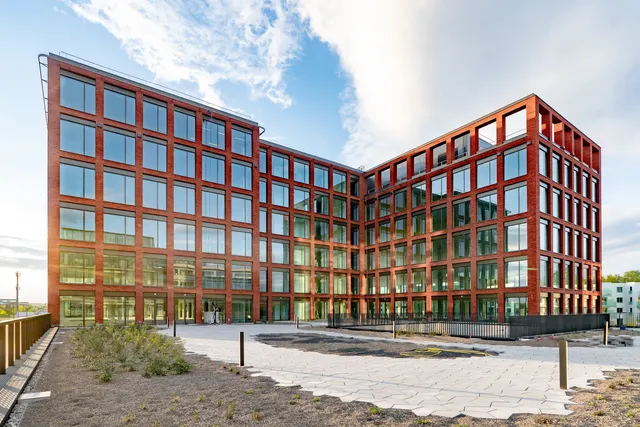
However, important steps have already been taken in recent years to change this. Befimmo’s ZIN project, a brand-new tower a stone’s throw from Brussels North station, is now in its final phase. From 2024, it will provide a workplace for 6,000 Flemish civil servants, alongside a hotel and a number of homes. The project is intended as a model building for the still excessively monotonous North Quarter. Next year, work is also expected to begin on converting the Proximus towers, an office complex that is ultimately to house a large number of student rooms and a publicly accessible footbridge.
The European Quarter is also set for large-scale transformation in the coming years. More than 300,000 m² of office space is to be redeveloped in total, with around 30% converted into housing or services. The trend is also reflected in the figures: 40% of all planning applications for major construction projects in Brussels concern office buildings being converted into homes.
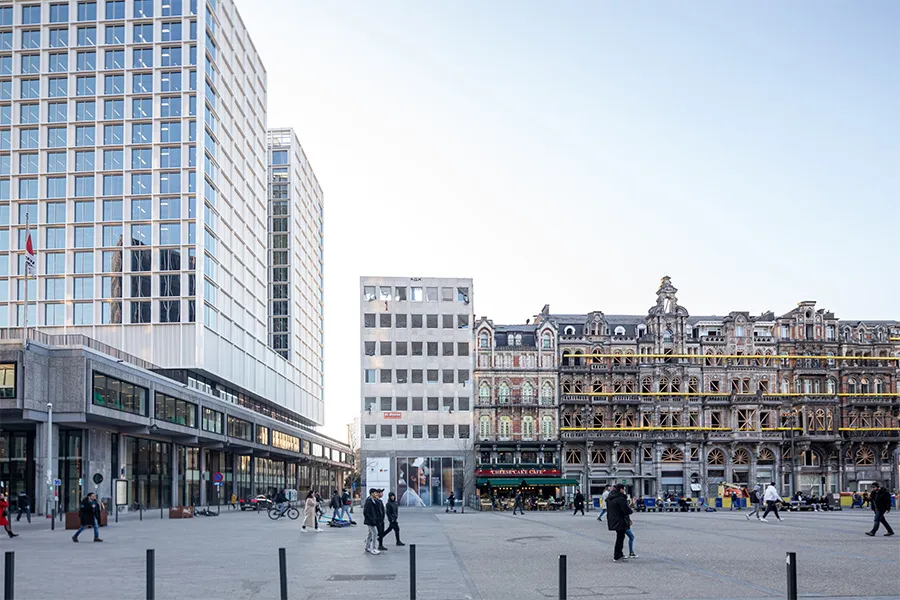
These trends, which offer opportunities for construction companies and project developers, are also evident in other cities. In Antwerp, a partnership between West Flanders-based developer ION and Katoen Natie will give the Boerentoren a mix of uses: after renovation, it will house cultural facilities, hospitality venues, offices, shops and apartments.
Ingenuity required
Academics are keen to give this positive shift as much momentum as possible. Researcher Paulien Beeckman (VUB Architectural Engineering), for example, used a study of sixty conversion projects across Belgium to identify which office buildings are suitable for conversion into homes. “Sometimes the relevant characteristics are obvious, such as the dimensions and load-bearing capacity of the structure,” she explains. “Think, for instance, of the dark areas inside an office building, which are uninhabitable without a clear architectural intervention. But the most decisive factor in determining whether an office building can be reused is the façade.”
Frederik Jacobs also stresses the complexity. “For architects, repurposing projects mean a longer research phase, because you have to work out how an existing building is put together. And that is often more complex than you might think. Many buildings were not built as drawn, either. This calls for greater creativity, which many designers actually enjoy,” he concludes.
Question about this story? Ask your question
Keep following this
Get an email when a new story is published. No account needed.
- SubjectConstruction projects