Revolutionary solar-cell façade cladding on a home at Kamp C
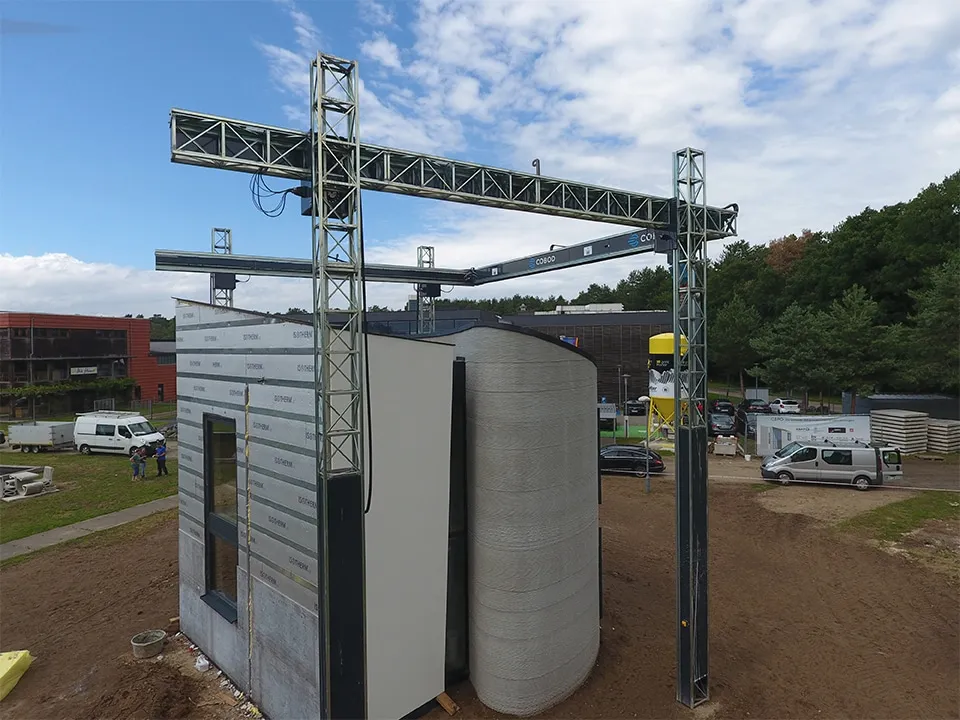
At Kamp C, the provincial Centre for Sustainability and Innovation in Construction, the 3D concrete-printed house has been completed with the latest generation of photovoltaic façade cladding.
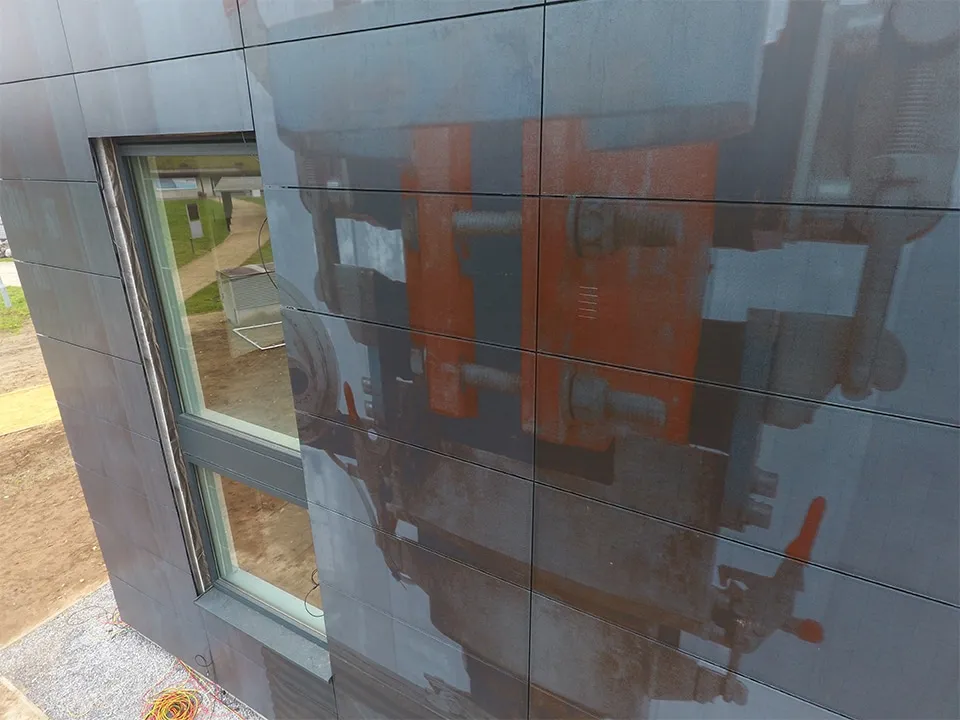
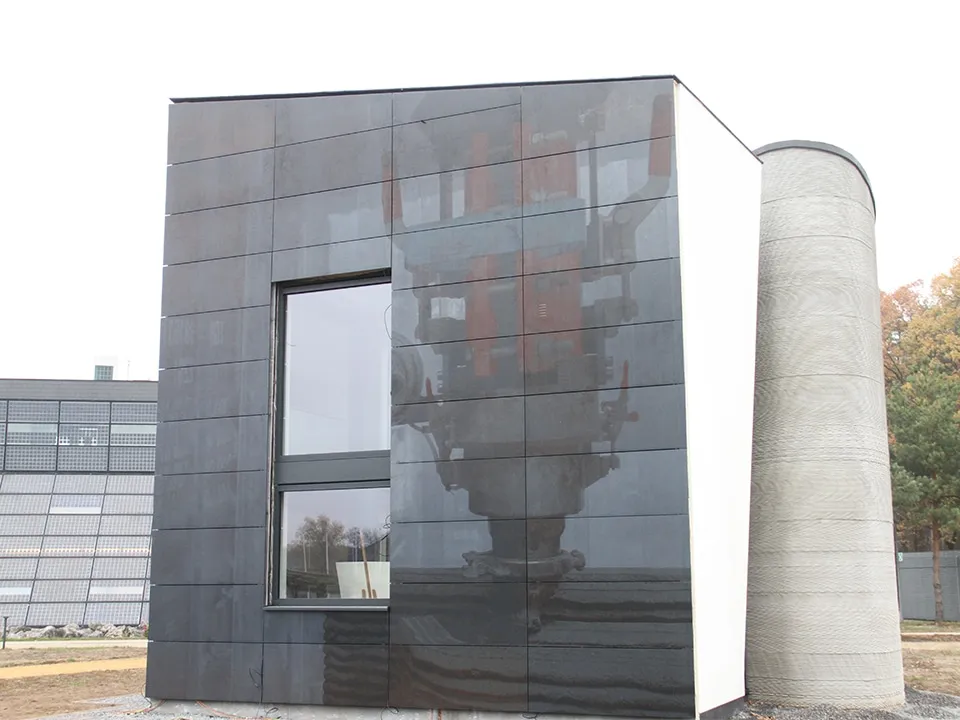
Visitors to the provincial centre cannot miss it: spread across 35 solar panels, a towering image of the 3D concrete printer adorns the façade. “Pixasolar’s design freedom inspired us to immortalise the 3D concrete printer on the house,” explains Emiel Ascione, Project Manager at Kamp C.
Disguised as façade cladding, the Pixasolar solar panels do not detract from the design of the house. Quite the opposite: the inkjet-printed solar panels add aesthetic and architectural value.
The panels’ unique design has not gone unnoticed. Earlier this year, Pixasolar was awarded the Red Dot Design Award “Best of the Best”. The panels received this distinction for their design, functionality and innovative character.
Patented technology
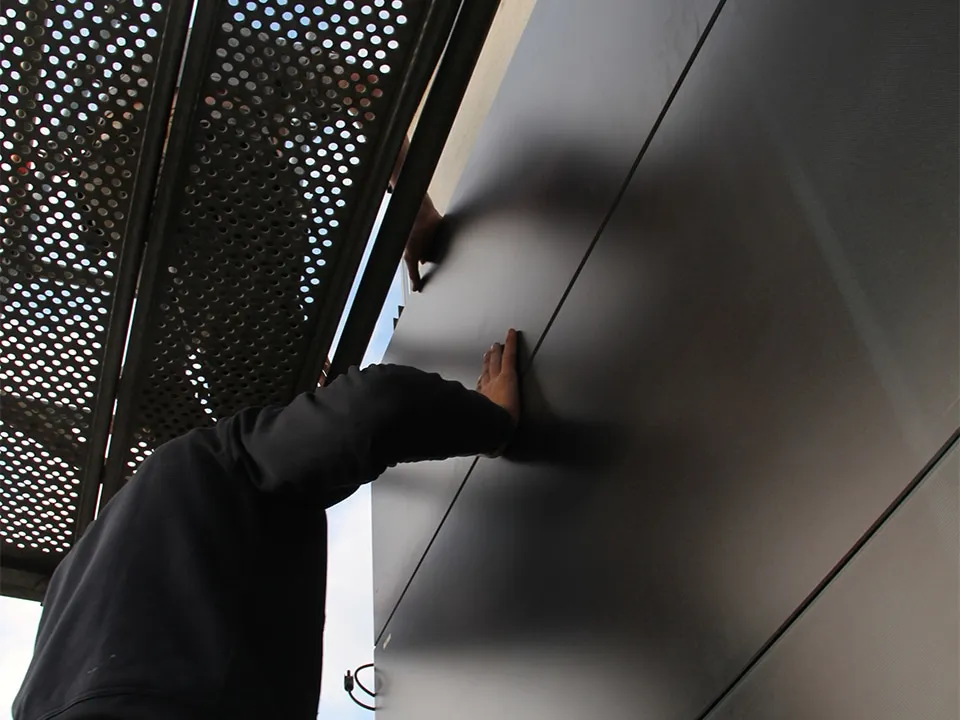
The energy-generating façade at Kamp C stands out for its construction and technology. No fewer than seven patents attest to the unique nature of the façade build-up.
Pixasolar solar panels comprise durable, high-efficiency monocrystalline solar cells. The cells are optimally integrated and connected to maximise output in all conditions. They are enclosed on both sides within a complex of laminated, thermally sealed PVB safety glass. The glass treatment, optimised cell layout and edge sealing of the solar panels are internationally patented.
The façade insulation system with an integrated batten structure is also patented in Europe. The ready-to-install insulation panels make it possible to insulate and level the façade particularly quickly and efficiently. At the same time, they provide a fire-safe supporting structure for mounting the solar panels.
Distinctive and affordable
A fully fire-safe, insulated energy-generating façade with Pixasolar solar panels is available from approximately €400/m². A personalised colour or design costs an extra €100 to €200/m². “This may seem a lot until you put the price in the right context,” says Sacha Lens, spokesperson for Pixasolar. A traditional façade with a separate solar installation on the roof often works out more expensive. The energy-generating façade at Kamp C will pay for itself in the coming years. “That is why the façade should not be seen as a cost, but as a sound, smart investment,” Sacha concludes.
Circular construction
The energy-generating façade reflects the philosophy of circular construction, a priority at Kamp C. The build-up was optimised for the project to align as closely as possible with the circular vision.
The Muro façade insulation system, with integrated support and adjustment profiles, creates a continuous insulation layer in a single operation, with a fire classification of Euroclass B-s2,d0. The solar panels are then mounted on prefabricated metal profiles using concealed anchors. This means the façade can be dismantled and reassembled at any time. At the end of their service life, the solar panels are fully recyclable. With this, Pixasolar aims to help address the ever-growing mountain of waste from discarded solar panels.
Strong teamwork
The façade at Kamp C is the result of close collaboration between Heliartec, Cooperio, Strikolith and AFS International. Together, they combined their complementary products to create a high-performance, energy-efficient façade concept. Ecopuur, a specialist in renewable energy technologies, was responsible for the installation. Convinced that demand for energy-generating façades will increase significantly, the company is investing in additional staff to deliver projects in Belgium.
Want to visit the project?
Anyone wanting to see the energy-generating façade for themselves will have to be patient a little longer. Due to tightened coronavirus measures, activities and guided tours at Kamp C are not possible until the end of 2020.
You can explore the project digitally on the Pixasolar website’s virtual tour: https://www.pixasolar.com/kampc. A series of photos and videos shows how the energy-generating façade was built.
Question about this story? Ask your question
Keep following this
Get an email when a new story is published. No account needed.
- SubjectConstruction projects