











BIM, construction data and digitalisation: how Neanex is making the construction industry more efficient and sustainable
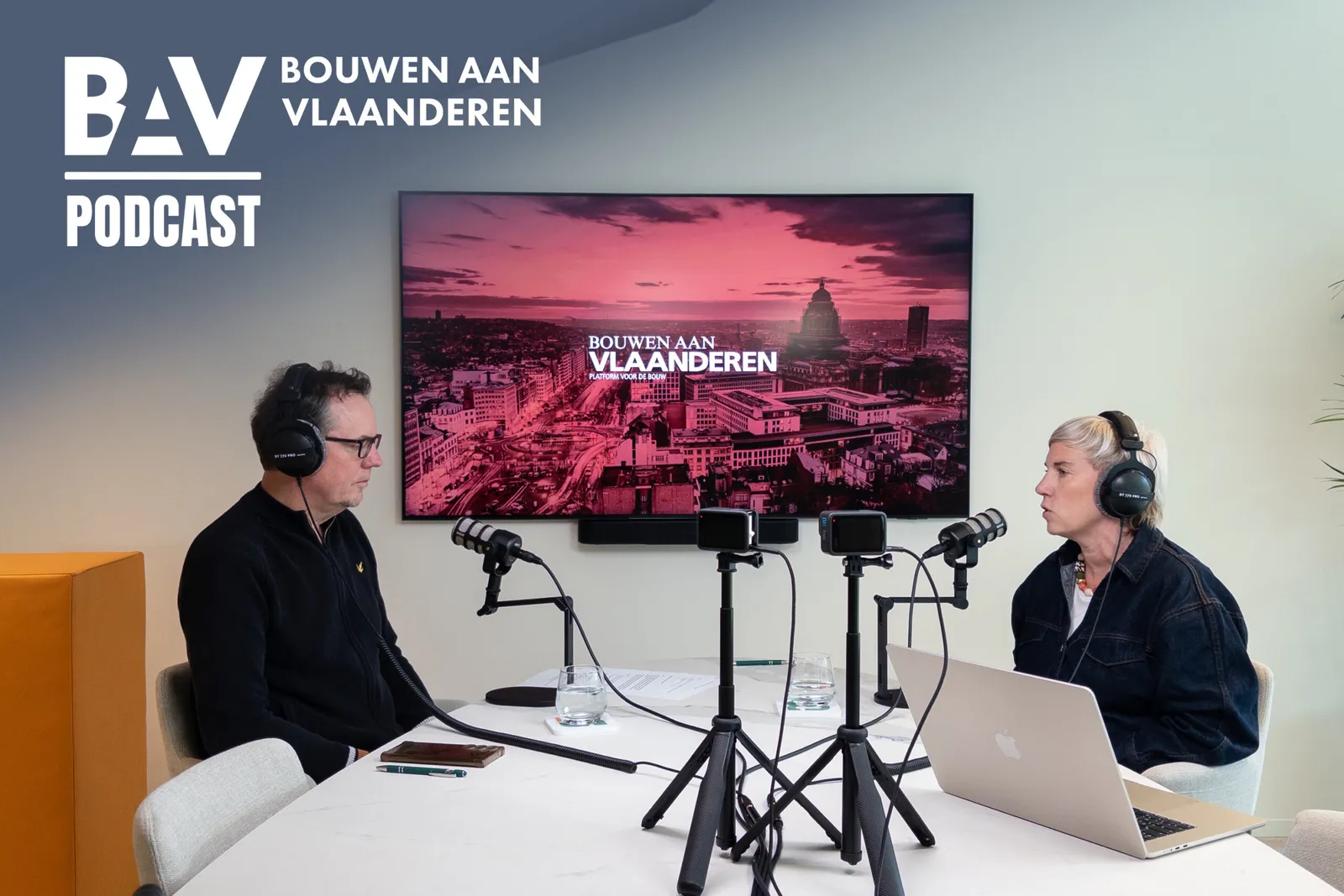
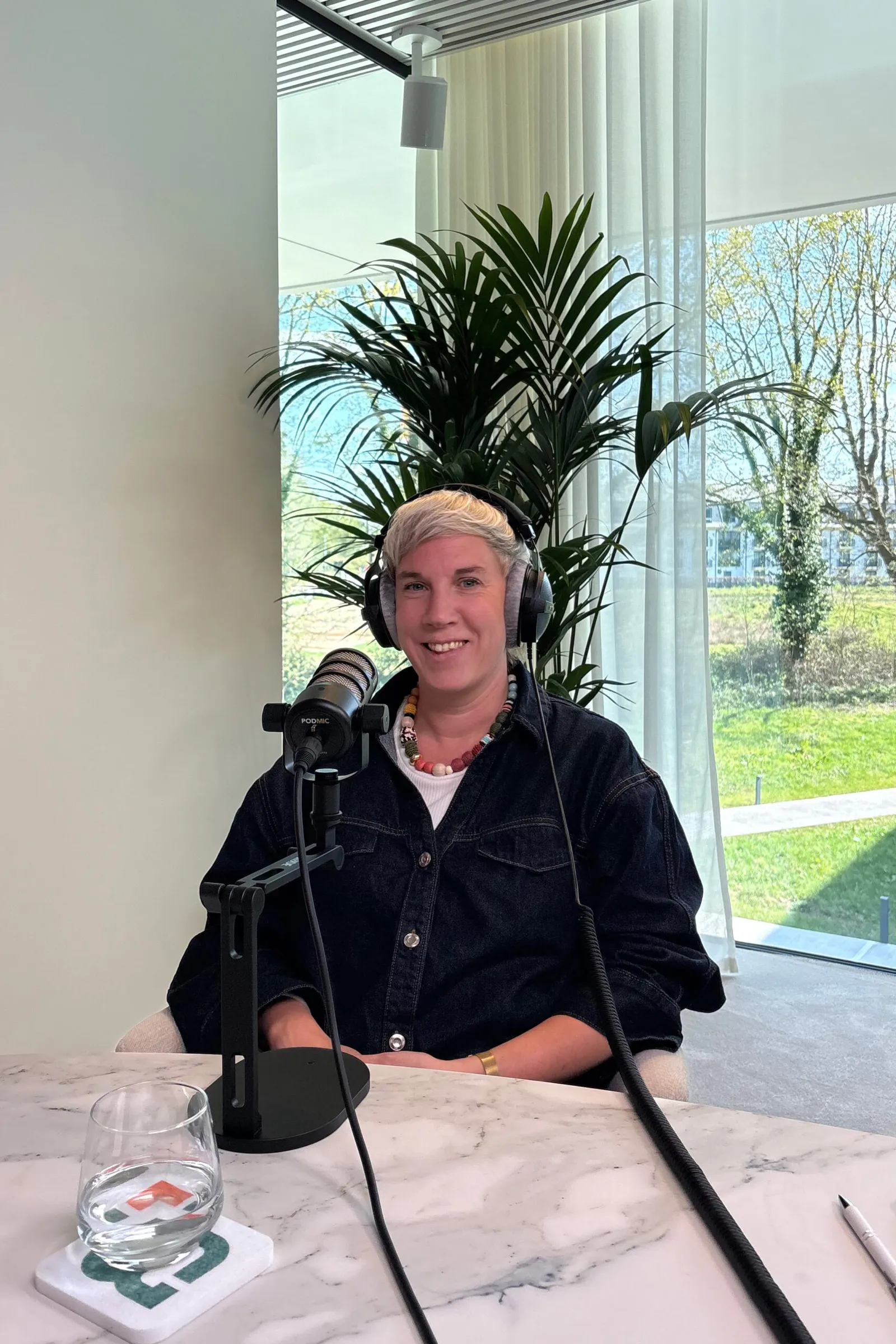
In this episode of Bouwen aan Vlaanderen, host Kris Vandekerckhove talks to Josefien Vanhuyse, CEO of Neanex, about the role of BIM, data and digitalisation in the construction industry. Despite the rise of digital tools, a large proportion of project information is still lost. What does this mean for efficiency, costs and sustainability? And how can things be improved? Drawing on practical examples and concrete insights, you will discover how data-driven working, asset registers and smart collaboration can fundamentally change the future of construction.
Full transcript
Alle hoofdstukken (11)
- Introduction and context for the conversation
- Is the system fundamentally broken?
- Where is information lost?
- Responsibility: processes, tools or people?
- Digitalisation in the construction industry
- Neanex’s Spotify metaphor
- Practical impact on projects
- Sustainability and circularity
- The role of asset owners and clients
- The sector’s vision for the future
- Closing
Introduction and context for the conversation
Kris Vandekerckhove: Welcome to the podcast studios at Lauwers Mediagroep in Oostkamp. Today we’re talking about BIM, data and digitalisation, and much more besides. We’ll also look at some of the challenges that remain in this area. Despite all the tools and models, a surprisingly large proportion of the information, in fact more than half, is still lost during construction projects. What does that mean for efficiency, costs and sustainability? And, more importantly, how can things be done differently? I’m discussing this with Josefien Vanhuyse, CEO of Neanex, a company that aims to put construction data at the heart of the entire construction process. Welcome, Josefien. Good afternoon, and thanks for joining us. Right, let’s get straight into it, Josefien.
Josefien Vanhuyse: Good afternoon. Of course.
Is the system fundamentally broken?
Kris Vandekerckhove: If more than half the data is lost on a construction project, as we mentioned in the introduction, shouldn’t we simply admit that the system is fundamentally broken today?
Josefien Vanhuyse: That’s a bold way to kick things off. I think, to put the question in context, that it isn’t necessarily a problem if some information is lost. Some information is only relevant to a particular stakeholder during a particular process, and that’s perfectly fine. But I do think it’s very difficult to re-engineer relevant information, or information we need at a particular point. That happens very often, too. Duplicating data in other systems for other stakeholders is standard practice in our industry. Above all, though, I think we need to identify our information requirements and expectations throughout the entire process, not just construction, but the asset lifecycle as a whole. Those projects naturally go into operation too, and have a particular function to perform. I don’t think we give enough thought to, or make explicit enough, what the information requirements are across those different phases. As a client, we come up with a concept. We discuss how to develop it with an architect or engineering consultancy. Then a contractor joins the project. The whole supply chain gets under way, and everyone has particular information requirements. But we find that those requirements are often defined far too late. Information is then lost, can no longer be found, or is not standardised or structured. So, in our view, defining those information requirements is key to making the system, which may seem broken, work as well as it possibly can.
Read the full transcriptCollapse transcriptnog 9 hoofdstukken
Where is information lost?
Kris Vandekerckhove: So you’ve almost answered my next question. I was going to ask where information is most often lost over the course of a construction project. But it happens at the start, because there aren’t any clear agreements.
Josefien Vanhuyse: I think information can be lost at any point in the construction process, and sometimes that doesn’t matter at all. What we do see is that the formal information handover points are often when people start considering what information they want to receive. There are indeed implicit agreements, for example in certain standards, which say that an agreement must be made. But they don’t explicitly state what the agreement should cover, what that means, what information I want about what, from which stakeholder, and exactly when it should be provided. The process is prescribed, but those details are not actually set down explicitly. So, at final physical handover, people often say: right, you still need to provide an as-built record. In the past, a lorry would turn up with a load of paper, which would then be put in an archive somewhere, never to be opened again. I think the as-built requirement is now being raised and is often included in a BIM protocol, but it still isn’t made explicit enough. At that point, people need to ask: what information is available, how are we going to collect it, how will we hand it over, and how will the receiving party, often the asset owner or client, use it? They only start thinking about information requirements and how to use the information at that stage. We really need to consider this earlier in the process: what are we going to use the information for? We could throw a great deal of information over the fence, but if no one uses it, we’d be better off focusing on information that can be useful for other applications, such as predictive maintenance or circularity.
Responsibility: processes, tools or people?
Kris Vandekerckhove: Yes, exactly. Without pointing fingers, of course, where should the bulk of the responsibility lie? Perhaps not with the tools, but with the processes? Or do people themselves need to be clearer sooner about exactly what is needed throughout the project?
Josefien Vanhuyse: Yes, I think all three aspects, processes, tools and people or agreements, are very important. We need to define the relationships between these different aspects and create a certain dynamic between them. In the past, I think there was often a focus on, ‘Right, we’re going to do BIM, so we need a BIM tool,’ whereas in our view BIM should also be a cross-disciplinary, integrated process throughout the entire lifecycle. That means first focusing on the processes: what are we going to agree with each other, when does particular information need to be provided, and what are we going to use it for? Is it for a particular validation, clash detection, other simulations or other requirements? Those processes need to be defined. Then, based on those processes, we can work out what capabilities and functions we need in the tools we use. And we use a huge number of them. We have an immense landscape of tools. That is an asset, of course, but also a risk. Which tools and capabilities can we bring together in a digital ecosystem to meet those functional requirements? It certainly doesn’t have to be a one-size-fits-all solution. Looking at a number of European companies, including ourselves, as well as many other Belgian companies with excellent tools on the market, we can see that they connect well with one another and can support those processes brilliantly with the right capabilities and functions. Then there’s the human aspect. I think it’s a good thing that we can still make mistakes as people. Can we discuss them with each other? Those processes, agreements and tools should help make the effort and hard work visible. The human reflection of that is the agreements between people. Those stakeholders are often set out in a contract. There are some good examples, as well as some challenging ones, such as NEC4 contracts or bouwteam contracts in the Netherlands, which really do facilitate collaboration and allow those processes and tools to provide genuine support. Ultimately, it’s about how we as an industry can move towards a form of integrated project delivery, with shared benefits and losses, because that is indeed something that the industry is still struggling with.
Digitalisation in the construction industry
Kris Vandekerckhove: They were the last ones still using fax machines, perhaps even sending a telex from one side of the room to the other. We still seem to rely a bit too much on PDFs, Excels and all kinds of separate tools, as you just said. Is that down to the industry, or do asset owners need to provide more input and, above all, push things more firmly in a particular direction?
Josefien Vanhuyse: I think you’ve already touched on a few things there. First, I think everyone knows that McKinsey chart, which is used in so many presentations in our construction industry, showing construction near the bottom in terms of digitalisation, just above hunting and fishing. But I think we’ve made huge strides in recent years. English has two different terms for this, which unfortunately we don’t have in Dutch: digitisation and digitalisation. I don’t think we can expect a revolution, because not everyone is Uber or Tesla. But as an industry, we can make the journey together, and we have already completed the digitisation stage. We have digital versions of many of the documents we used to work with. Paper is still used in the industry, let’s not forget, but most of the sector has made the shift. We work with PDFs and Excels; fax machines and telexes have, unfortunately, all but disappeared. My children are still amazed by how a fax works, with paper going in at one end and coming out at the other. Maybe we should bring it back. So we’ve taken that step: digitisation. But now let’s look at digitalisation. To link this back to BIM and the starting point, a data-focused way of working, I think some other industries moved to digitalisation very quickly and developed standards for it. I think the construction industry really needs to make that switch, and it can be painful. But we already have plenty of tools and open data standards available to use. The challenge is to put in place the tools and processes that can work with them. That is something we still see as a challenge in many cases. And every construction project is, in a sense, a new production facility or factory that we build, essentially from scratch. That makes it a major challenge compared with other industries.
Neanex’s Spotify metaphor
Kris Vandekerckhove: Which brings us neatly to Neanex, of course. You often talk about a Spotify for construction data, a very visual image. What does that mean in practical terms in the context of a project?
Josefien Vanhuyse: Yes, the Spotify analogy, it could be Netflix, but this makes it a little more tangible. We always compare what we do at Neanex, and particularly on our Fundament platform, with this: how can we provide interconnected, contextualised data with meaning for the construction industry? To explain, let’s compare Spotify with the way music evolved before Spotify and digital music. Imagine we were in this beautiful building, filled to the brim with old music cassettes, which some of you may still remember. I’m raising my hand too. The ones with two holes in the middle that you had to wind forwards and backwards with a Bic. Now imagine the whole building is full of that kind of cassette, and I give you three words and say: those three words are actually the title of a song, or perhaps an album, I can’t remember. Could you find me the cassette with that song on it? That sounds like a challenge.
Kris Vandekerckhove: I remember cassettes, for one. You can stack them neatly, so you could fit quite a few in here. And just because you pick up a cassette, physically, doesn’t mean you know whether that song is on it or not.
Josefien Vanhuyse: So that would be a huge challenge. And that’s actually a little like how we organise data in the construction industry today. There is already a broader logic to the way we store PDFs, but that’s still only one level of hierarchy. Now think of Spotify. I give you three words, you enter them into your Spotify account, and immediately get various suggestions for songs and albums that might contain that title. You get suggestions, so the context of the genre you’re looking for. You get albums by the same artists. And that’s how we organise information on our Fundament platform. It’s an interconnected approach that also gives the data meaning, which we call semantics, and enables you to view that information from your own perspective. A very tangible example is the various sockets in this room. Are they part of the room or the electrical system? The answer, of course, is both, but depending on who you are or what information you need, you’ll look at that socket differently. An electrical engineer might say: I look at the systems, there are eight sockets on one circuit, and I want to see how they’re interconnected and what supplies them. But an architect might say: I see the rooms and levels in this building, and in each room there is specific equipment, including a socket. And that’s how we look at the data: interconnected and in your context, through your own lens.
Practical impact on projects
Kris Vandekerckhove: Before we get too esoteric about how we look at sockets, what you’re actually doing is making data from different tools work together, so that when you search for something, you find it straight away, along with all its semantic context. We want to know what that means in practice: what concretely changes on a construction site or in a project when the data is in good order? Because I’ve heard that you also play a fairly important role in Oosterweel.
Josefien Vanhuyse: Yes, that’s right. I think that if we look at what actually changes on a project or construction site, or in the way processes are approached, research shows that just over 50% of data is lost. Meanwhile, 30% of project staff on projects such as Oosterweel spend their time looking for the right information. I think we all know that workloads are high and there is strong demand for skilled staff, the engineers who have to lead, deliver, devise and develop all these fantastic projects. If we can save 30% of their time by giving them the right information straight away, rather than making them ask where it is, whether they have to calculate it again themselves, which system to look in, or whether a colleague has access, that’s a significant gain. So 30% of their time goes on finding the right information. That means, first of all, a 30% gain in efficiency and a 30% reduction in costs. Those people can spend 30% of their time on creative work that data still can’t do for us. And thankfully so. Secondly, it’s about stakeholder communication. Communication is, of course, key on projects of this complexity. If we can be very explicit about what we’re discussing, what you expect from a project, and how I, as a contractor, architect or engineering consultancy, intend to carry out the design, then we can make it very clear, tangible and visible. This also means fewer obstructions and better risk management, helping us make integrated working a reality.
Sustainability and circularity
Kris Vandekerckhove: If data is handled this way and you can find everything that’s available, surely you can use it to support sustainability and circularity too, because you know in advance what works, how you’ll use it and, potentially, how it can be repurposed or reused afterwards. So what role do asset registers and material passports play in reuse decisions?
Josefien Vanhuyse: Yes, we also call our platform a digital asset register. It is sometimes referred to as a building or project passport. Essentially, it brings together all the data relevant to your context. One of the topics, use cases or applications it can support, alongside efficiency, productivity, requirements validation and contract compliance, is of course everything related to circularity. Unfortunately, the materials passport concept was pushed down the agenda at European level by the crisis in Ukraine, but it is coming back. Particularly with the 2028 regulations on digital product passports on the way. We should certainly be recording information about the products and materials used in our projects, explicitly and for the future. Recording material information is therefore another application using the same functionality. Once again, it comes down to our information needs. These may include circularity, carbon footprint, embodied carbon and materials passports. And again, what gets measured gets managed, so this will also enable us to make choices about materials. If we choose material X, Y or Z, each with a particular carbon footprint or environmental impact, we’ll be able to measure that immediately, even when dealing with very large volumes of data.
The role of asset owners and clients
Josefien Vanhuyse: So when does this really become valuable for all those asset owners? There is certainly a shift underway: information is relevant at the as-built or handover stage, and awareness of this is growing. Asset owners and clients are indeed setting requirements that the market must meet, but there is still a lot more that can be done. We also expect public clients and asset owners to use their funding and public funds to take responsibility for pushing the industry in this direction and setting out their data requirements and expectations. That will also help them manage maintenance and operations more effectively, and make greater use of predictive maintenance. The aim is to avoid carrying out maintenance solely on the basis of time, and instead focus on performance, for example. A road should only be maintained when its performance is no longer adequate, rather than simply because we predicted that it would need maintenance at a certain point. They can do more to drive this. That responsibility, the ability to enforce requirements, and including them as a contractual element are all very important. We see this being strongly driven in the utilities sector in the Netherlands, for example. We work with them to ensure that the digital maturity of contractors and the industry as a whole is considered from the outset as an award criterion, alongside choices relating to circularity and sustainability.
The sector’s vision for the future
Kris Vandekerckhove: Great. To round off this particularly fascinating podcast, thank you, Josefien. Let’s dream a little. We’re entering the world of dreams with Josefien. What would a construction project look like in an ideal world ten years from now, in your view? Probably focusing on your area of expertise.
Josefien Vanhuyse: Ten years is a long time in this fast-evolving, certainly data-driven industry, but I think there are a number of areas where we can see that progress is under way, yet which we would like to see further advanced. If we allow ourselves to dream a little bigger, we’d like to be there within five years. We’d like to work more according to the principle of integrated project delivery. Construction teams have a huge amount of knowledge, so why don’t we bring it all together and ensure that, in a more collaborative system, we can deliver projects to a high standard, on budget, efficiently and productively? I think that’s certainly one of Neanex’s ambitions: responsible commissioning and contracting. As a knowledge holder and software developer, we’re also happy to take responsibility for this by promoting open data standards and advocating for their adoption. I think a second point is that circularity and productivity don’t have to be competing choices. In fact, they go hand in hand. We can’t be productive, efficient or sustainable unless we connect them. For us, sustainability also has a social and economic component. That’s also the case when we look at the various elements of ESG in Europe. So let’s put that into practice and stop having to choose between them. I think that’s another thing we dream of. And the third thing, if we can dream even bigger, is greater recognition of the human side of our sector and our work, and of creativity. Of course, with everything that’s happening around AI and data, we sometimes see people taking a step back, and a certain fear of it. I think we need to be very conscious of that. But I also think that our human creativity is our strength when it comes to dealing with it. And we see a lot of possibilities for our industry there. It’s our creative, associative minds that will enable us to come up with great solutions for our built environment and make the right choices. On the other hand, if we look at our software development work, at our own application Fundament, there are many Belgian and European alternatives available today. And I think that, as Europe, we should promote them and take a stand on connecting them better, as a sustainable alternative in our sector. I think that’s something we’d like to see happen, and something we certainly support.
Closing
Kris Vandekerckhove: But you’re active across Europe too. So you see the solutions coming together in a kind of unity at European level rather than Belgian level, which makes sense to me.
Josefien Vanhuyse: Yes, our region is too small, of course. As a software developer, you always have to look beyond a limited region. You develop software for the world, not just for our own region. There are a number of highly complementary players on the market alongside Fundament, who are making great strides and with whom we’re also working on projects. We can see that a best-of-breed, connected ecosystem, where different applications based on standards can be linked together, brings a great deal of value to projects and organisations. It’s about moving away from the one-size-fits-all approach or the vendor lock-in claimed by very large players, which also carries significant risks. We’re also seeing, in certain tenders and requests for proposals, that more clients are consciously choosing European alternatives. That’s certainly an important development.
Kris Vandekerckhove: All right, I’ve already found the title for this podcast: “We make software for the world.” There you go. How good is that? You get strong speakers, and then you get really strong speakers. Josefien Vanhuyse of Neanex was in that latter category. Thank you very much for your clear insights. Thank you. Did you find this episode interesting? Share it with colleagues in the sector and help continue the conversation about digitalisation and data in construction. You can find more episodes on our various channels. Until next time!
Keep following this
Get an email when a new story is published. No account needed.
- SubjectGeneral







