











Facing brick manufacturer leads the way in the sustainable transformation of the construction sector
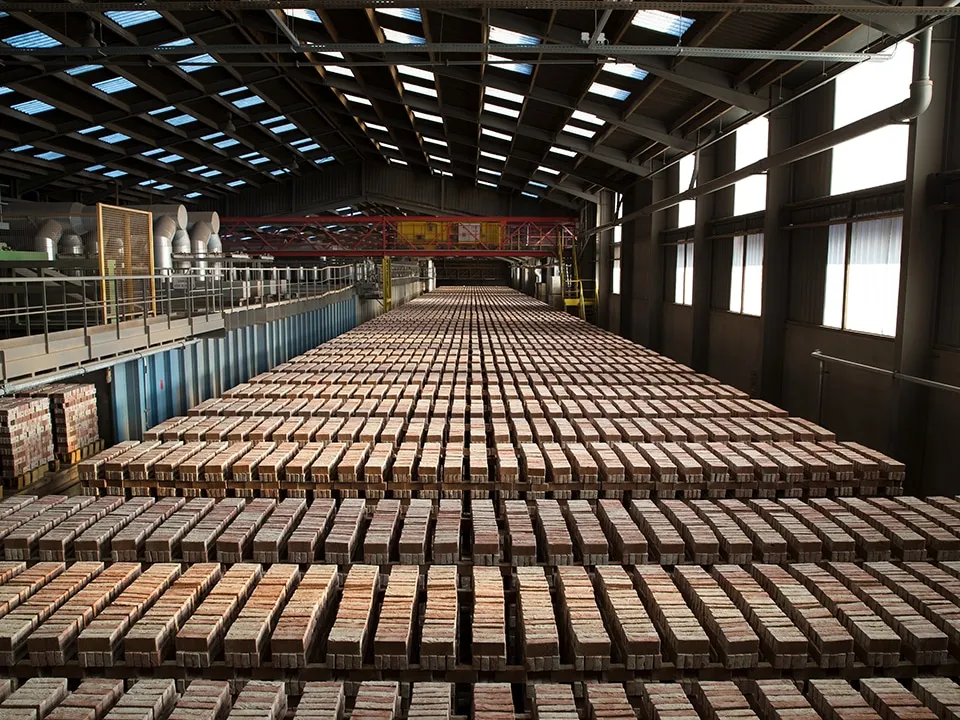
When Jaak Vandersanden, then also mayor of Kleine Spouwen, founded his own family business in 1925, sustainability, social commitment and collective wellbeing were priorities from the outset. It is no surprise, then, that these values have been embedded in the DNA of the well-known brick manufacturer for almost a century. In its highly engaging sustainability report, Vandersanden explains, among other things, the specific efforts it is making and the innovations it is developing to minimise its environmental impact. These range from far-reaching energy efficiency and eco-friendly brick slips to carbon-negative bricks that turn waste into a useful product.
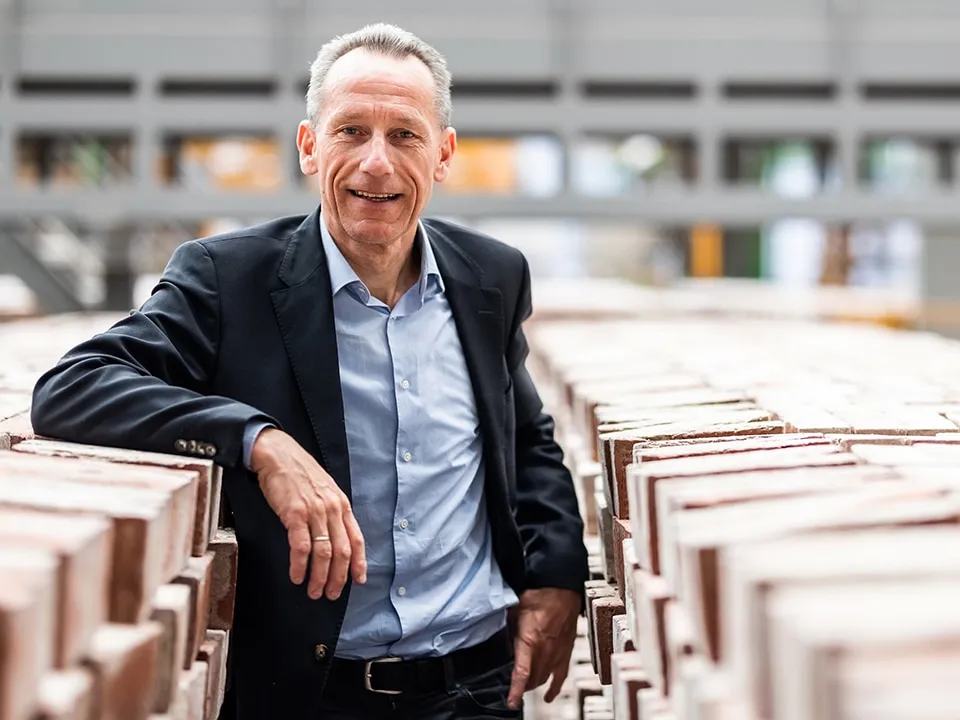
“Empty slogans and promises are not for us. We would rather point to tangible achievements and projects. Our ambition is to become the most sustainable and innovative company in the brick sector. We are not simply trying to ‘keep up with the times’, but to lead the way,” says Vandersanden emphatically. The many measures taken by the Limburg-based family business in recent years to further reduce its energy consumption and use raw materials more sparingly and efficiently show that these are no empty words. And they are paying off: no materials are wasted in the production process, all the water needed is part of a closed-loop system, flue gases are filtered as thoroughly as possible, solar panels and a wind turbine in Lanklaar generate green energy, new bricks are dried using waste heat from the kilns, a tunnel kiln that emits 25 per cent less CO2 has been commissioned in Tolkamer, and investment has gone into developing circular drying stack systems, impregnated facing bricks and packaging containing at least 30% recycled plastic … “We are also actively exploring the potential of wind energy and flue gas capture at our sites. In short, reducing our environmental footprint is a key priority, and we are going to great lengths to do so. By 2023, we aim to reduce our environmental impact even further, by at least 15% compared with 2020!”
Thinner bricks and brick slips
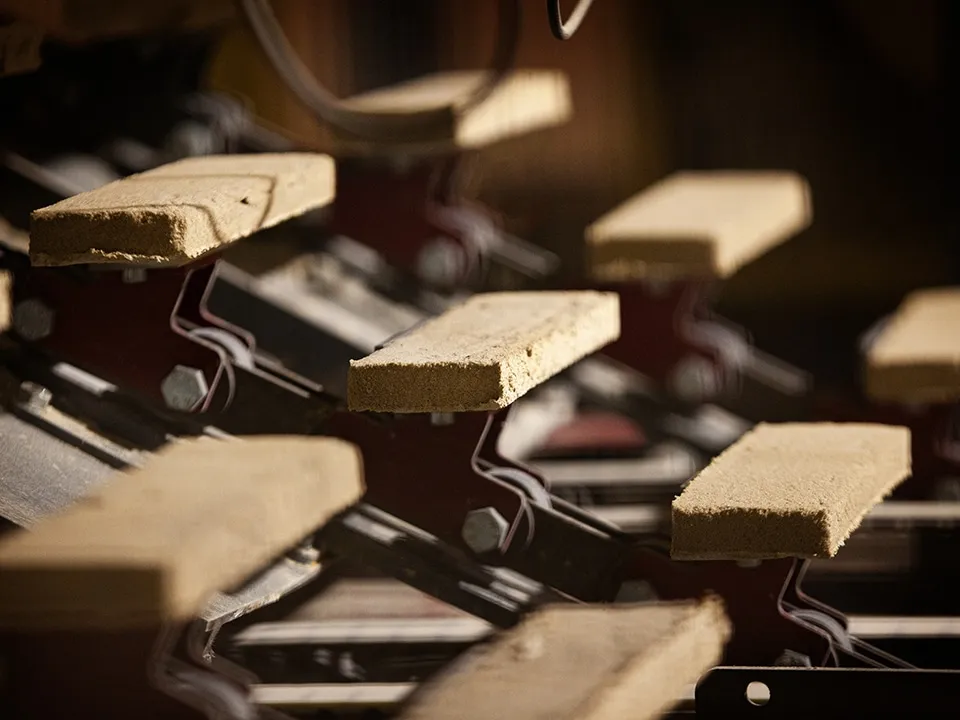
Vandersanden is also questioning the sustainability of its products. Despite all the efforts mentioned above, the traditional brickmaking process consumes considerable energy. “That is why we are making our facing bricks thinner, from 10 cm to around 7.5 cm, without compromising their properties, and switching to brick slips, in other words, 2 cm-thick slices sawn from our bricks,” explains Dominique Nassen, Product Manager Bricks at Vandersanden. “Brick slips allow us to cover twice the area with a single fired product, while gaining around 8 cm of insulation space without any visible difference in appearance. With this in mind, we developed E-Board®, a complete system solution comprising made-to-measure EPS insulation boards, brick slips, mortar adhesive and other accessories. We now also produce ECO brick slips, manufacturing the slips themselves rather than sawing them off bricks. The advantages of this breakthrough are numerous: 70% fewer raw materials, 50% less energy consumption thanks to smaller kilns, and the prefabrication of homes using the fully automated RoboBrick® brick-slip robot … The next step will be hydraulic pressing, which will allow us to produce brick slips less than 1 cm thick and deliver even greater economies of scale.”
“The carbonation bricks are the new standard-bearers in our sustainability story”
Revolutionary carbonation brick
But that is not all. Behind the scenes, Vandersanden is working hard on a revolutionary innovation: the carbonation brick. “This is truly Cradle to Cradle, as there is no firing process involved at all. The raw materials are waste products from the metal industry that absorb CO2 and solidify as a result. This produces carbon-negative bricks: producing the carbonation bricks needed to build one house with 15,000 facing bricks captures more than 5 tonnes of CO2, whereas traditional bricks would release 3 tonnes of CO2. Following an extensive period of product and process development, including the testing of a CO2 climate chamber and a press, we are building a pilot plant in Lanklaar to further fine-tune this promising process and move to full-scale production next year,” explains CEO Jean-Pierre Wuytack. “As you can see, we are even prepared to move away from our ceramic tradition and explore other possibilities, as long as they are sustainable. Our focus is on products for façades and streets, not necessarily ‘bricks’. We need to reinvent our sector and our activities. The carbonation bricks are the new standard-bearers in our sustainability story.”
Een zakelijke vraag aan Vandersanden? Get in touch
Companies in this story
Keep following this
Get an email when a new story is published. No account needed.
- SubjectGeneral
- CompanyVandersanden







