











Revision and harmonisation of energy performance of buildings policy
Text ORIImage Robert Kneschke/shutterstock.com
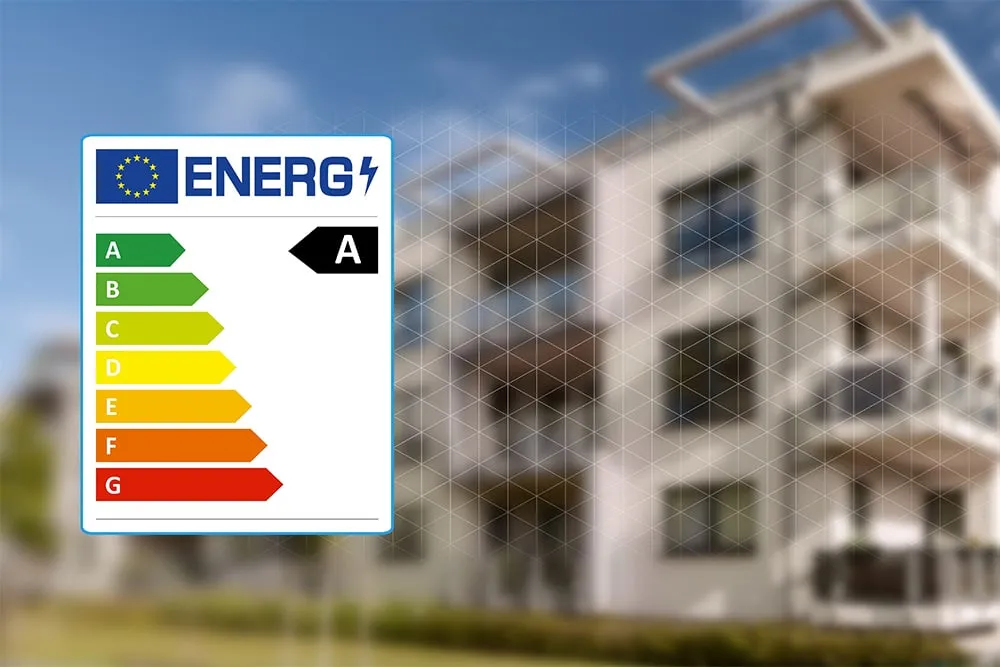
The new European Directive 2024/1275/EU on the energy performance of buildings entered into force on 28 May 2024, and Member States, in Belgium the regional authorities, must now transpose it into their own legislation.
A number of changes should be highlighted. First, the aim is no longer to achieve nearly zero-energy buildings, but CO2-neutral buildings (by 2030 for new buildings and by 2050 for existing buildings). In addition, the global warming potential (broadly speaking, operational and embodied greenhouse gas emissions) over the whole life cycle must be stated for new buildings. This development underlines the fact that it is no longer possible to consider energy performance alone, without also taking into account the overall climate impact of a building or renovation project, and preferably its impact in other areas too, such as the circular economy and biodiversity.
More than ever, the focus is on renovating buildings, which is clearly at the heart of the problem. Minimum energy performance standards will have to be set for non-residential buildings. By 2030, the worst-performing 16% of buildings must be upgraded progressively, and by 2033 the worst-performing 26%. For residential buildings, the ‘renovation trajectory’ approach will be used, under which the average energy performance of the building stock must improve by 16% by 2030 compared with 2020, and by 20 to 22% by 2035. This approach must target the worst-performing buildings. Finally, fossil-fuel boilers are to be phased out by 2040, and solar energy installations must be installed in new and renovated public and non-residential buildings.
The challenges facing renovation projects within this new framework will often be considerable. But specialist consultancies are creative in proposing solutions, provided the regulations are results-oriented and not overly prescriptive.
The transposition of this directive, coinciding with a new legislative term, is an excellent opportunity to evaluate the policy pursued to date and the administrative and technical problems encountered on the ground, to align urban planning regulations with energy performance of buildings and climate objectives, to simplify administrative procedures and, finally, to harmonise the regional calculation systems, as the construction sector has long been calling for.
Question about this story? Ask your question
Keep following this
Get an email when a new story is published. No account needed.
- SubjectGeneral







