











Tarkett creates the world’s first carbon-negative linoleum floor

A world first in circular flooring innovation
Tarkett is setting a new international standard in sustainable flooring innovation. The company is the first manufacturer in the world to introduce a linoleum collection that is carbon-negative over its entire life cycle. In doing so, Tarkett goes beyond existing initiatives and reinforces its pioneering role in circular construction and sustainable design.
While carbon negativity in the sector is often limited to the production phase, Tarkett Linoleum takes a fundamentally different approach. The floor is carbon-negative from the responsible sourcing of renewable raw materials through to take-back and recycling at the end of its life. Thanks to its carefully considered circular design and closed-loop system, materials and the carbon they store remain in use for as long as possible. This achievement has been independently verified through an Environmental Product Declaration (EPD).
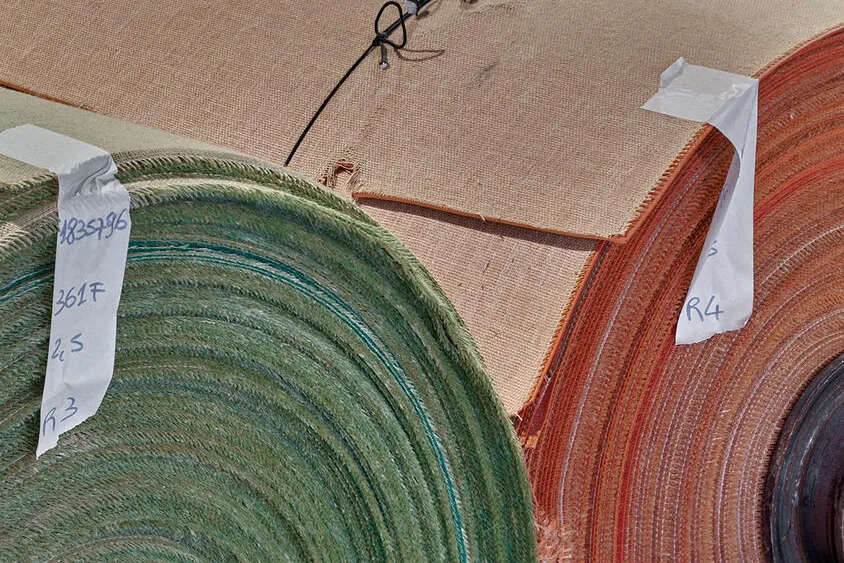
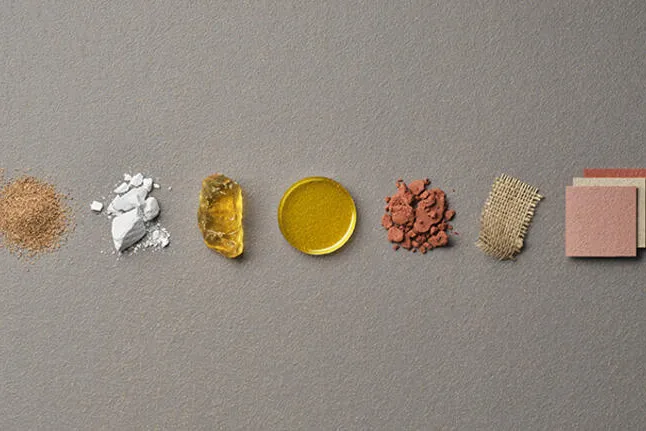
Tarkett has been manufacturing linoleum in Italy since 1898 and still uses the original recipe today: a natural blend of renewable raw materials such as cork, linseed oil, pine resin and wood flour. The latest collection, Lino Materiale, celebrates this natural heritage and brings the beauty and tactile appeal of cork to the surface with a uniquely textured finish.
“True circularity takes collaboration”
Thomas Leneveu, Vice President Commercial Business Unit at Tarkett EMEA, explains:
“We are particularly proud to have achieved carbon negativity with our linoleum. This is an important milestone and the result of decades of development and investment in both the product and the production process.
At the same time, it is crucial to emphasise that carbon negativity is only possible if the linoleum is returned to Tarkett at the end of its life. Our ReStart® take-back and recycling programme is the backbone of this circular system. By working with our customers, discarded linoleum is given a new life as flooring for the next generation.
True circularity comes from strong partnerships. Whether it is making use of residual material streams from other sectors or working with customers to take back flooring, the greatest impact is achieved when manufacturers, customers and partners work together to keep materials and the carbon stored in them in circulation.”
In detail:
The circular carbon footprint of Tarkett Linoleum
To accurately track a product’s carbon impact over its entire life cycle, Tarkett calculates and verifies what is known as its Circular Carbon Footprint.
The latest independently validated EPD confirms that Tarkett Linoleum, 2.5 mm achieves a negative circular carbon footprint of -1.92 kg CO₂-equivalent per m² across all life-cycle stages.
Production: materials and manufacturing process
Tarkett Linoleum is made from up to 97% natural ingredients. Up to 83% of these are abundant, renewable raw materials such as cork, linseed oil, pine resin, wood and jute. These materials absorb CO₂ as they grow and regenerate quickly.
Tarkett Linoleum also contains up to 40% recycled materials, including wood flour from the construction sector and recycled cork stoppers from the wine industries of Sardinia and Portugal.
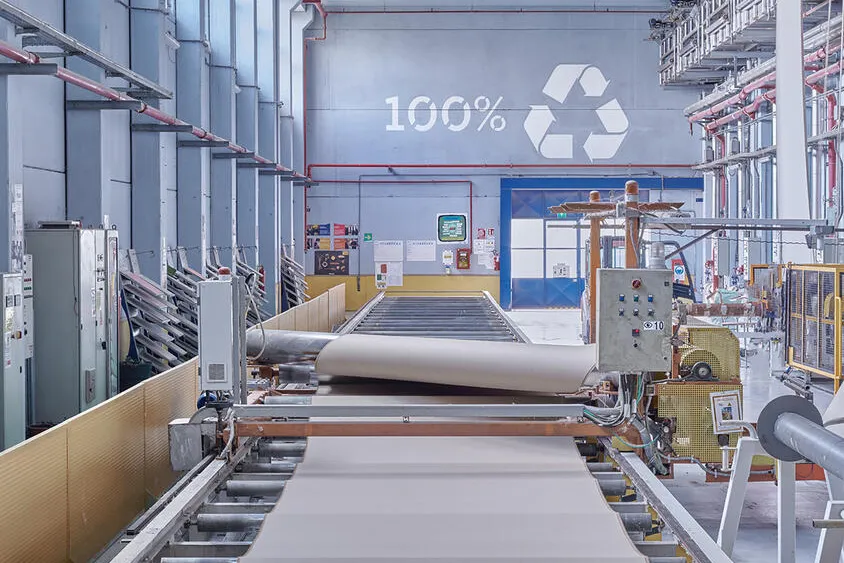
Production in Narni (Italy) uses 100% reused industrial water and 100% renewable electricity. Forty per cent of the energy is generated on site, including by solar panels.
Installation
Installation is carried out by experienced professionals, with minimal cutting waste. Offcuts and cutting waste can be returned through the ReStart® programme for reprocessing into new flooring.
Use phase
Thanks to its exceptional durability, Tarkett Linoleum has an expected service life of 30 years. The floor resists dirt, everyday wear, abrasion and chemical exposure throughout its life cycle.
End of life and recycling
At the end of its long service life, Tarkett Linoleum is 100% recyclable. Through ReStart®, post-consumer linoleum is collected, returned to the factory in Narni and processed into new flooring solutions. This closes the loop and maximises the retention of raw materials.
Today, 29 countries across five continents participate in ReStart®. Over the past 14 years, 124,000 tonnes of discarded flooring have been collected, equivalent to the volume of 12 Eiffel Towers.
Question about this story? Ask your question
Keep following this
Get an email when a new story is published. No account needed.
- SubjectGeneral







