Bouwen aan Vlaanderen is part of Louwers Mediagroep: 45+ trade platforms in the Netherlands, Flanders and Wallonia. Trade magazines, websites, newsletters, video and podcasts, since 1987.
Third EPB Congress: light, air and sound also contribute to sustainability
On Thursday 3 October, several hundred construction professionals gathered at BEL Brussels for the third EPB Congress. The focus: what is keeping architects, property developers and clients awake at night in 2019? Quite a lot, as became clear from the series of fascinating talks. Although energy conservation has gradually become a priority, other aspects also play a part, such as creating healthy and comfortable homes. How can all these priorities be reconciled, and how can everything be kept affordable? Authorities in various fields sought to shed light on these questions at the congress.
The third EPB Congress took place at BEL Brussels, the conference centre based at the headquarters of Leefmilieu Brussel, which is also one of Europe’s largest passive buildings. It is difficult to imagine a more suitable venue for a series of talks on sustainability and the construction of tomorrow.
Thinking creatively about the BOX
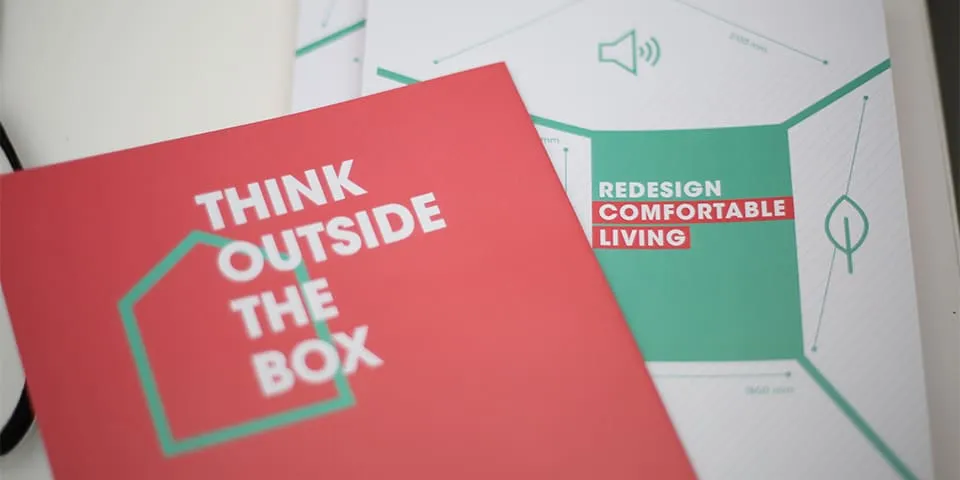
‘Think outside the BOX’ is the motto of the EPB Congress for good reason: The BOX is the name of a partnership between seven companies: training specialist SBM, and suppliers Renson, Unilin, AGC, Sapa, Soudal and Skylux. Filip Van Mieghem, Marketing Manager at Soudal, explains: “All these partners focus on the building envelope. You can compare a building to a large box, which is why we are joining forces under the name ‘The BOX’. But we want to use this EPB Congress as an opportunity to think creatively and originally about that ‘box’.”
“Our focus remains on the building envelope, but at this congress we are looking beyond the purely energy performance story,” Van Mieghem continues. “What happens to our comfort in an energy-efficient home? What do we need to look out for? Light, air and sound are the key themes.”
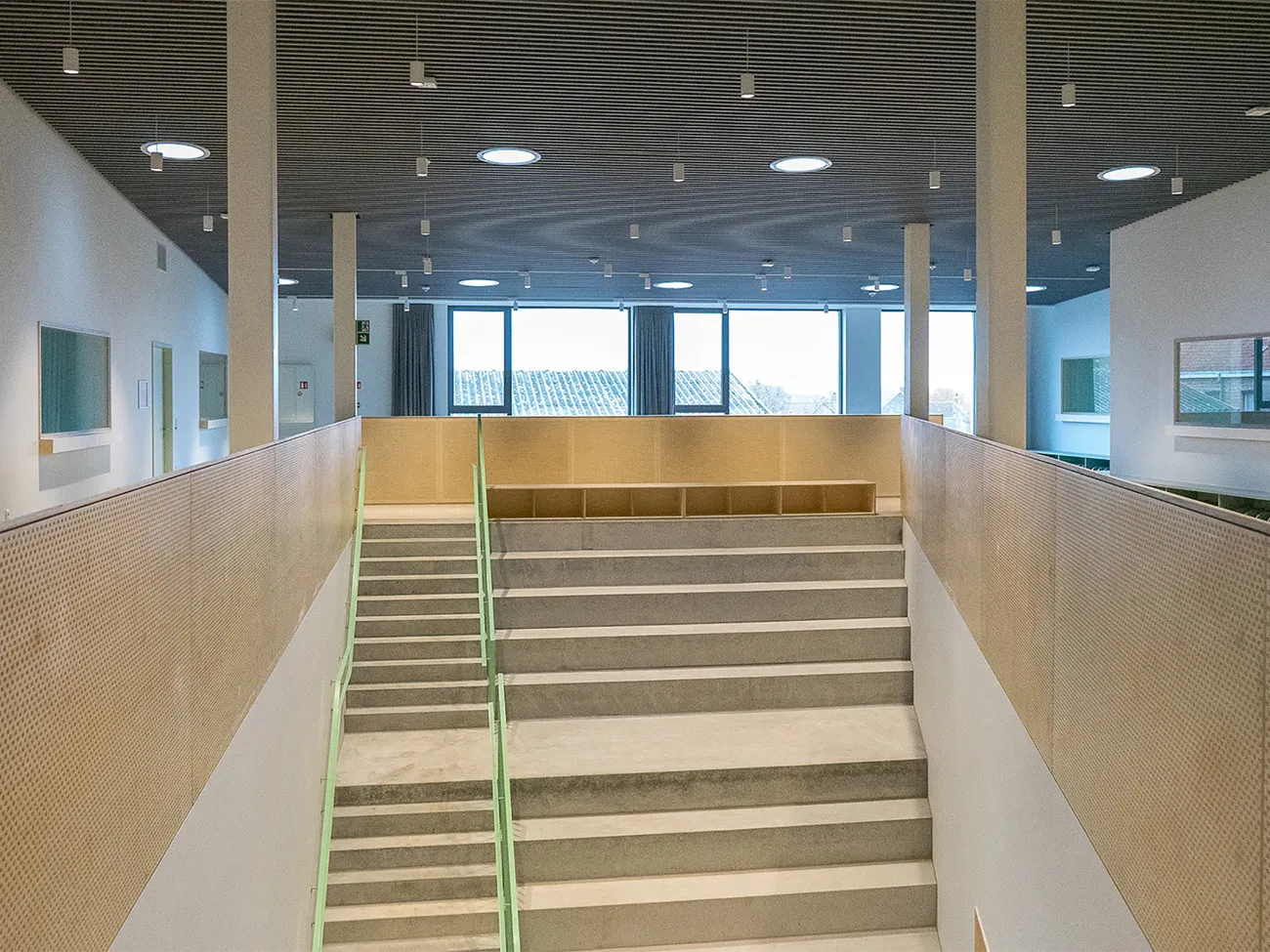
Het lichtrijke atrium creëert de nodige ruimte.
Listening to stakeholders
Five fascinating speakers each explored a different aspect of healthy and comfortable construction at this thought-provoking event. Karim Zouaoui of property developer ION, for example, views construction from a developer’s perspective. However, he says, the days when developers worked in isolation on their projects are long gone. “We have to take account of all stakeholders: the authorities, users, the local community and investors. From the outset, we must listen carefully to all these parties. Stakeholders’ needs set the agenda for us. As a result, sustainability has become an increasingly central theme in our activities.”
Of course, property developers continue to focus on value creation. Their investments need to deliver over the long term. “That is our métier as property developers: creating added value for the user. At the same time, we have to try to raise users’ awareness of new developments and bring them on board. Sometimes that also means finding a willingness among users to pay for these developments.”
“At this congress we are looking beyond the purely energy performance story”
Expertise more important than expensive materials
Sustainability has long been about more than energy efficiency alone: that was essentially the central theme of this EPB Congress. From that perspective, acoustics are also an important part of a sustainable approach. Bart Ingelaere, Deputy Director General at WTCB, gave a highly acclaimed presentation on the dos and don’ts of good acoustics. “Acoustics are not about using very expensive materials, but about expertise,” he stressed. An integrated approach is also essential: acoustics are difficult to separate from aspects such as fire safety.
One often overlooked factor, according to Ingelaere, is the impact of acoustics on health: “So many people suffer every day from poor acoustics. Think of disrupted nights, the resulting lack of sleep and disputes between neighbours. Many of these problems are caused by materials that have been installed or selected incorrectly.”
New performance requirements and standards for acoustics will come into force in spring 2020. Ingelaere also looked at these in greater depth. WTCB provides a checklist to help make the right choices. “You do not always need to go for the most expensive materials, as a relatively simple solution will sometimes suffice. The same product can solve an acoustic problem or make a complete mess of things. It all depends on whether you have used the materials correctly.”
“Acoustics are not about using very expensive materials, but about expertise”
Measuring air quality
Luc Dedeyne, energy consultant and EPB reporter, then took a closer look at ventilation, another comfort issue that is often underestimated in modern buildings. Among other things, he discussed the new ventilation standard currently being drafted, which proposes a new calculation method. Ventilation will be based on air quality. “We need to measure air quality, rather than fixating on the ventilation system’s flow rate,” said Dedeyne. Ever stricter EPB requirements and the rise of airtight construction have led to the problem of the future: overheating. “We need almost no energy to heat a home any more. The indoor climate is becoming increasingly important. Preventing overheating helps deliver healthy air quality and lower consumption,” said Dedeyne.
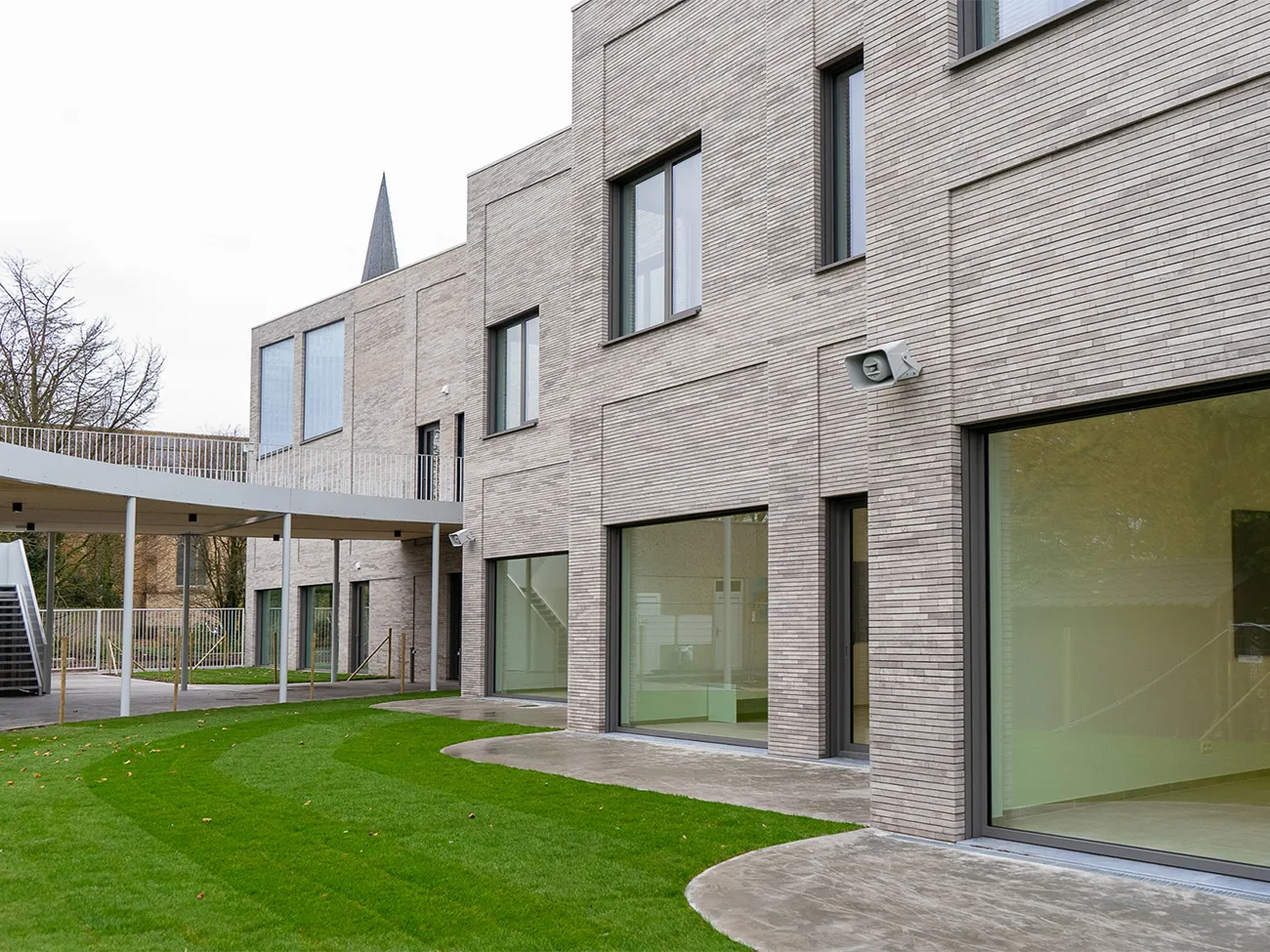
De gloednieuwe Sint-Lodewijksschool beschikt eveneens over een aangename speelplaats.
Bertrand Deroisy, head of WTCB’s Light Laboratory, discussed the criteria set out in the new European lighting standard. The standard takes four criteria into account: natural light, views out, sunshine hours and the risk of glare. Clever solar shading systems help increase natural light and, in turn, user comfort. The main challenge, however, is reconciling optimal natural light with energy performance.
“We need to measure air quality, rather than fixating on the ventilation system’s flow rate”
The final speaker was the evening’s keynote speaker, Vincent Callebaut, the renowned architect who was invited to explain his vision of the city of tomorrow. His revolutionary thinking on the ecological transition in cities, with a strong focus on the circular urban economy, has earned him a strong international reputation. At the request of the Paris city authorities, for example, he designed eight prototype ecological residential towers capable of generating electricity. This led to Paris Smart City 2050. He was also given the opportunity to deliver a fiery and impassioned speech at the EPB Congress on sustainability, the role of nature in cities and the ecological transition.
Find the right company in the sectorSearch by product, field, region or project in the company directory and across all Bouwen aan Vlaanderen articles.
We use cookies to keep the site working properly. With your consent, we also use cookies for statistics and third-party banners. Read more in our privacy and cookie statement.