











“You can only win the war for talent with creative and innovative solutions”
Text Tim JanssensImage Louwers Mediagroep
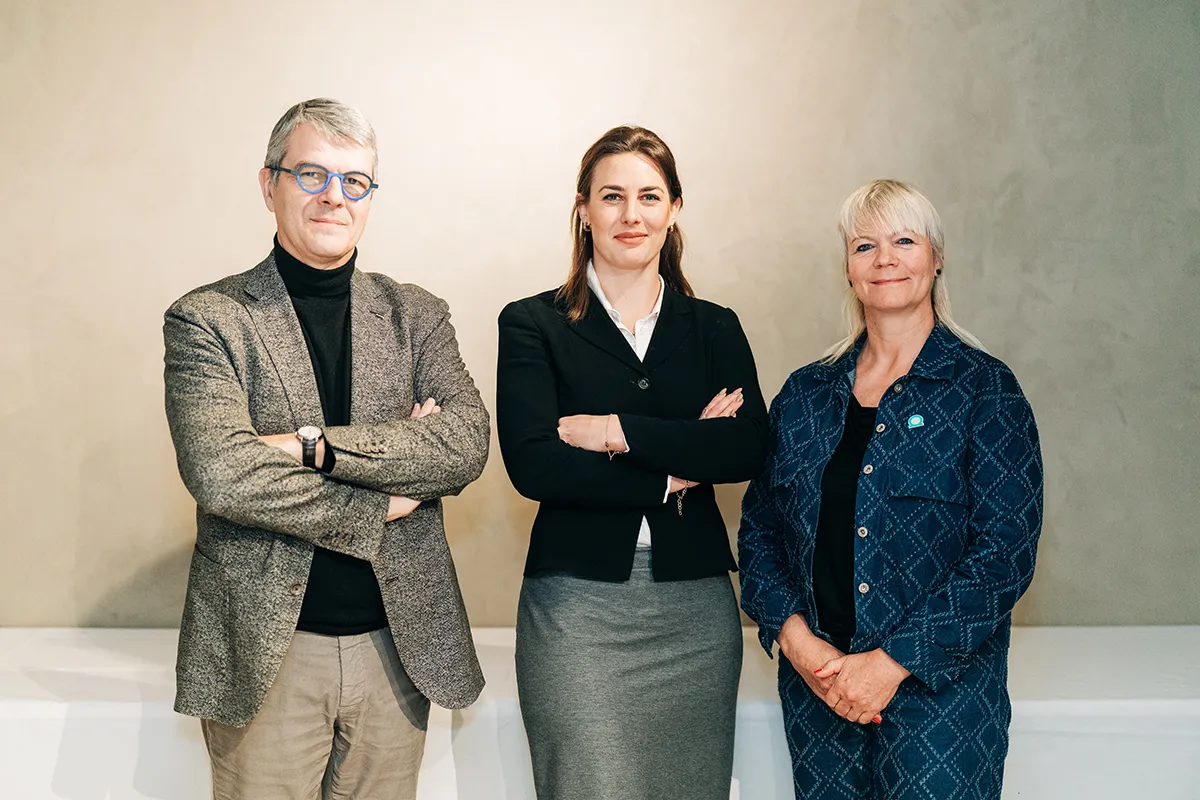
Finding qualified new employees and filling all vacant positions successfully is an extremely difficult task for many architects, engineering consultancies and construction companies. The sector has been caught up in a veritable ‘war for talent’ for years, with demand for bright minds and skilled hands far outstripping supply. How can you remain attractive and successful in a tight labour market, when technological innovation and the quest for sustainability, among other things, are placing ever greater demands on companies and their staff? That was just one of the many questions discussed at our first round-table discussion of the year, where three industry experts shared how they are arming themselves for the fierce competition in their fields: Vibe Hellebuck (architect and partner at assar architects), Julie Schoutteten (CEO at Studibo) and Karel Derde (owner and director at Derde Construct and vice-chair at Embuild Vlaanderen).
Let’s start by taking a closer look at the term ‘war for talent’. Does it accurately describe what is currently happening in the sector? Or is it a buzzword that is used all too readily?
All: “Yes, we can certainly speak of a ‘war for talent’. Finding good new employees has been very difficult for several years now, and competition between companies is fierce.”
Julie Schoutteten: “To some extent, it is also a self-fulfilling prophecy. Because the term is bandied about everywhere, job applicants are well aware that they are in a strong negotiating position and dare to make hefty demands. That makes it even harder for us to attract skilled new employees on affordable terms, because the economic climate is not such that we can simply pass everything on to our clients. It remains a very difficult balancing act.”
How should we assess the situation in practical terms? Are there, for example, vacancies that you just can’t fill?
Julie Schoutteten: “That can take a while in certain niche markets, yes. Take acoustics, for instance, which requires a particular aptitude. Anyone working in that field is a specialist in their area. So these are rare and highly sought-after profiles.”
Vibe Hellebuck: “For us, positions that require the right experience are a particular bottleneck. Bringing in young people is somewhat more straightforward, as trainee architects have to complete work placements. There is, of course, already some competition to secure the best trainees. But that takes considerably less effort than finding architects with several years’ experience, a solid technical grounding and the expertise to manage large construction sites effectively. We have a few people, for example, who are particularly good at overseeing large, technically complex projects during the construction phase, but people like that are not so easy to find on the jobs market these days.”
Karel Derde: “In the contracting sector, the war for talent is being fought at both operative and administrative level. At my own company, for instance, we are urgently looking for a quantity surveyor and prevention adviser, a very rare profile. On the construction side, many building companies bring in foreign workers to make up for the shortage of Belgian labour, but that brings its own challenges. There is often a language barrier, for example, which makes it far from easy to communicate all the safety rules effectively.”
Julie Schoutteten: “I worked in the contracting sector myself for a few years in the past. So I know from experience that it is by no means easy for construction companies to find good, reliable workers who can carry out the work to the required quality standards …”
Karel Derde: “We need to look closer to home again. Because once the war in Ukraine is over, many Eastern European workers will return home. That is a tension that too few construction companies are addressing at the moment. And, indeed, there is still a lot of room for improvement when it comes to quality.”
What is behind the war for talent in the construction, engineering and architecture sectors? Can you identify the causes?
Karel Derde: “Recent statistics from Voka point to an undeniable demographic trend. For every ten people leaving the sector, only eight are joining it. That gap will only widen over the next decade. Things should improve somewhat after that, but in the short term the shortage of new entrants will remain the main problem.”
Julie Schoutteten: “That was also one of the main reasons for setting up Studibo. Quite simply, too few qualified engineers are graduating. Centralising recruitment is a huge asset for our members. The economies of scale this creates make our group much more attractive. Nevertheless, getting the right people into the right positions remains a challenge.”
Vibe Hellebuck: “Fortunately, there are still enough architecture graduates. Our main challenge is retaining good young employees. After a few years, we see some of them move to the other side of the table. In other words, they are poached by contractors or property developers, who can offer a much better salary package than we can.

Once they have left, they generally do not come back. In addition to direct competition from other architecture practices, this is another factor we have to take into account.”
Julie Schoutteten: “It is worth pointing out in this regard that they may earn a bit more, but they often have to work much longer hours. Sometimes you have to be on site at 5 in the morning, only to get home at 21 hours. That is generally not a problem for young starters, but it becomes more difficult once they start a family. We see more people at that stage of life coming to us, because working hours at some of our companies are more structured, or they can work in the warmth of an office rather than out on site in all weathers.”
Karel Derde: “On the construction side, the availability of workers is also somewhat dependent on the economic climate. Now that private housebuilding has slowed down a bit, I’m suddenly getting unsolicited job applications again. And let me emphasise one more thing: young people are not the only ones who can add value. People aged 50+ are by no means past it. In fact, they are usually the first to put their hands up when weekend or holiday work is available.”
Aside from a good salary and other benefits, how do you persuade applicants to choose you and then stay with you?
Vibe Hellebuck: “By making the most of the advantages we offer. Sometimes it comes down to little things. Last year, the Antwerp branch of assar architects moved to a new office, so we are always keen to invite promising candidates in for a face-to-face meeting as soon as possible. That way, they can see for themselves whether they like the working environment. It may seem like a trivial detail, but our employees really appreciate the fact that we all have lunch together every day around one large dining table. Being flexible and treating people with humanity also helps, of course. As long as the work is done properly, employers need to be able to trust their staff and turn a blind eye now and then, for example by letting someone with a sick child work from home. In principle, you get that back many times over, because it boosts employee commitment and works both ways.”
Julie Schoutteten: “Responding to individual needs and ambitions is another important key to success. Some people need to feel that they can continue to develop within your organisation, that there are enough training opportunities and that you have a career path in mind for them … Others enjoy specialising in a particular niche and do not necessarily want to progress.”
Karel Derde: “Attracting people is one thing, but keeping them on board is another. Statistics show that many people leave the construction sector at around 30 to 35 years of age. We should therefore be putting much more effort into staff retention, although of course it is not an exact science. You can do a lot to create a good atmosphere in the workplace and ensure a healthy work-life balance, but in the end it mainly comes down to whether someone is a good fit for the company culture. It takes people skills to judge that accurately, and there is still plenty of room for many companies and managers to improve in this area.”
Vibe Hellebuck: “That’s right. Not everyone knows the first thing about people management, even though it is crucial to keeping employees happy and motivated. That is why I have taken on the role of HR business partner at our practice. The younger generation in particular appreciates that. They know they have someone to talk to, that they are listened to and that their concerns do not fall on deaf ears …”
Speaking of the younger generation: they have a reputation for being much more assertive and demanding, while also being less inclined to live for their work. As seasoned professionals, how do you deal with that?
Vibe Hellebuck: “It is certainly true that young people today have different needs and expectations. But isn’t a generational clash something that has always existed? The key is to find the right mix among your staff, so that younger and older employees can complement and inspire each other in a positive way. Listening, communicating and sharing knowledge are crucial. Ideally, this should happen spontaneously and informally, because you cannot force these things. Think, for example, of a senior architect who works in design taking a young BIM technician to a construction site to show them how everything fits together from a construction perspective.”
Julie Schoutteten: “I think we should approach the issue with an open mind and be prepared to meet young people halfway. They are the future, after all. I know many older colleagues question the work-life balance their younger colleagues are aiming for, when they themselves worked incredibly hard in their early years to build their careers. But personally, I don’t think it is necessarily a bad thing if someone wants to work 4/5, so they can take Wednesday and Friday afternoons off to look after the children. The important thing is that they find a good balance between their work and private life, so they can be the best version of themselves in both.”
Vibe Hellebuck: “When I was a young architect starting out, I spent all my free time in the evenings building up my own little practice, without it bringing in any income. Just working, working, working. I don’t know many people in their early twenties who still do that today. And perhaps they’re right …”
Karel Derde: “The spirit of the times is simply different now, and we have to move with it. It’s as simple as that. Sometimes you have to be a little more flexible and not cling too rigidly to the rules … That’s part and parcel of good HR management these days. Up to a point, of course, because we have to make sure the balance within our teams isn’t disrupted. And make no mistake: young people also need structure and support to function well. So it’s certainly not a one-sided story of ‘anything goes’.”
Julie Schoutteten: “As an employer, you also have to be willing to stand your ground. Personally, I find one of the most difficult things is that young people straight out of school already have very high expectations when it comes to the overall package.
What they could earn, which smartphone and company car they could get … Those are the first questions we get these days when we meet young talent, not what the job would involve or what their working days would look like. Compared with fifteen years ago, it’s the opposite way round. It’s not always easy to deal with, but of course you do have to respond to it to some extent, or you risk missing out on a lot of potentially good employees.”
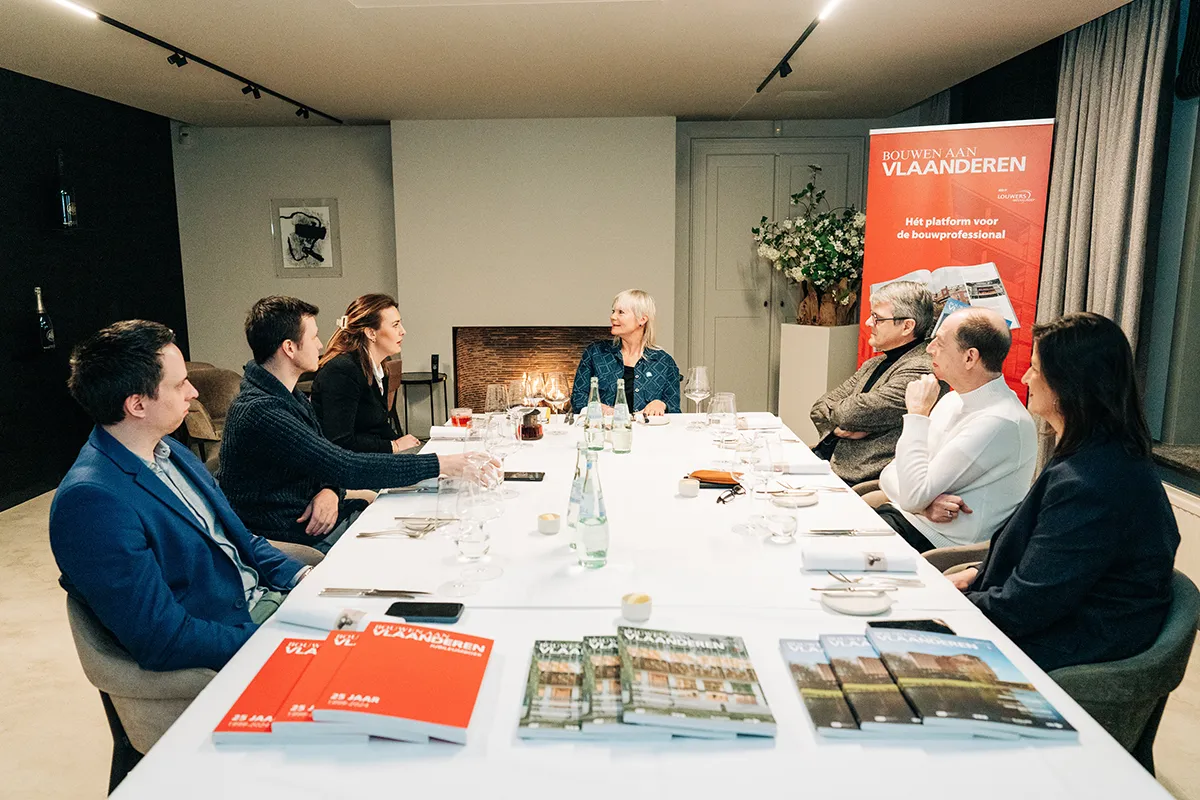
Is a certain scale essential for a business to hold its own in today’s labour market?
Vibe Hellebuck: “The fact that we’re a large practice certainly helps us attract new employees. They’re soon given a lot of responsibility, can work on prestigious projects, have plenty of opportunities for career progression and so on. That appeals to people.”
Karel Derde: “It’s not always easy for smaller businesses to compete and get access to high-calibre candidates. Many large contractors have become very skilled at employer branding, for example through recruitment campaigns on social media. As a result, many SMEs and small businesses systematically miss out, making it increasingly difficult for them to develop a growth strategy. But running a business is all about being creative, and every little helps. I’ve noticed that by taking on a few roles at Embuild, I can share information with my employees about today’s and tomorrow’s challenges, which undoubtedly helps build our image as a reliable, forward-thinking employer. As a company, above all you need to retain your own identity and look for people who are a good fit for you and your company culture.”
Julie Schoutteten: “Absolutely, because not everyone feels at home in a large company. There are certainly people who deliberately want to work for small businesses, where communication is generally more direct and relationships more personal. They’re often very loyal employees, too. Once you’ve found them, they tend to stay for a long time. That’s why at Studibo we also focus strongly on local roots and on the smaller scale of our practices. It works remarkably well.”
Recruitment often involves intermediaries such as recruiters, recruitment agencies and headhunters. Are they a blessing or a curse?
Vibe Hellebuck: “In my view, it’s a double-edged sword. At best, it can save you time, energy and hassle, especially if you need candidates with specific or sought-after skills. But they can just as easily poach good employees from you. Sometimes I think it goes too far. Our employees get calls during working hours asking whether they might be interested in a particular vacancy at one of our competitors. There’s a real LinkedIn culture these days.”
Julie Schoutteten: “We also work with recruiters, but we’ve agreed clear terms with them and set certain no-go zones. We shouldn’t forget that we’re not just competitors, we’re colleagues too. Honesty is the best policy, so it’s important to maintain good relationships with others in the sector and not constantly try to outdo one another.”
Karel Derde: “I once happened to be standing next to one of our project managers when he got a call asking if he might be looking for a new challenge. When I stepped in, the conversation was quickly over (laughs). Things have improved a little since then, but the way headhunters and recruitment agencies operated a few years ago was verging on human trafficking. It’s unbelievable how many offers we received back then. But when I asked for more information, they could barely answer my questions.”
Vibe Hellebuck: “I know exactly what you mean. The people who actually call you haven’t always been in the business long enough to assess what you’re looking for, what skills potential candidates need and so on. I often have to spend the necessary time explaining all that myself, which risks negating the main reasons for using them: taking the burden off our hands and cost efficiency.”
Karel Derde: “To outsource or not? That’s a question we’re also discussing in our boardrooms. When you do the sums, you realise you could just as well hire an extra full-time employee to handle recruitment and employer branding. That person would have the essential understanding of the company culture.”
Julie Schoutteten: “I regularly meet with our recruiters to explain who we are and what our philosophy is. In a way, I consider them part of our group. Like our employees, they need to be fully on board with our story. They also attended our first major internal team event at the end of October, so they could see for themselves what our culture is like and who our people are … They now know exactly what we’re looking for, and that has helped us enormously so far. I have very little to criticise about the way we work with them today.”
Vibe Hellebuck: “Something else we tried during a previous recruitment drive was tapping into our employees’ own networks. After all, they are and always will be the best ambassadors for our practice. It worked well at the time.”
Julie Schoutteten: “It’s a good idea in principle, although we’ve noticed that not everyone is equally keen. When employees recommend people they know, they sometimes feel a little responsible for them too. They’re clearly afraid it might not be a good fit, even though we certainly wouldn’t hold that against them.”
Finally, let’s look to the future. Are there signs of improvement on the horizon, or will it continue to be a struggle?
Julie Schoutteten: “There doesn’t seem to be a change in sight just yet, so we’ll have to keep looking for inventive HR strategies to make a difference. I think Studibo offers a good answer to the challenges we face today, because we’re growing like wildfire. But there’s not much we can do to change the number of new entrants. The number of students is what it is. The key is to make the construction sector as attractive as possible. Then hopefully the pressure will ease a little in time. But of course, that won’t happen overnight.”
Karel Derde: “We’re working on it. Embuild and other sector associations are investing heavily in raising awareness among school-age children, starting as early as primary school. Take ‘Bouwrakkers’, for example, a holiday camp designed to get children aged seven to fourteen interested in the construction sector, or ‘Toekomstbouwers’, where people from the construction sector give talks in schools. It’s also crucial to bring parents on board, because they have a major influence on their children’s eventual choice of studies. Constructiv’s large-scale campaign, which saw it set up a stand at all the major music festivals over the past two years, has already borne fruit in this respect, as a survey shows that the sector’s image is improving. In short, we’re pursuing various approaches, both short- and long-term, to lower the barriers to construction courses and careers. Unfortunately, when it comes to perceptions, it can sometimes feel like a losing battle. You can make every effort to portray the sector in a positive light, but one TV report about rogue contractors defrauding people and you’re back to square one. Such distressing cases are extremely rare, though. Even if this gives a highly distorted picture of everyday reality, it has a direct impact on the number of people entering the sector.”
Julie Schoutteten: “It’s a real shame, because there are more than enough things that make a career in construction attractive. Few people have cause to complain about the pay. And what could be better than helping to deliver impressive projects?”
Karel Derde: “Exactly. Unfortunately, that professional pride is far too rarely communicated. Fortunately, there are some encouraging signs too: the tendency to pigeonhole technical and vocational education seems to be fading, hands-on professions are finally being valued again, and the rise of STEM subjects is also a positive development. I also expect a lot from trends such as automation, modularisation, standardisation, robotics and collaborative robotics. In time, these should help contractors compensate for a great deal. They’ll also make our profession more technologically advanced and therefore more attractive to young people. Pessimism is certainly not an option. You catch more flies with honey than with vinegar, so looking for solutions is the only way forward. The economic reality is what it is, so above all we all need to stop complaining and show some enthusiasm. That’s the only way we’ll persuade more people to pursue a career in construction.”
Question about this story? Ask your question
Companies in this story

Keep following this
Get an email when a new story is published. No account needed.
- SubjectGeneral
- CompanyStudibo







