“AI facial recognition is the access control of the future”
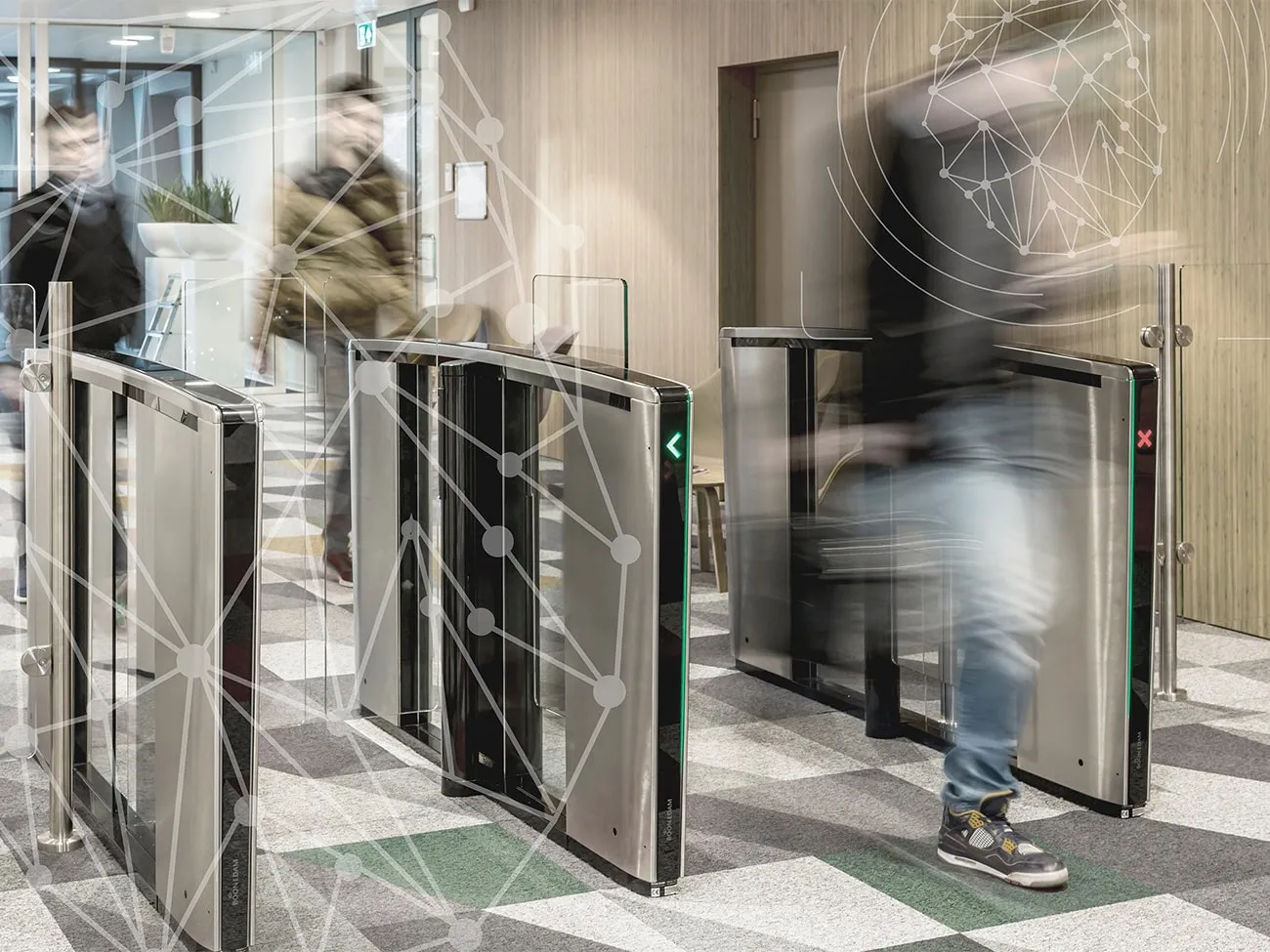
In today’s society, advanced innovations are increasingly being used to improve people’s safety and wellbeing. Artificial intelligence (AI) is therefore becoming ever more important, including in the field of access control.
One example is AI software that opens or keeps doors closed based on facial recognition, a specialism that Boon Edam has explored in depth in recent years. “Facial recognition can be used across virtually all security levels of access control.”
Whether we like it or not, technology continues to influence virtually every aspect of our lives, including the workplace. “That is nothing new, of course, but the extent to which it is now being integrated is unprecedented,” says Boon Edam. “The days of 9-to-5 workplaces, where employees have a fixed desk or office, are over. People need a more flexible working environment. Since the coronavirus crisis, partitioned workspaces have also become more popular than ever, as occupancy levels in
office buildings had to be limited. To keep people on site safe and avoid health risks, companies and building owners are opting en masse to install seamless security and access control systems, including those based on AI facial recognition technology.”
Smooth, secure movement
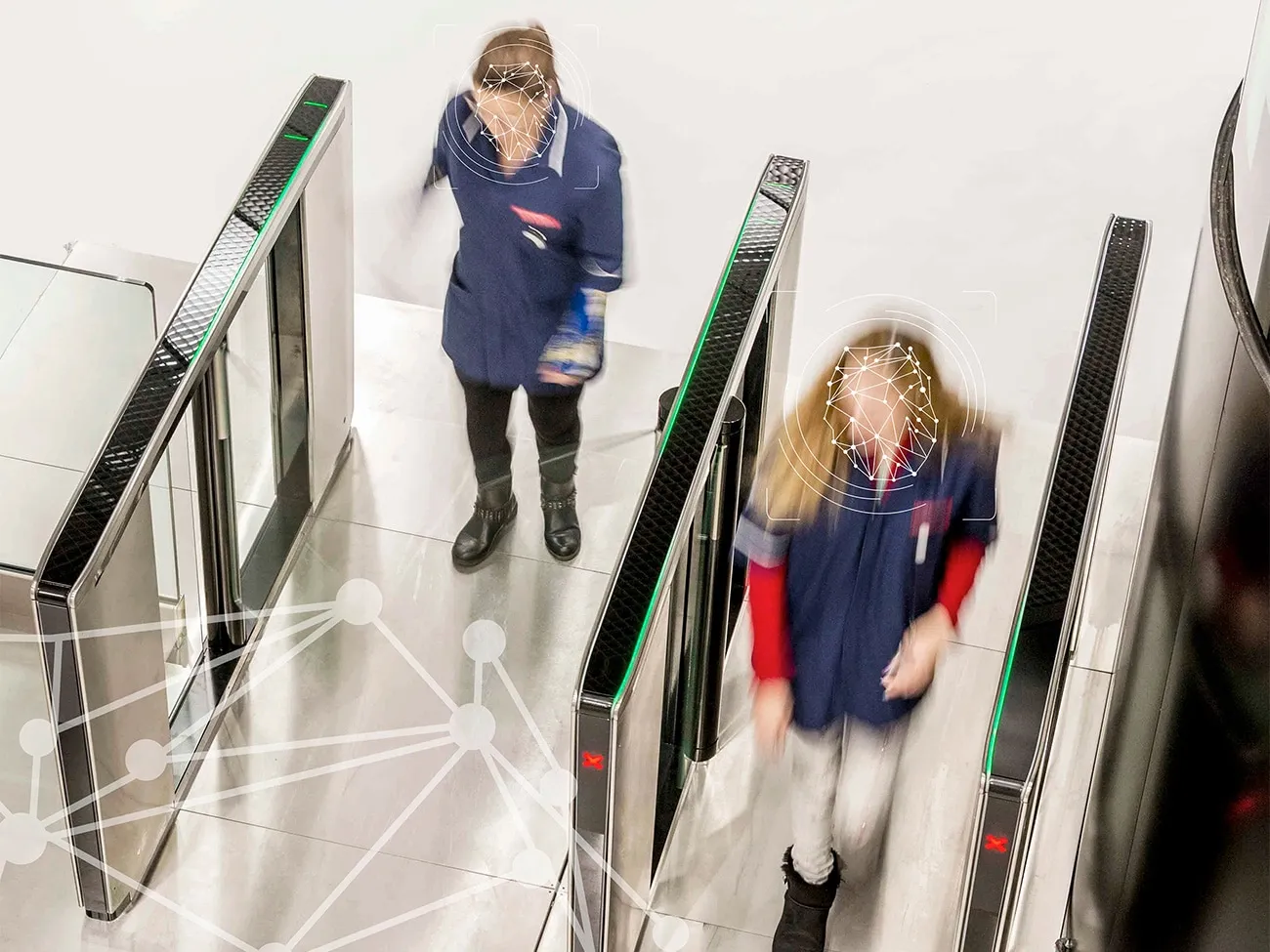
With facial recognition, an algorithm identifies a face in a photograph or video image. Within milliseconds, the points on a person’s face are mapped and converted into a unique code. The facial recognition software then compares this code with the data in a database. If there is a match, it can determine who is in the image and whether or not access should be granted. “One of the biggest advantages of access control based on facial
recognition is that waiting times are a thing of the past,” Boon Edam emphasises. “The software registers the face of someone approaching before they reach the access gate. If that person is granted access, the system gives the green light when they are immediately in front of or inside the gate. This ensures smooth circulation and also prevents someone else from following them through the open gate. It is also important to know that the biometric data collected is processed in full compliance with the AVG and GDPR, and used solely for authentication or security purposes. There are therefore no legal objections to using facial recognition for access control. We are absolutely convinced that it will become increasingly common in the future!”
Question about this story? Ask your question
Keep following this
Get an email when a new story is published. No account needed.
- SubjectThemes