Concrete and steel construction
Concrete bridge beams with unique geometry set two firsts
Text Philippe SelkeImage Ets Ronveaux
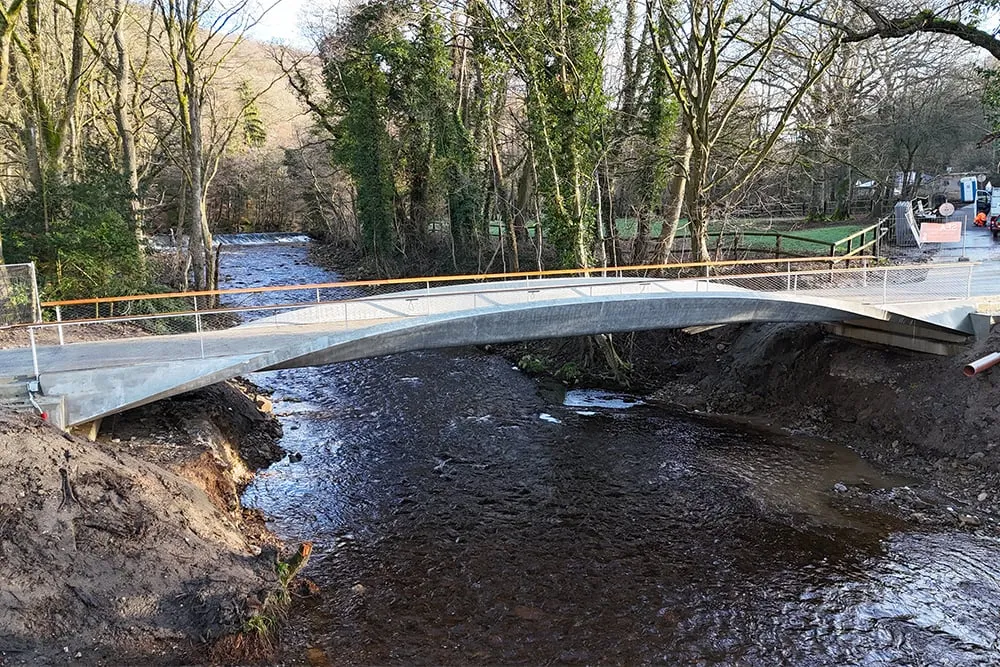
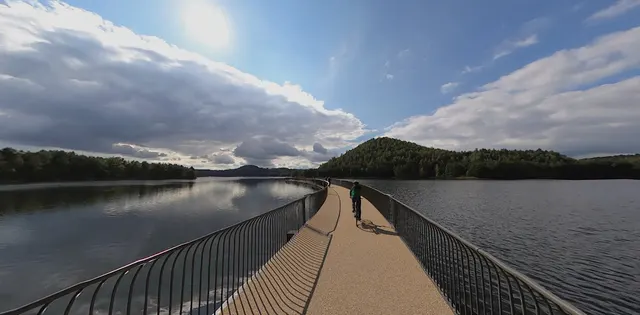
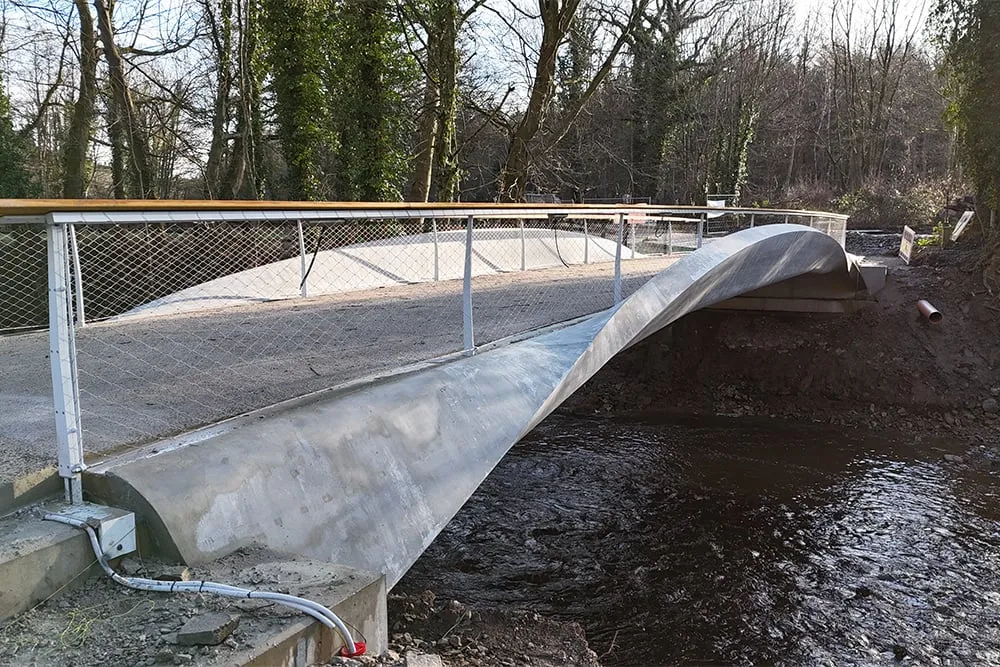
Many civil engineering structures in the east of the country were damaged during the floods of July 2021. Some bridges were even at risk of losing their stability. In such cases, the entire structure may need to be replaced, as was the case on the Vesder and Helle rivers in Eupen. Four newly built concrete bridges stand out thanks to their spiral-shaped beams, manufactured by Ets Ronveaux.
Thanks to their distinctive geometry, designed by the Servais design and architecture practice, the cycle and pedestrian bridges could be integrated seamlessly into the landscape. Julien Grosjean, project engineer at Ets Ronveaux: “Besides the aesthetic aspect, the unusual shape also meets the requirement to increase clearance beneath the beams and avoid a central pier. This improves the river’s flow and will limit damage in the event of future flooding.”
Eight beams were manufactured for four different bridges. They are up to 25.50 metres long and 2.10 metres high, with the largest weighing 21 tonnes. The beams were prefabricated at Ronveaux in a continuous process, but their installation on site was spread over several weeks. The first structure to open was the Langesthal bridge, where the beams were installed at the end of November.
A challenge at every level
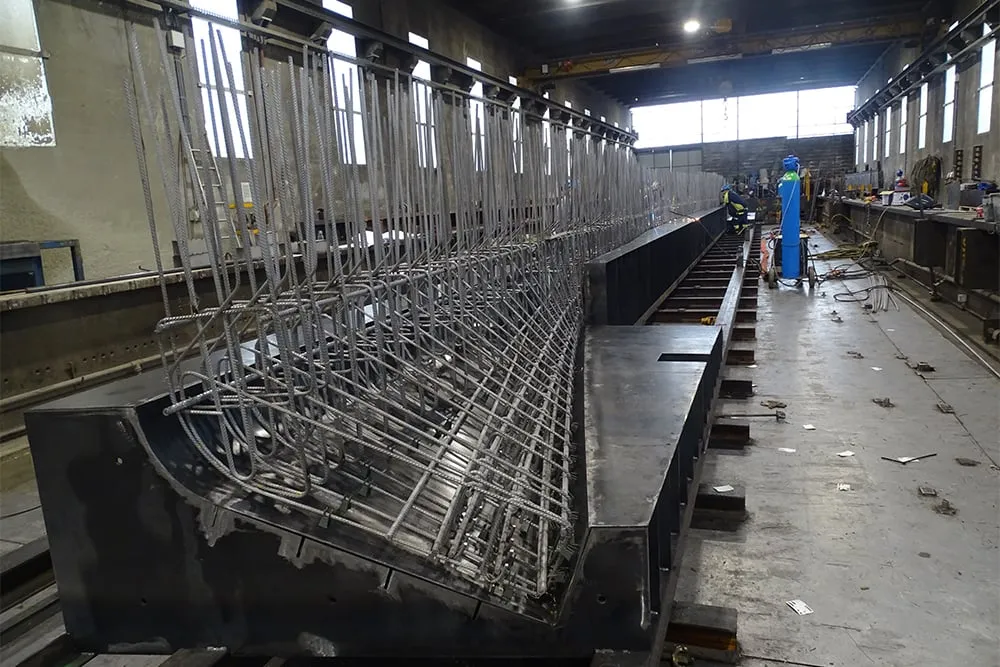
Given their highly unusual shape, producing these concrete elements was a real challenge for Ronveaux, from design through to delivery. Julien Grosjean: “It was unprecedented. To assess the feasibility and costs of the project properly, we had to work out how the beams would be reinforced and cast, and how to make the formwork, which required no less than 20 tonnes of steel.”
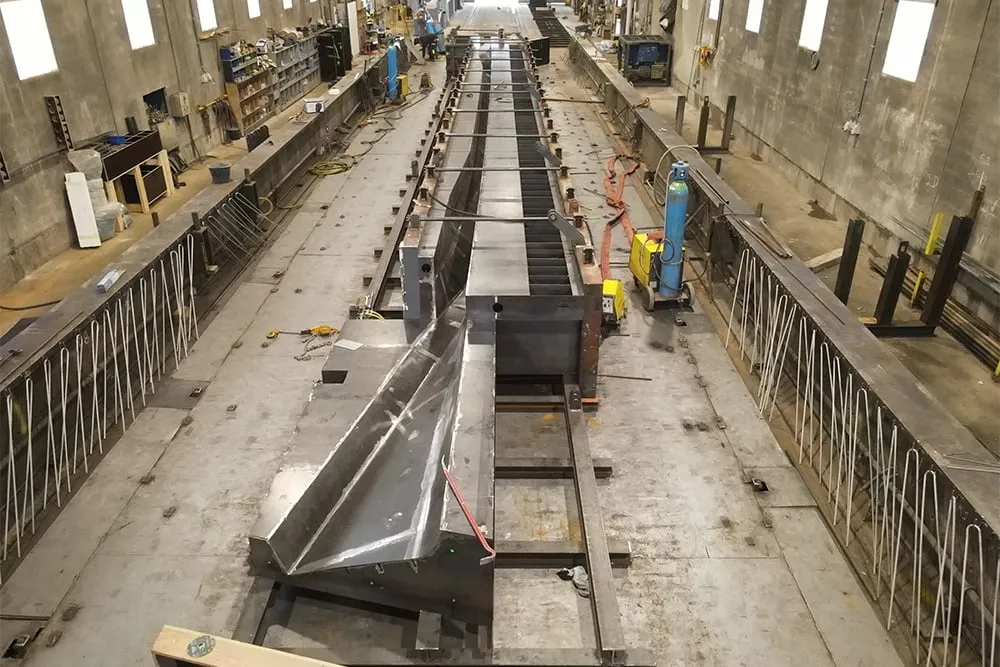
The formwork drawings for the concrete elements were produced in 3D to meet the requirements of the client and designer as closely as possible. Ronveaux’s metal workshop then had to cut, bend and assemble all the steel plates to create the unconventional curves of the two-part formwork. It is 26 metres long, 1.20 metres high and 2.60 metres wide.
The concrete beams themselves are notable for their stainless steel reinforcement, another first for Ronveaux. This will reduce damage to the concrete caused by corrosion of the reinforcement, a persistent problem in many civil engineering structures in Belgium. The durability of the beams will help extend the bridges’ service life. This type of reinforcement was also ideally suited to the relatively slender structure envisaged by the Servais design and architecture practice, as it allows for a slightly thinner concrete cover than conventional steel reinforcement.
Cradled into position
But that was not all. Julien Grosjean continues: “The beams were cast only on their horizontal side, the edge, so they then had to be turned through 90°. This operation required special lifting equipment because the beams’ centre of gravity is not aligned with their longitudinal axis, as it would be in a straight beam. Since the beams function as an arch in their final position, there was a risk they would break if handled in the usual way. After the formwork was removed, they were therefore placed in a metal cradle, allowing them to be turned inside our factory hall before being stored.”
All the beams were then transported to the site, still in their cradles, for installation by Haas&Co in collaboration with Bodarwé. “Once everything had been concreted, the cradles were removed so that we could use them for the next bridge.”
An unusual project
“What I’ll remember about this project is how every department at Ronveaux was able to adapt to an unusual assignment,” concludes Julien Grosjean. “There are few companies in Belgium capable of producing concrete elements like these. We were able to find the right solutions throughout the construction process and meet the client’s strict requirements. Hats off to the whole team!”
Question about this story? Ask your question
Keep following this
Get an email when a new story is published. No account needed.
- SubjectConcrete and steel construction