Concrete and steel construction
Digitalisation and sustainability: Q2B and new concrete standards lead the way
As a certification body for ready-mixed concrete, mortar and the associated raw materials, BE-CERT has been investing heavily in digitalisation for several years. Following the development of the BE-CERT Extranet, joining the brand-new Q2B platform is a second milestone in quick succession. Clients and contractors can find all certified products in one user-friendly database. The past year has also seen further significant progress on sustainability, most notably with the new standards for the concrete sector (NBN B 15-001 and NBN B 15-105).
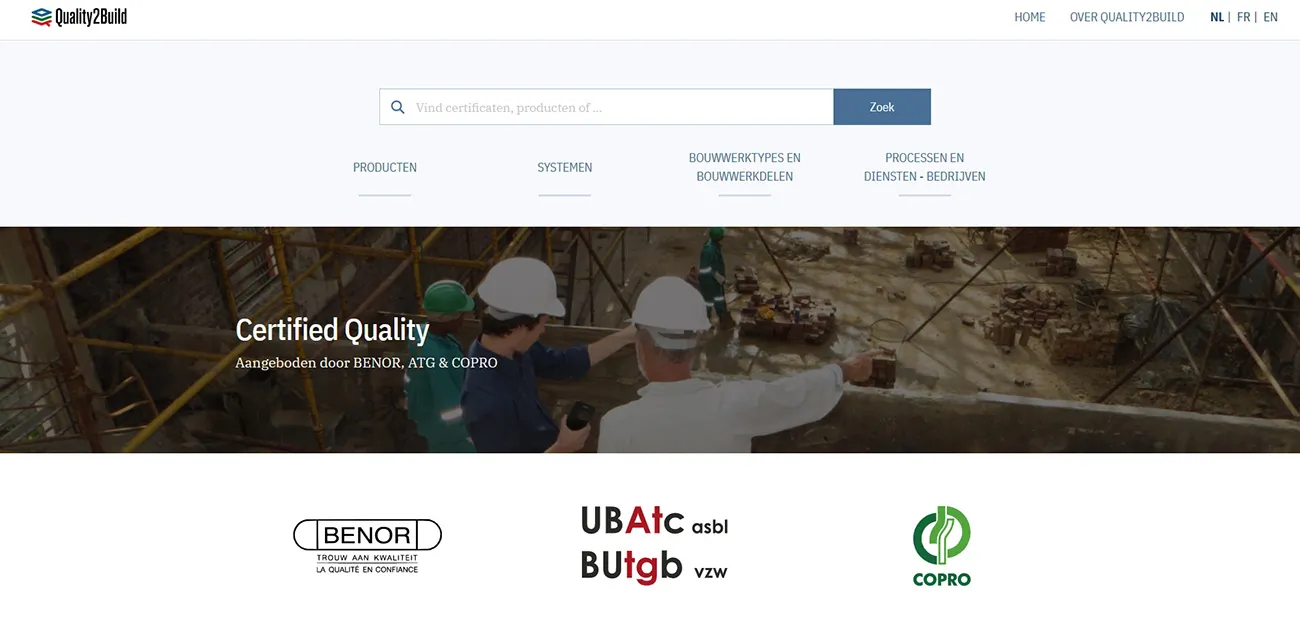
The Q2B platform, with ‘Q2B’ standing for ‘Quality to Build’, brings together all construction products certified in Belgium. The quality marks in question are BENOR, COPRO and ATG. Clients and contractors can search by product or manufacturer and access all the relevant information in just a few clicks: product and manufacturer details, certificates, technical data sheets, regulations, and more. BE-CERT was closely involved in the initiative through the non-profit organisation BENOR and has, of course, also linked its own data to the platform. “There are so many different construction products on the market that it is not always easy to see the wood for the trees. In that respect, the Q2B platform is a useful guide for users looking for products that come with a quality guarantee,” says Caroline Ladang, director at BE-CERT.
Complementary to the Extranet
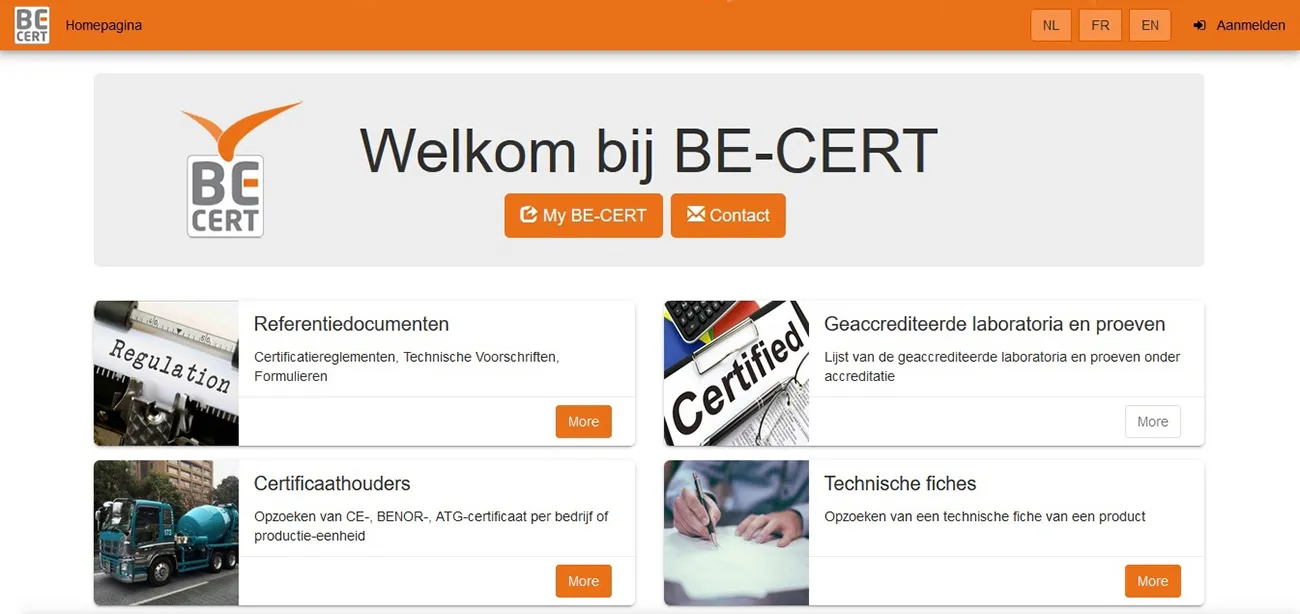
Q2B was introduced shortly after the launch of the BE-CERT Extranet. Do the two platforms not overlap? “No, quite the opposite: they are highly complementary,” Caroline Ladang replies firmly. “Q2B is aimed specifically at users, whereas our Extranet is primarily designed for certificate holders. In both cases, however, the benefits are the same: less administrative work and faster, more accurate processes. Both Q2B and the BE-CERT Extranet are part of a major multi-year plan to make the administrative ‘flow’ involved in certification fully digital in time. We intend to take further steps in this direction in the near future. Inspection and audit reports should be available digitally the following day. And instead of entering laboratory test results manually and sending them on, we want to make them available through our Extranet as quickly as possible. The same applies to calibration reports from the metrology department, which will soon be available on our Extranet and will no longer need to be sent by post or email. Another project in the pipeline is laboratory management. This will enable certificate holders to quickly check which laboratories are accredited to carry out which tests as part of a certification process. We also want to bring together on our Extranet invitations and documents relating to the meetings and committees that BE-CERT coordinates. In short, our digital shift is far from complete!”
Concrete with alternative raw materials
BE-CERT has also made considerable efforts on sustainability in recent months. “The new Belgian concrete standard NBN B 15-001 was published in early July, with BE-CERT closely involved in its development,” explains Caroline Ladang. “The previous version of this standard already referred to NBN B 15-100 on alternative binders. The new version also refers to the parallel standard NBN B 15-105, published in July, which covers inert materials. These two standards set out a methodology for demonstrating the durability and suitability for use of concrete made with alternative raw materials. Concrete producers can use this methodology to produce concrete with a higher content of recycled concrete and mixed aggregates than is currently permitted by the concrete standard. The methodology can also be used for materials such as recycled sand, which falls outside the scope of the concrete standard. This is an important development for sustainability, as alternatives to inert materials are being actively sought because supplies are not inexhaustible. Step by step, we are moving towards a more sustainable world of construction!”
Een zakelijke vraag aan PROCERTUS? Get in touch
Companies in this story
Keep following this
Get an email when a new story is published. No account needed.
- SubjectConcrete and steel construction
- CompanyPROCERTUS