Concrete and steel construction
High-performance concrete slab for waste processing thanks to micro- and macro-fibre reinforcement
Text Niels RouvroisImage Adfil
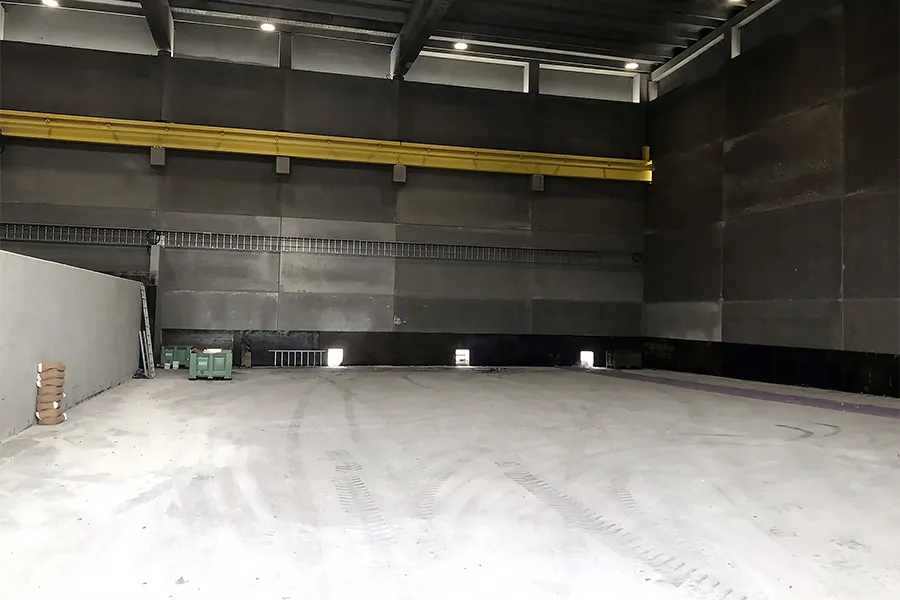
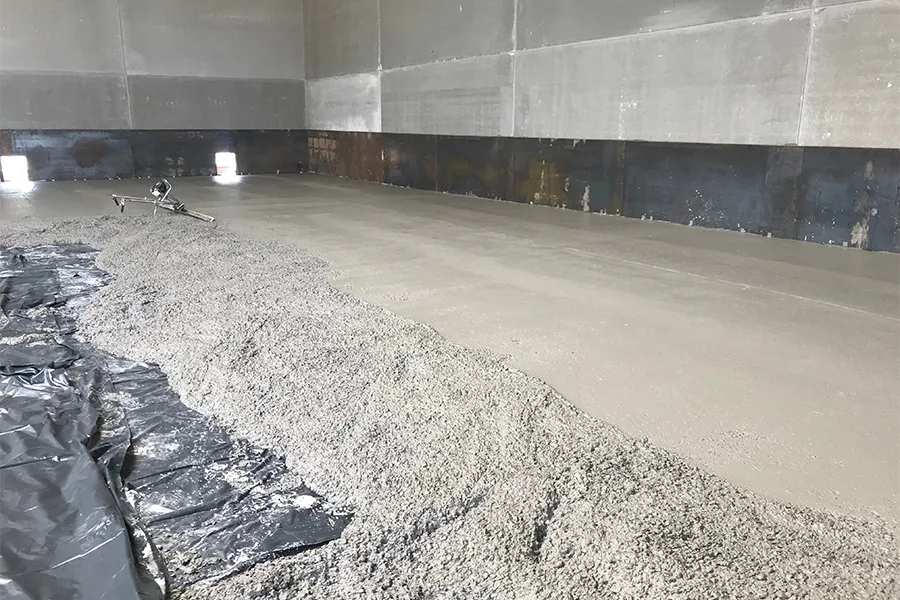
For a new concrete floor slab for processing recyclable waste, Vanheede Environment Group, a specialist in sustainable waste management, was looking for a high-performance, durable solution. Adfil, a renowned manufacturer of micro- and macro-polymer fibres, was engaged by main contractor TRBA to help deliver the 600 m² concrete floor slab. “The result is a seamless slab with greater impact and abrasion resistance. This is thanks in part to our micro- and macro-fibres,” says Steven Anseeuw, technical sales manager at Adfil.
Adfil, based in Flanders and a developer and manufacturer of high-performance fibres for reinforcing ready-mixed concrete, sprayed concrete and precast elements, has long advocated the use of fibres as a sustainable alternative. Steven Anseeuw says: “The benefits are clear. Tying steel mesh takes a lot of man-hours. Those hours can be put to more efficient use elsewhere if you opt for fibre-reinforced concrete. Fibres are durable over time because they retain their strength throughout the structure’s service life.”
The strength and added value of Adfil’s products were clearly demonstrated during the construction of the concrete floor slab for waste processing at a Vanheede Environment Group site. Steven Anseeuw says: “Vanheede Environment Group is no stranger to us. We have worked together before, and when it became clear that Adfil could help them deliver seamless concrete slabs, there was considerable interest. Liquids and acids are released during recycling and can seep through joints into the ground. For environmental reasons, Vanheede Environment Group naturally wants to avoid this. A seamless slab would therefore offer significant added value.”
SRA, macro- and micro-fibres
But creating a slab of this kind, in this case covering an area of 600 m² and 20 cm thick, is no simple matter. Steven Anseeuw says: “You have to take various factors into account, which calls for a complete system. One aspect is shrinkage control, while the other is ensuring that the slab has the necessary freedom of movement.”
To control shrinkage, it is essential to retain as much moisture as possible in the concrete, and five elements of this system are crucial to achieving that. Steven Anseeuw says: “The first two are a combination of our macro- and micro-fibres. Our ‘Durus Easyfinish’ macro-fibres provide reinforcement and help reduce stresses in the concrete. The ‘Crackstop M Ultra’ micro-fibres retain water for longer and also improve impact resistance, making the slab more durable in terms of wear. This is important, as heavy machinery such as a bulldozer will be working intensively on the slab. Another, less well-known element that helps control shrinkage is ‘Crackstop Liquid’, or ‘Shrinkage Reducing Agent’. This crucial product reduces the concrete’s shrinkage potential, significantly lowering shrinkage stresses and further reducing the risk of shrinkage cracks.”
Every detail matters
“Correct installation is absolutely crucial for this particularly technical application,” Steven Anseeuw continues. “Every stage must be carried out properly, from highly accurate levelling and the installation of the plastic membrane and perimeter strips to polishing the concrete. Since every detail matters in achieving a good result, we supported the TRBA team with advice throughout the process. We were also on site during the pour. I would certainly like to commend TRBA and subcontractor Carrofloor for both the preparatory work and the execution, as well as for the very high quality of the concrete. Since the slab’s freedom of movement is very important, accurate installation of the perimeter strips was also a key consideration. Sinusoidal joints were deliberately chosen to optimise the transition from one slab to the next. This also means less wear and therefore a more durable end result.”
High-performance end result
“Just before polishing began, our CrackStop Ultra-finish was also sprayed over the slab on our advice. This buys you time and prevents the slab from losing moisture during polishing. It also creates a slightly greasier paste on the concrete surface, allowing for a better finish and an even harder surface layer. The combination of all these steps ultimately produced a high-performance slab with excellent impact and abrasion resistance and no joints,” concludes Steven Anseeuw.
Question about this story? Ask your question
Keep following this
Get an email when a new story is published. No account needed.
- SubjectConcrete and steel construction